TLDR
A Department of Employment and Workplace Relations report published 8 July 2026 found no significant AI-driven employment disruption in Australia through February 2026. Unemployment sat at 4.4% in May 2026 and labour-force participation remained near record highs, with AI-exposed occupations still growing, just more slowly than less-exposed ones. A separate Australian HR Institute employer survey found 19% of firms reported fewer entry-level roles due to AI, a signal the aggregate data have not yet absorbed. The report is designed to monitor current conditions, not forecast future outcomes, leaving the longer-term question deliberately open.
KEY TAKEAWAYS
What the report found
The Department of Employment and Workplace Relations published the AI and Employment in Australia report on 8 July 2026, and the headline finding is blunt: no significant disruption yet.[1] Australia's unemployment rate sat at 4.4% in May 2026, with labour-force participation remaining near record highs.verifiedVerified Source: ministers.dewr.gov.au[2]
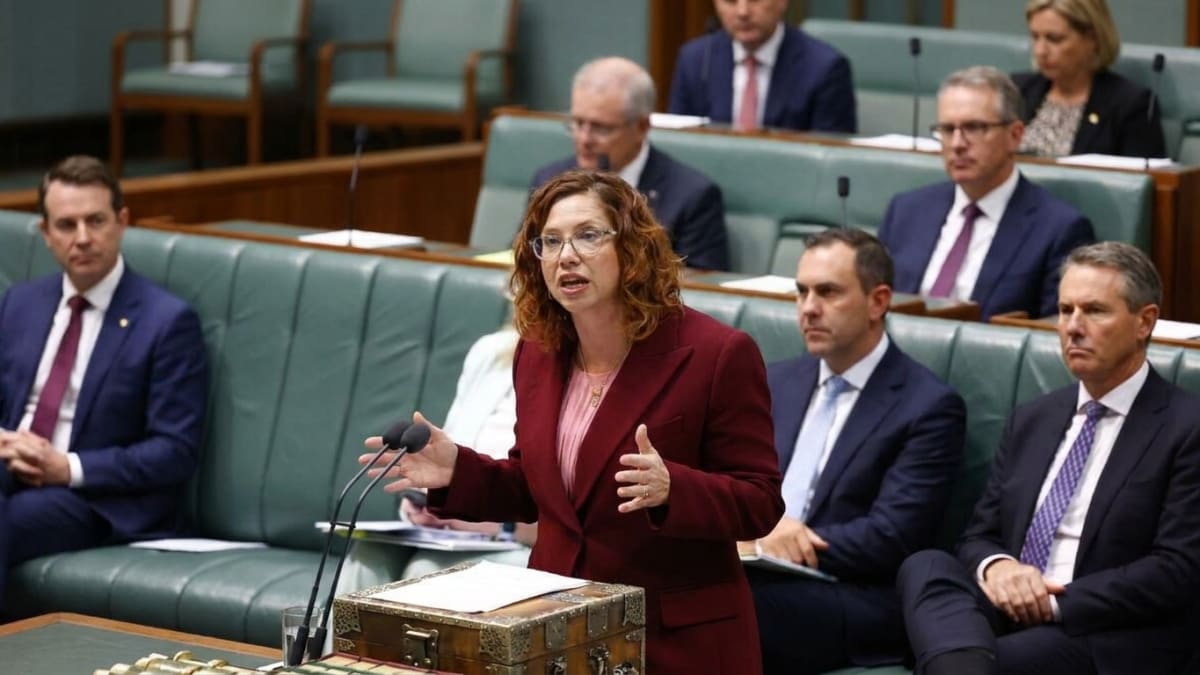
Minister for Employment and Workplace Relations Amanda Rishworth said the findings were clear. Rishworth said the AI and Employment in Australia report shows artificial intelligence is not currently causing upheaval in the labour market.[2] The report found no major shifts in job types across occupations through February 2026.[2]
How the report was built
The Office of the Chief Economist wrote the report for DEWR, drawing on ABS Labour Force Survey data and Jobs and Skills Australia's Internet Vacancy Index.[1] The methodology combines descriptive statistics, a core statistical model and robustness tests, making it a multi-dimensional monitoring framework rather than a single snapshot.[1]
The report builds on Jobs and Skills Australia's 2025 Generative AI Capacity study, adding an analytical layer to work already in the system.[1] The framework is designed to monitor current labour market developments, not to forecast future outcomes, a distinction that matters when reading the conclusions.[1]
AI-exposed occupations: still growing, just slower
Since November 2022, employment in the occupations most exposed to AI grew by 5.6%, compared with 9.5% growth in the occupations least exposed to AI.verifiedVerified Source: ministers.dewr.gov.au[2] That is a meaningful gap, nearly four percentage points, but it is a gap in growth rates, not a contraction. AI-exposed roles are not shrinking in Australia; they are simply expanding more slowly than their less-exposed counterparts.
Rishworth framed this as a reason for measured confidence rather than alarm. Rishworth said AI could yet reshape the jobs market in Australia, but the report shows labour market conditions remain strong by historical standards, youth outcomes have mostly held up, and occupational reshuffling has not accelerated.[2] The qualifier matters: "could yet" is doing real work in that sentence.
Where the tension lies
Global tech companies including Google, Microsoft and Meta have made high-profile workforce cuts attributed in part to AI-driven efficiency, yet Australia's aggregate numbers have not registered that pressure in any measurable way.[2] That gap between headline-grabbing layoffs and stable national statistics is exactly the kind of signal that aggregate data are poorly suited to catch early.
The Australian HR Institute's December 2025 WorkOutlook survey adds texture the official report cannot. The AHRI survey found 19% of employers reported a decrease in entry-level roles due to AI, while 41% reported an increase.verifiedVerified Source: ahri.com.au[3] That 19% is not a majority, but it represents a fifth of employers already adjusting hiring behaviour at the entry level, precisely where workers have the least bargaining power and fewest alternative pathways.
The tension between the two data sets is not a contradiction. Employer surveys capture intent and early-stage adjustment; the ABS Labour Force Survey captures what has already happened across the full economy. One runs ahead of the other by design.[1]
What the monitoring framework does not tell you
The Office of the Chief Economist was explicit that the framework monitors current conditions rather than forecasts future ones.[1] That is an honest scoping of what quantitative labour market data can reliably do. It also means the report offers no view on whether the 5.6% versus 9.5% growth gap widens, stabilises or closes over the next two years.
Economists working on AI and labour markets have long said that AI's augmentative potential may generate productivity gains and new roles in higher-skilled occupations even as it trims demand for routine tasks, a dynamic the current monitoring framework is not built to distinguish at an occupational level. The DEWR report is a floor, not a ceiling, on what policymakers need to understand.
The minister's position and what comes next
Rishworth's public statements on 8 July 2026 were careful not to declare the AI employment question settled.[2] The government's posture is watchful rather than reassured, with monitoring ongoing and the framework set to be updated as more data become available. What the report does close off is the most alarmist version of the argument: that AI has already caused a structural break in Australian employment conditions.
The AHRI WorkOutlook survey covered the December quarter of 2025, and the DEWR report's data runs through February 2026, both current as of the publication date of 8 July 2026.[3]
SOURCES & CITATIONS
FREQUENTLY ASKED QUESTIONS
What did the AI and Employment in Australia report find?
Are AI-exposed occupations losing jobs in Australia?
What does the AHRI WorkOutlook survey show about entry-level roles?
Does the report forecast what AI will do to Australian jobs in the future?
Takeshi Mori writes about technology and start-ups. He is curious about how products get built and who they are really for, and he would rather see a thing working than hear it described.