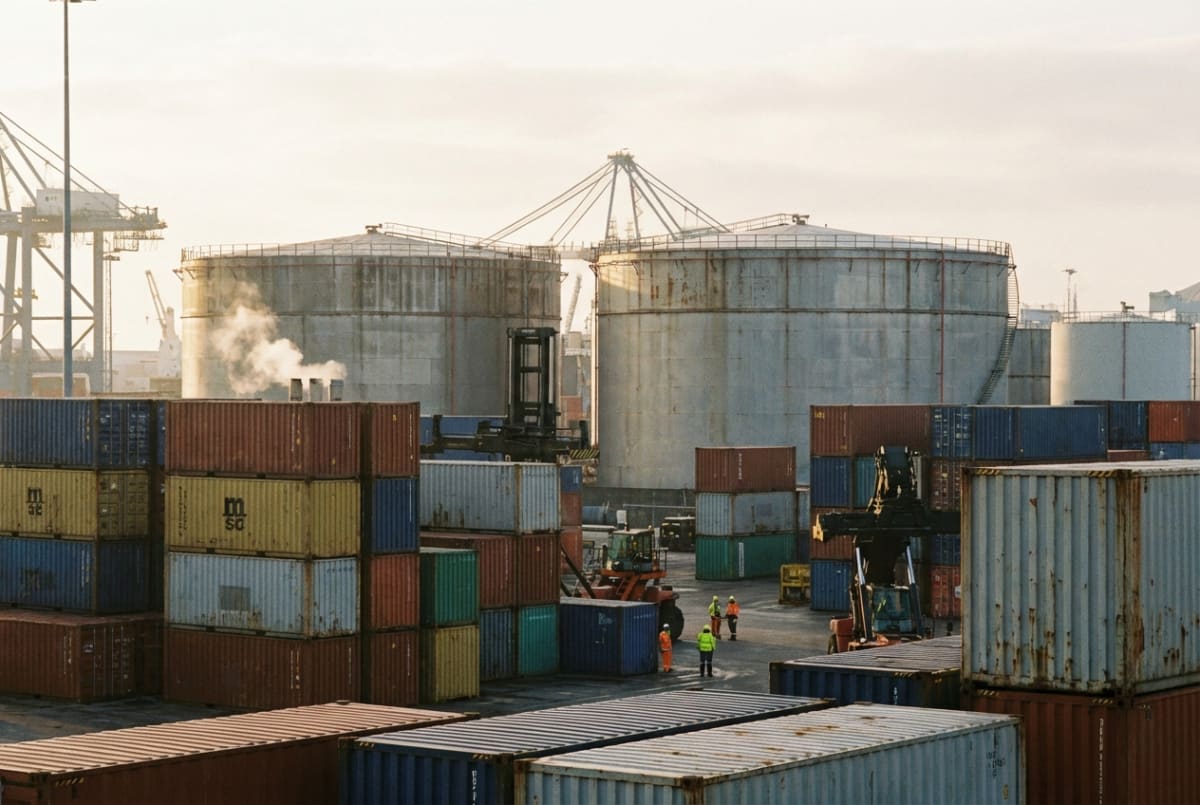
I've been telling anyone who will listen that Australians are three years behind on EV adoption. Then the Strait of Hormuz closed and suddenly everyone wants to talk about electric cars.
TLDR
The Iran war and Strait of Hormuz blockade have pushed crude oil past US$100 a barrel, sending Australian petrol prices above $2.40 a litre. EV market share hit a record 11.8% in February 2026. Chinese brands BYD, GWM, Chery and MG now occupy four of Australia's top 10 selling positions. BYD's second-generation blade battery can charge from 10% to 70% in five minutes.
KEY TAKEAWAYS
With crude oil past US$100 a barrel and some analysts predicting US$150, the maths has changed. Petrol is hitting $2.40 a litre in capital cities. Nigel, a farmer from regional Victoria, is now seriously looking at EVs for the first time. He runs 11 vehicles on his property and is considering solar panels to power charging. His annual running cost estimate for an EV: $100.
That is not a typo. One hundred dollars.
The numbers tell the story
Federal Chamber of Automotive Industries data shows EVs hit 11.8% market share in February 2026. That is a record monthly share, up from 8.3% for all of 2025. Plug-in hybrids and the Tesla Model Y both grew more than 20% month-on-month.
But here is the context that matters: only 2% of all cars on Australian roads are electric. We are not witnessing a revolution. We are witnessing the revolution finally getting started, propelled by a fuel crisis that nobody planned for.
FCAI chief executive Tony Weber put it bluntly: EV sales in 2025 were 8.3%, up only 1.1 percentage points since 2023. That is glacial. February's spike suggests external pressure works better than policy incentives.
Chinese brands are winning
Here is the number that should make Toyota and Mazda nervous: last month, China overtook Japan as Australia's largest source of new cars. First time ever.
Since 2020, more than 10 Chinese brands have entered the Australian market. Six launched in the past two years. In the 12 months to February 2026, four Chinese brands ranked in Australia's top 10 sellers: BYD at sixth, GWM at seventh, Chery at ninth, and MG at tenth.
Electric vehicles always make sense, but they are making more sense now because people can see the financial benefits.
— Paul Ellis, BYD spokesman
John Kett, chief operating officer at GWM Australia, confirmed the spike is real. Cost-of-living pressures are pushing consumers toward cheaper vehicles, and Chinese brands are positioned to capture that demand.
I drive a BYD Seal. I have watched the brand go from unknown to ubiquitous in three years. The quality is there. The tech is competitive. The prices undercut European and Japanese alternatives by $10,000 to $20,000 on comparable models.
The battery tech nobody is talking about
Earlier this month, BYD announced its second-generation blade battery. The headline spec: 10% to 70% charge in five minutes. That is not marketing fluff. That is 1,500 kW charging at 1,000 volts.
To put that in perspective, most Australian public chargers operate at 50 kW to 350 kW. Tesla Superchargers max out around 250 kW. BYD is talking about infrastructure that charges six times faster than the fastest thing most Australians have access to.
The second-gen blade battery also works in extreme cold. BYD claims 20% to 97% charge in 12 minutes at minus 20 degrees Celsius. For Australian conditions, cold performance rarely matters. But this is about building a global product, and BYD is designing for Norway as much as New South Wales.
BYD plans to deploy 20,000 flash charging stations in China this year, including 2,000 highway stations covering one-third of service areas. Whether that infrastructure comes to Australia is another question. BYD Australia has not confirmed the new battery will reach local models.
What they are not telling you
A few things to keep in mind before you assume China has already won.
First, those 5-minute charging times require specific BYD charging infrastructure. Standard public chargers will not deliver those speeds. BYD is building a walled garden: fast charging for BYD owners, everyone else waits.
Second, Australia is being used as a testing ground. Tu Le, founder of Sino Auto Insights, described Australia as a 'pressure release valve' for Chinese brands facing brutal competition at home. We have almost no tariffs and no quotas. Chinese automakers are using Australia to refine their approach before tackling Europe and North America, where regulatory barriers are higher.
Cut-throat competition in China is forcing brands to look to places such as Australia as a pressure release valve.
— Tu Le, founder, Sino Auto Insights
Third, servicing is still a question mark. Prime Minister Anthony Albanese warned this week that new market entrants need to meet Australian standards on service, not just rely on sales volume. That is a polite way of saying some Chinese brands have struggled with aftersales support, parts availability, and warranty response times.
Fourth, the 5-minute charge claim is impressive but comes with asterisks. That is 10% to 70%, not empty to full. At 70% state of charge, you are looking at maybe 350 to 400 kilometres range depending on the model. Enough for most use cases, but not quite the petrol station experience of 800 kilometres from a full tank.
The fuel crisis as accelerant
Angela, a Melbourne buyer, summed up the shift. Her family had been interested in EVs for years but rising fuel prices pushed them to seriously consider the switch. Three generations of her family now agree it is worth the investment.
This is how adoption curves work. They stay flat until external pressure creates urgency. COVID accelerated remote work adoption by a decade. The Strait of Hormuz blockade is doing the same thing for EVs.
Tapan Patel, a Melbourne business development manager, chose BYD specifically because of its battery-making heritage. BYD started as a battery company in 1995 before moving into vehicles. That depth of supply chain integration is why their battery tech is ahead.
The shift in perception toward Chinese brands matters as much as the shift toward EVs. Five years ago, 'Chinese car' meant cheap and unreliable. Now it means affordable, technologically advanced, and increasingly desirable. That is a brand transformation most Western marketers would kill for.
What happens next
If oil stays above US$100 a barrel, expect EV market share to keep climbing. March sales data will arrive in a few weeks and will likely show another record. The fuel crisis started in early March, so February numbers only captured the beginning of the spike.
The bigger question is what happens when oil prices eventually stabilise. Does interest in EVs fade, or has the crisis created a permanent shift in consumer consideration? My bet is the latter. Once someone genuinely considers an EV, they rarely go back to assuming their next car will be petrol.
The infrastructure gap remains Australia's biggest obstacle. We have 4,500 public charging stations for a country of 26 million people spread across 7.7 million square kilometres. By comparison, the Netherlands has 144,000 charging points for a country smaller than Tasmania.
But infrastructure follows demand. The fuel crisis is creating demand. And Chinese manufacturers have both the products and the pricing to meet it. Whether Australian consumers embrace that reality willingly or get pushed into it by geopolitics, the direction is now clear.
BYD sold 3.3 million vehicles globally in 2025, overtaking Tesla as the world's largest EV maker by volume. Four of Australia's top 10 selling brands are now Chinese. The second-generation blade battery charges faster than anything on the market. The March sales data drops in three weeks.
SOURCES & CITATIONS
FREQUENTLY ASKED QUESTIONS