TLDR
EY-Parthenon modelling warns an H5N1 incursion into Australian commercial poultry could cut GDP by up to $6.2 billion and push a carton of eggs from $6.40 to $11.20. More than 730 wildlife detections have been confirmed since June 2026, but no commercial flock has been infected.
Three scenarios, one supply-chain warning
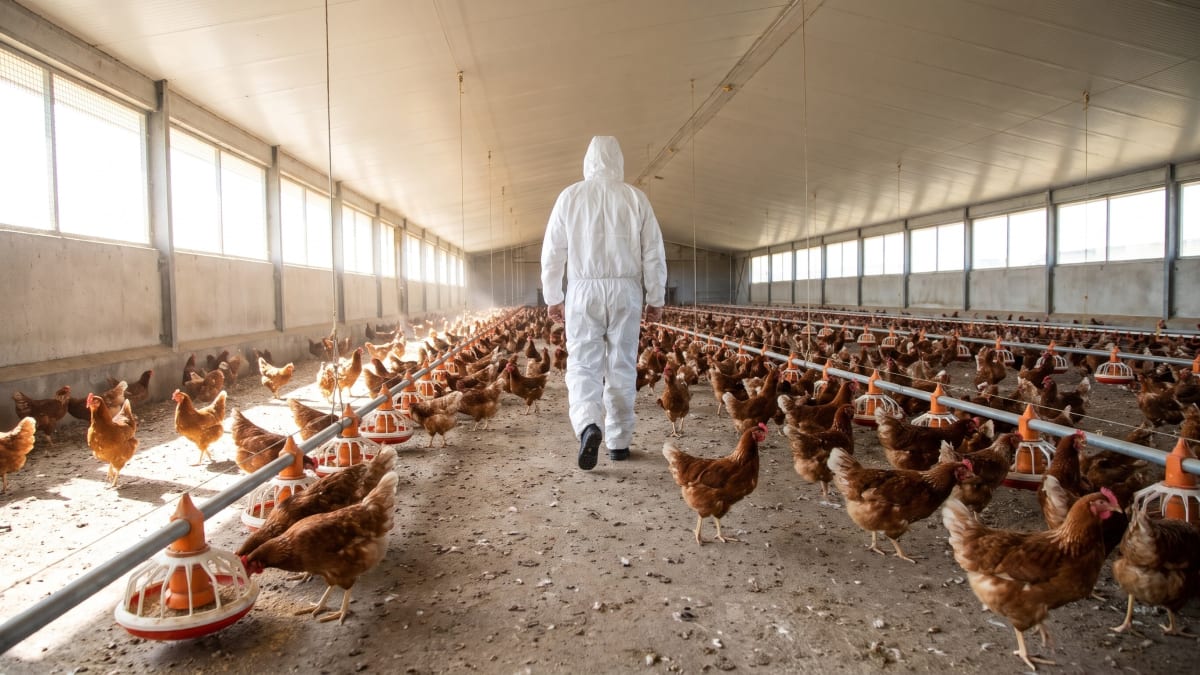
EY-Parthenon released scenario modelling on 11 November 2026 testing three hypothetical paths if H5N1 enters Australia's commercial poultry flocks: a contained outbreak, disruption to shared infrastructure such as breeders, hatcheries, processors and freight, and an interrupted recovery involving further outbreaks before the industry has stabilised.[1] The modelling is a scenario analysis rather than a forecast that an outbreak will occur.
Real GDP would sit $0.7 billion below baseline over 2026 to 2028 in the contained scenario, $3.0 billion lower if shared supply-chain capacity is disrupted, and $6.2 billion lower under interrupted recovery.[1] Average annual employment losses run from 495 full-time equivalent jobs in the contained case to 5,629 in the most severe, with peak egg and poultry prices rising roughly 10 per cent, 35 per cent and 76 per cent respectively across the three scenarios.
Patrick Huynh, EY Australia partner, said the biggest economic risks emerge when disruption extends beyond individual farms and reaches the shared infrastructure supporting production across the industry.[7] Huynh said the faster outbreaks can be contained, and the more effectively critical supply chains continue operating, the smaller the impact on businesses and households.
What those price rises mean at the checkout
In the severe interrupted-recovery scenario, a $6.40 carton of eggs would reach approximately $11.20, chicken breast would rise from $11.00 to $19.25 per kilogram, and a rotisserie chicken would climb from $13.00 to $22.75.[1] The report notes that exposure extends well beyond individual farms, because shared grading, processing, freight, breeding and hatching capacity can prevent otherwise healthy producers from getting product to market.
Where H5N1 stands in Australia now
Australia's first mainland H5 detection was a brown skua found near Esperance, Western Australia, with CSIRO confirmation announced on 20 June 2026.[2] Agriculture, Fisheries and Forestry Minister Julie Collins said at the time: "This is the highly pathogenic strain of concern that has been circulating globally, and is the first detection in Australia."
More than 730 confirmed wildlife events had been recorded as at 12 November 2026, spanning multiple jurisdictions and including mass-mortality events and limited mammal detections.[3] No commercial poultry flock or other agricultural livestock has been infected in Australia, and food authorities say chicken and eggs remain safe to eat when handled and cooked correctly.
What past outbreaks showed about prices
Australia's 2024 H7 experience provides a partial domestic comparison. Eight Victorian poultry properties were affected, yet the Australian Bureau of Statistics recorded egg prices 9.1 per cent higher over the year to the September 2024 quarter, attributing the rise to shortages caused by the bird-flu outbreak.[6] Meat and seafood prices rose only 0.4 per cent over the same period, with no comparable broad chicken-price shock recorded.
In the United States, the HPAI wave from October 2024 through March 2025 saw the loss of 50.7 million laying hens, with retail egg prices reaching around US$6 a dozen in early 2025.[5] Broiler prices moved far less: the USDA recorded a March 2025 national composite of 131.92 US cents per pound, roughly 3 cents above the 2024 level.
Government and industry response
The National Management Group committed in July 2026 to cost-share up to $24.8 million for the initial wildlife response, covering investigation, laboratory testing, enhanced surveillance, public reporting and engagement with veterinarians and wildlife carers.[4] The Commonwealth said it had committed more than $113 million since 2024 to H5 preparedness, surveillance and response capability.
KEY TAKEAWAYS
SOURCES & CITATIONS
- EY-Parthenon bird flu modelling: From chook sheds to the checkout
- Minister Collins media release: Confirmed H5 bird flu in Australia
- Australian Government bird flu reporting dashboard
- National Management Group communique, 21 July 2026
- USDA ERS Livestock, Dairy and Poultry Outlook, April 2025
- ABS Consumer Price Index Australia, September quarter 2024
- EY-Parthenon bird flu modelling newsroom release
FREQUENTLY ASKED QUESTIONS