
TLDR
The federal government has opened consultation on how it will build a government-owned stockpile of one billion litres of diesel and jet fuel by 2030, funded by 3.2 billion dollars set aside in the 2026-27 Budget. Nothing has been built yet: the reserve is a proposal out for industry comment, alongside plans to lift mandatory stockholdings and support the last two refineries.
Canberra puts a government-owned stockpile out for consultation
Australia held roughly 37 days of diesel cover as of late June. That number is the margin between normal freight and a cascade of shortages across food, construction and mining if a supply shock hits before the next tanker arrives.[1] Climate Change and Energy Minister Chris Bowen, Infrastructure Minister Catherine King and Agriculture Minister Julie Collins jointly announced the government's response: a government-owned fuel reserve, something Australia has never had before.[2]
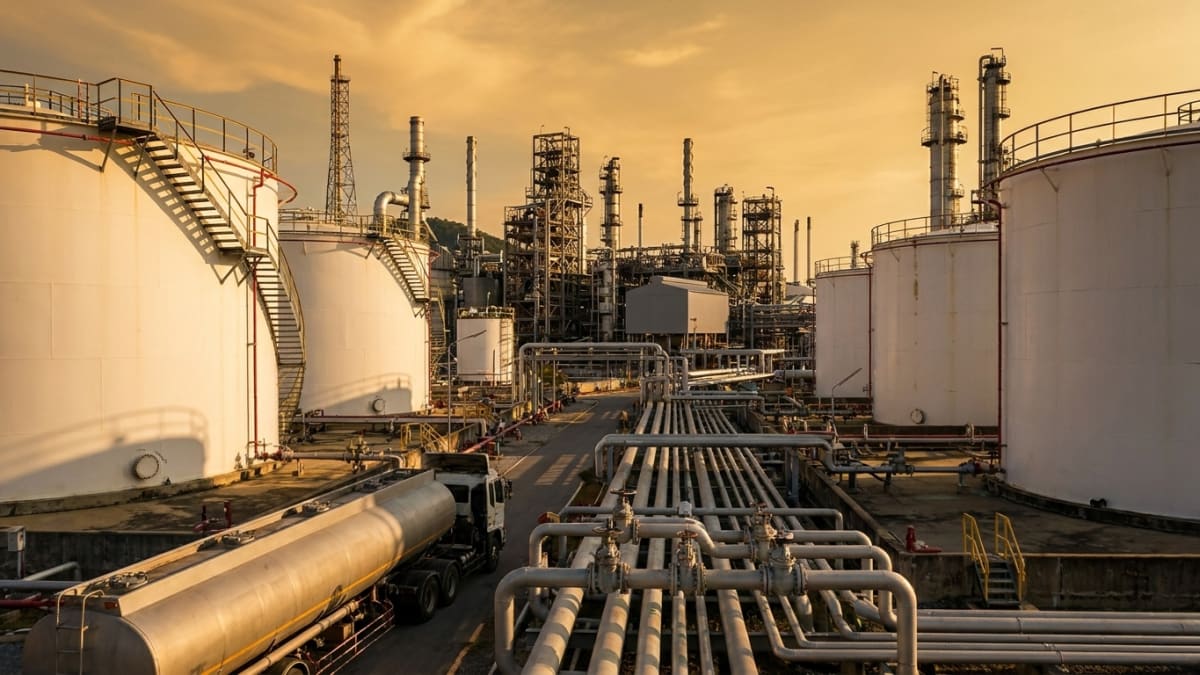
The Australian Fuel Security Reserve will hold around one billion litres of diesel and jet fuel at a cost of 3.2 billion dollars, making it the single largest sovereign fuel holding the country has attempted.[2] Three ministers on the same release signals this is not being treated as an energy portfolio matter alone; it cuts across infrastructure and agricultural supply chains as well.
Where the 14.8 billion dollars is going
The reserve draws from the broader 14.8 billion dollar Strengthening Australia's Fuel Resilience package, announced in the 2026-27 Budget, which also includes a 7.5 billion dollar Fuel and Fertiliser Security Facility.[3] The fertiliser facility matters because food production is as exposed to diesel and ammonia feedstock shortfalls as the road freight network.
The package also raises the minimum stockholding obligation to 50 days, a statutory floor that importers and refiners must maintain rather than run lean.[3] The gap between 37 days recorded in late June and the 50-day requirement is the target the reserve is designed to close. Consultation has also opened on how to implement the reserve in practice, and whether feasibility studies should support Australia's two remaining refineries beyond 2030.[2]
The global picture driving the decision
Overall refinery crude oil processing ran about five million barrels per day below year-earlier levels in July, as tanker disruptions in the Strait of Hormuz and reduced Russian exports cut global refining output, according to the International Energy Agency.[4] That shortfall flows directly into spot diesel markets and, eventually, into prices paid at the truck stop and the mine gate.
The US diesel crack spread topped 100 US dollars a barrel for the first time, reaching a record 102.20 US dollars, driven by Middle East and Ukrainian conflict disruptions and peak agricultural demand.[4] Australia imports a large share of its refined products, which makes it a price-taker in that environment. Building physical stocks onshore is one of the few levers a mid-sized economy can pull unilaterally.
Bowen said that investing in onshore sovereign fuel refining capability is a sensible and prudent response to secure Australia's energy security at a time when overseas conflicts demonstrate the fragility of energy supply chains.[5] At a press conference in Sydney, Bowen said Australians can take confidence that while international instability continues, so does Australia's fuel security.[1]
What it means for the economy
Diesel moves freight between ports, farms, supermarket distribution centres and building sites. A shortfall does not show up as a single line item; it widens costs across every sector that depends on road or rail transport, which is nearly all of them.
Australia held about 37 days of diesel cover as of late June, up from around 36 days a week earlier, demonstrating the growing buffer provided by expanded stockholding obligations.[1] That incremental movement from 36 to 37 days in a single week shows the existing obligation is working at the margins. The reserve is designed to provide a step-change rather than a marginal improvement, moving the country past the 50-day threshold that most comparable economies treat as a minimum.
The Fuel and Fertiliser Security Facility adds a dimension that goes beyond transport. Fertiliser production relies on natural gas and oil-derived feedstocks, so a sustained disruption to refined product imports would eventually affect planting seasons and domestic food prices. That linkage is why Agriculture Minister Collins is named alongside Bowen and King, and why the package spans two separate facilities rather than one consolidated reserve.
Refinery consultation and the longer horizon
Australia now operates two refineries, both built when the country had a larger domestic refining base. The open consultation on supporting those facilities past 2030 through feasibility studies signals the government is at least considering whether to underwrite continued domestic refining rather than relying entirely on import infrastructure.[2] No commitment to extend refinery support has been made; the consultation is the first step.
A separate stream on low-carbon liquid fuels sits inside the same review, which suggests the government is trying to run the security and decarbonisation tracks in parallel rather than treating them as sequential. The practical tension between building sovereign diesel stocks and reducing diesel dependence is not resolved in the current announcement, and the consultation process will need to address it. For now, the numbers that matter are 37 days of cover today, a 50-day obligation coming, a one billion litre reserve being designed, and a 14.8 billion dollar package committed in the 2026-27 Budget.
KEY TAKEAWAYS
SOURCES & CITATIONS
- Minister for Climate Change and Energy press conference, Sydney
- PM media release: Government securing more fuel reserves
- Minister for Infrastructure: Strengthening Australia's fuel resilience
- IEA slashes 2026 supply forecast as Hormuz reopening remains elusive
- PM media release: First step announced to develop potential new oil refinery in Australia
FREQUENTLY ASKED QUESTIONS
What is the Australian Fuel Security Reserve?
What is the new minimum stockholding obligation?
Why is global diesel supply so tight right now?
What is the Fuel and Fertiliser Security Facility?
Elias Thorne writes about interest rates, the bond market and the Reserve Bank. He is interested in what monetary policy actually does to household budgets, and in the long stretches of economic history that tend to repeat.