You might not know where Ras Laffan is. But you're about to feel it in your bank account.
TLDR
Iranian missile attacks damaged Qatar's Ras Laffan facility, which supplies 20% of global LNG. UK gas prices jumped 11.3% in one day. Recovery could take 3-5 years. Even though Qatar supplies less than 2% of UK gas directly, global shortages will push wholesale prices up and electricity bills with them. Experts say government intervention may be needed to protect households from price shocks similar to the 2022 energy crisis.
KEY TAKEAWAYS
Iranian missile strikes hit Qatar's main liquefied natural gas facility this week, knocking out 17% of the world's LNG supply. QatarEnergy says repairs will take three to five years. UK gas prices jumped 11.3% in a single day Thursday, hitting 154.8 pence per therm. European prices climbed more than 10%.
If you're thinking "I don't use gas", think again. Gas sets the price for wholesale electricity in the UK, regardless of whether you heat your home with solar panels or charge your EV on wind power. When gas goes up, electricity goes up. That's how the market works.
Why Qatar matters
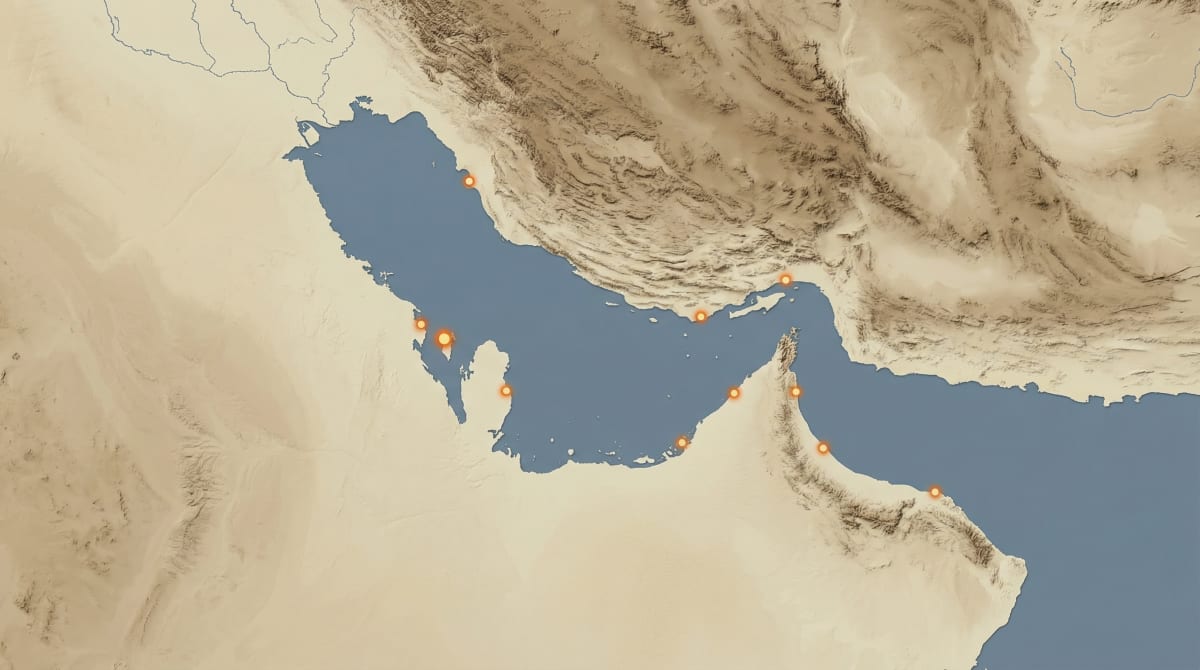
Qatar's Ras Laffan Industrial City sits 80 kilometres north-east of Doha. It processes about a fifth of the world's LNG supply. Before the strikes, analysts expected a short disruption with production back to normal by mid-2026.
Those expectations have been shattered. Wood Mackenzie's Kristy Kramer, head of LNG strategy, said the attacks "fundamentally reshape global LNG outlook" and recovery is "likely significantly extended." Market expectations of a controlled restart now appear "increasingly unlikely."
The attacks fundamentally reshape global LNG outlook. Recovery is likely significantly extended, and market expectations of a controlled restart now appear increasingly unlikely.
— Kristy Kramer, Head of LNG Strategy, Wood Mackenzie
Shell's Pearl gas-to-liquids facility took extensive damage in the first wave. A second attack caused "sizeable fires and extensive further damage" to several LNG facilities, according to QatarEnergy's statement. No casualties were reported, but the financial hit is brutal. Qatar's Minister of State for Energy Affairs pegged the annual revenue loss at $20 billion.
The UK connection
Here's the part that matters for your wallet. The UK gets less than 2% of its gas directly from Qatar. Norway supplies three-quarters of UK imports, the US another 17%. So why does Qatar's crisis hit British households?
Because energy markets are global. When 20% of the world's LNG supply goes offline for years, everyone competes for what's left. Prices rise everywhere, not just in countries that buy Qatari gas.
Gas made up 26.8% of UK electricity generation in 2025, according to the National Energy System Operator. Ofgem uses gas as the "marginal source of power" to set wholesale electricity prices. When gas costs more, electricity costs more, regardless of where the electrons actually come from.
What happens next
Nick Butler, former BP head of strategy and adviser to Gordon Brown, says the government will need to step in. "In the short term, someone is going to have to pay more and we need to be planning for that. I think now we've come to a stage where the government will have to come in with a plan for energy security and a plan for protecting people who are going to pay these higher prices in two or three months' time as the market works through."
The IEA projects global gas demand growth will re-accelerate to 2% in 2026 after slowing in 2025. Asian markets are expected to account for half of that incremental demand. With Qatar's supply offline for years, the squeeze is real.
Matthieu Favas, commodities editor at The Economist, called the price surge "huge" but noted prices remain well below the peaks seen after Russia invaded Ukraine. Prices remain below those peaks, which offers some perspective. The bad news is this disruption could last longer than the early days of that conflict.
What this means for your money
Your energy bills are going up. How much depends on how long Qatar stays offline and whether other producers can fill the gap quickly. The US and Qatar were set to add about 300 billion cubic metres per year of new LNG capacity by 2030, accounting for 70% of global additions. Qatar's chunk of that expansion is now delayed by years.
If you're on a fixed energy tariff, you're protected until it expires. If you're on a variable rate or your fixed deal ends soon, start budgeting for higher bills. The market is pricing in sustained elevated prices, not a quick bounce back.
Watch for government announcements on price caps or support schemes. Butler's prediction of intervention in two to three months aligns with how long it takes wholesale price increases to filter through to retail bills. If prices stay high, expect political pressure for measures similar to what we saw in 2022.
For households, the calculus is simple: global energy supply just took a multi-year hit. Prices reflect that reality, and households should prepare for higher bills over the coming months.
SOURCES & CITATIONS
- QatarEnergy statement on missile attacks
- Qatar says Iran attack caused significant damage at Ras Laffan gas facility
- Wood Mackenzie: Ras Laffan attacks fundamentally reshape global LNG outlook
- Missile attacks cause estimated loss of $20 billion in annual revenue - Peninsula Qatar
- Britain's Energy Explained: 2025 Review - National Energy System Operator
- Coming surge in LNG production is set to reshape global gas markets - IEA
FREQUENTLY ASKED QUESTIONS