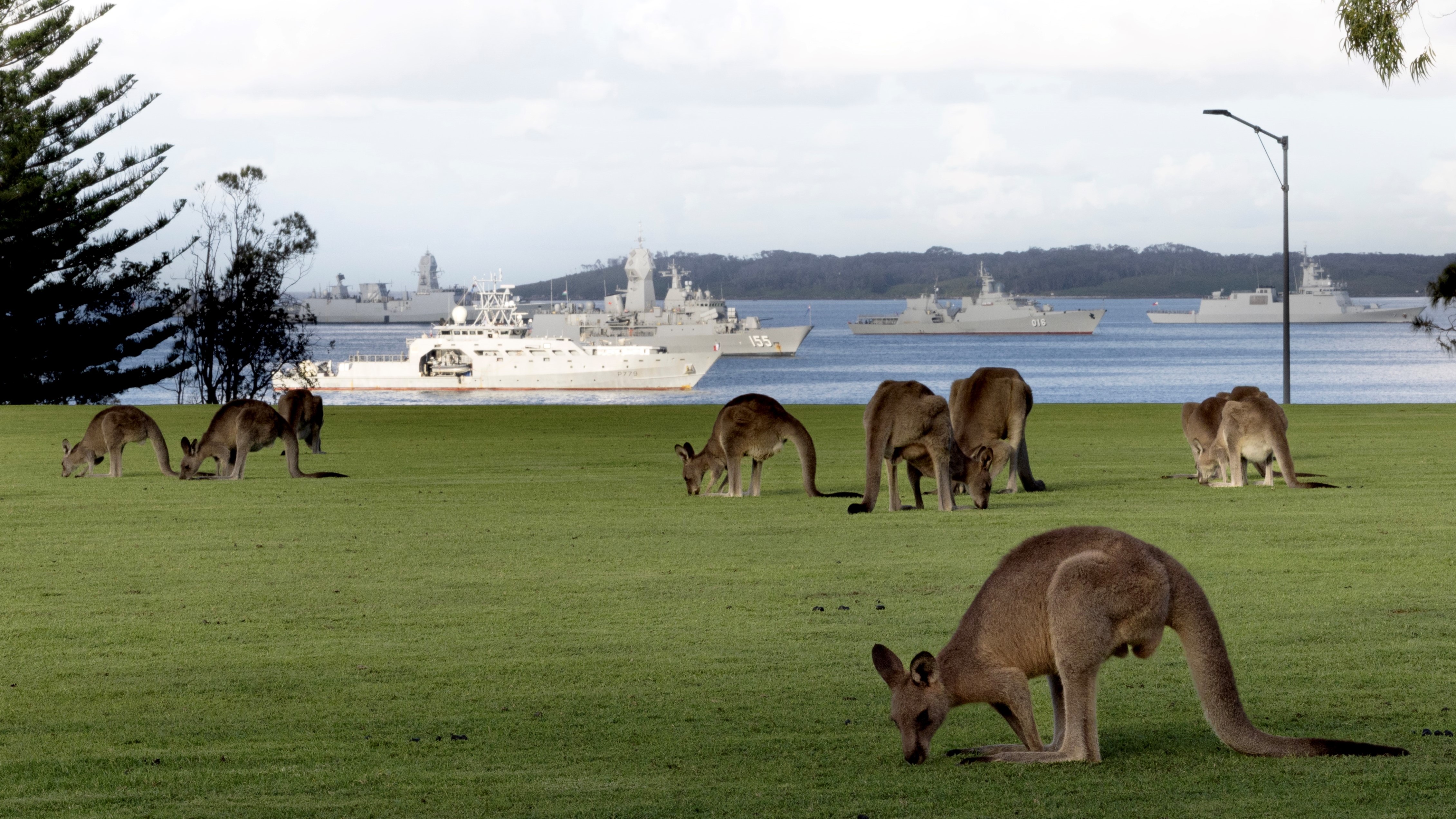
The waters off Sydney Harbour filled with grey hulls and white wakes on Saturday morning as 31 warships from 19 nations made their ceremonial entry for the 2026 Exercise Kakadu Fleet Review. It was the largest gathering of foreign naval vessels in Sydney since the centenary celebrations of 2013.
TLDR
Sydney Harbour became the backdrop for Australia's largest naval gathering in over a decade on Saturday, as 31 warships from 19 countries assembled for the Exercise Kakadu Fleet Review. The event marks 125 years since the formation of the Commonwealth Naval Forces. With conflict raging between Israel and Iran, war grinding on in Ukraine, and tensions elevated across the Taiwan Strait, the exercise carries strategic weight that extends well beyond ceremony.
KEY TAKEAWAYS
The occasion marked 125 years since the formation of the Commonwealth Naval Forces, the precursor to today's Royal Australian Navy. But the timing made this more than anniversary pageantry.
A Fleet Review in Wartime
Just hours before the ships filed through Sydney Heads, Israel launched fresh strikes on Tehran and Beirut. The Strait of Hormuz, through which much of Australia's fuel imports transit, remains contested. The war in Ukraine grinds into its fourth year with no resolution in sight. Across the Taiwan Strait, military activity has intensified as Beijing continues what analysts describe as 'grey zone' pressure campaigns.
Against this backdrop, a ceremonial fleet review takes on different meaning. The ships anchored off Garden Island and Rose Bay represent nations that would likely operate together if any of these flashpoints escalated into broader conflict.
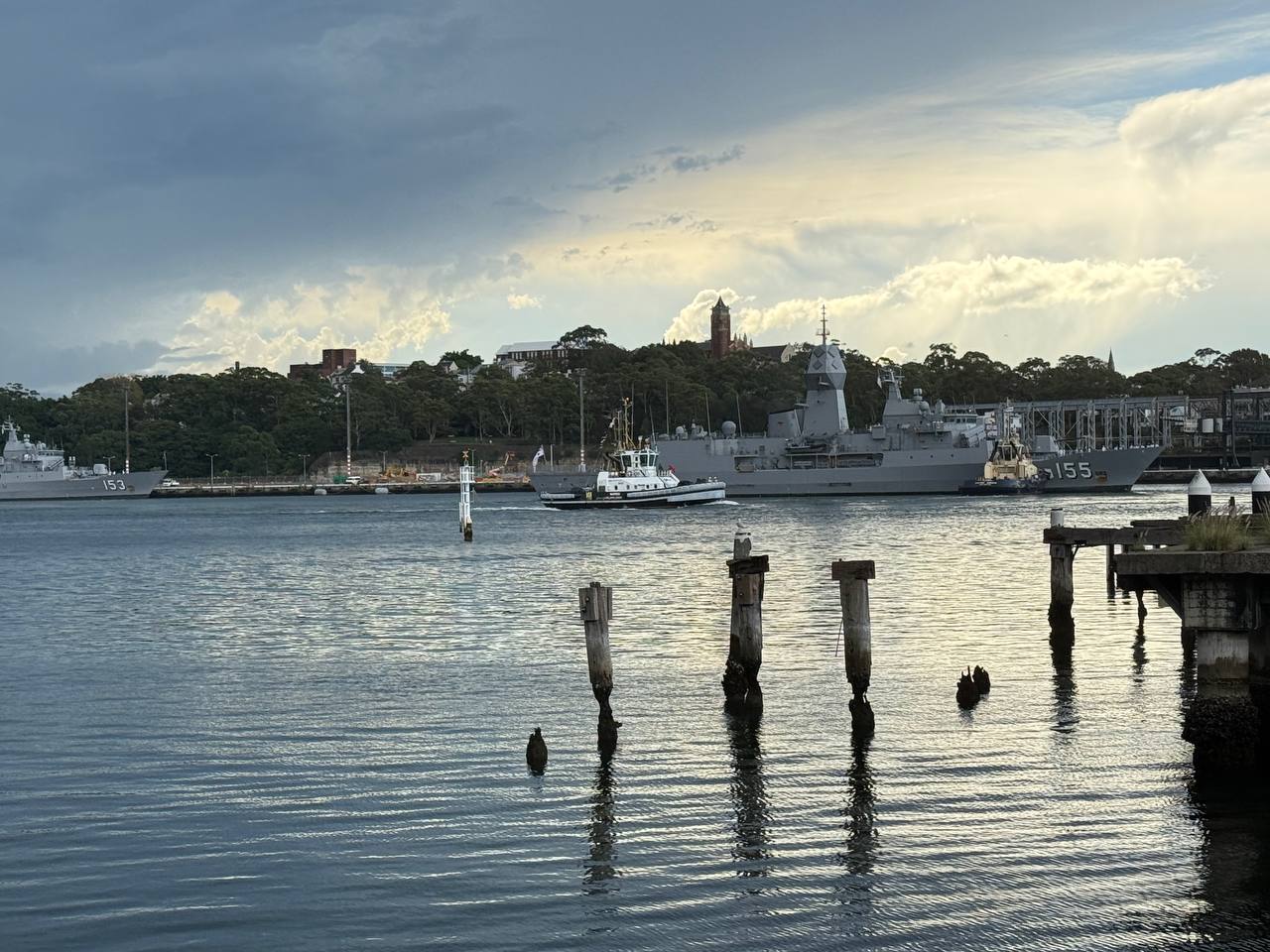
HMAS Ballarat (FFH 155) and HMAS Stuart (FFH 153) at anchor in Sydney Harbour.
Japan, India, Indonesia, Singapore, Vietnam, the Philippines: every one of these nations has a direct stake in what happens if China moves on Taiwan. Every one has participated in security dialogues, freedom of navigation exercises, and intelligence sharing arrangements that accelerate when regional temperatures rise.
Exercise Kakadu is officially a training exercise. The scenarios and partnerships being tested suggest it could serve as more than that if circumstances demanded.
The Review
Governor-General Sam Mostyn, accompanied by Deputy Prime Minister Richard Marles, Chief of Defence Force Admiral David Johnston, and Chief of Navy Vice Admiral Mark Hammond, boarded HMAS Leeuwin to conduct the ceremonial inspection.
The reviewing ship, a hydrographic surveyor last used in this role during the 2013 Fleet Review, proceeded past each anchored and berthed vessel, receiving ceremonial salutes as it passed. One column of ships sailed through the main channel, passing Leeuwin as they headed west toward the Harbour Bridge.
The Fleet Review highlights the depth of our partnerships across the region. The strength of these relationships and the importance of working together to ensure a secure maritime domain, that's what you see here today.
— Vice Admiral Mark Hammond AO RAN, Chief of Navy
The language of partnership and cooperation sounds diplomatic. But when the Chief of Navy talks about 'ensuring a secure maritime domain', the implication is clear: these are the nations Australia would fight alongside if the Indo-Pacific order fractures.
19 Nations, One Harbour
The assembled fleet read like a roll call of Indo-Pacific naval power. Alongside Australia, vessels arrived from India, Japan, Indonesia, Malaysia, the Philippines, Singapore, Thailand, Vietnam, Canada, France, New Zealand, Fiji, Papua New Guinea, Tonga, Kiribati, Samoa, and the Cook Islands.
The Indonesian Navy deployed KRI Raden Eddy Martadinata-331, carrying personnel from the elite Kopaska frogman command. Japan sent destroyers bearing hull numbers visible from the shoreline. Ships from India, Malaysia, the Philippines, Thailand and Vietnam transited together from Darwin under the command of HMAS Choules.
That transit, covering thousands of nautical miles through contested waters, was itself a training exercise. As Captain Darin MacDonald, commander of the Australian Maritime Task Group, noted: "Exercising with regional partner nations strengthens our ability to operate together at sea. It builds trust, mutual understanding and interoperability between our forces."
Interoperability is the technical term. The plain English version: when ships from different nations need to operate as a combined force, they need to have practised together. Radio protocols, fuel transfers, coordinated manoeuvres, rules of engagement. All of this must be drilled until it becomes second nature.
The Aerial Display
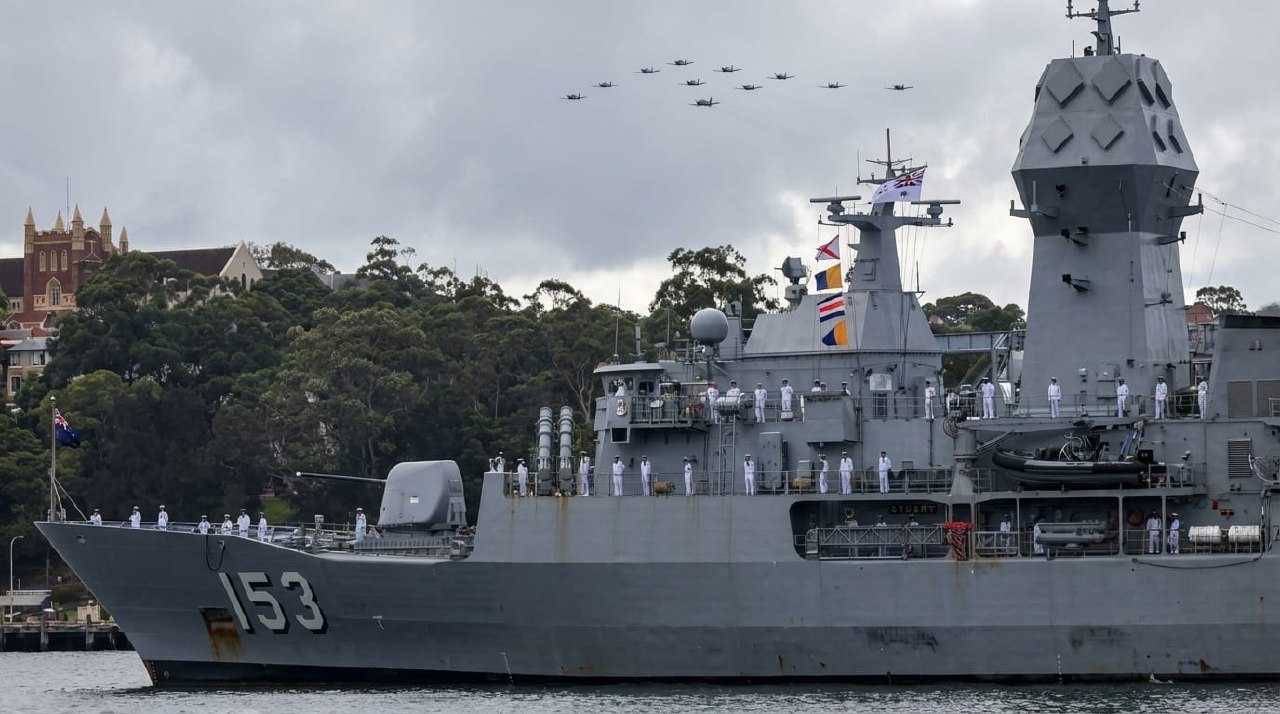
HMAS Stuart with helicopter formation overhead.
The centrepiece of the afternoon program came between 2:45pm and 3:15pm, when the Royal Australian Air Force joined the Navy for a combined aerial display over Sydney Harbour.
F/A-18F Super Hornets, EA-18G Growlers, and F-35A Lightning II jets traced paths across the harbour, their contrails visible from vantage points stretching from Mrs Macquarie's Chair to Bradleys Head. MH-60R Seahawk helicopters flew in formation, their echelon pattern silhouetted against cumulus clouds.
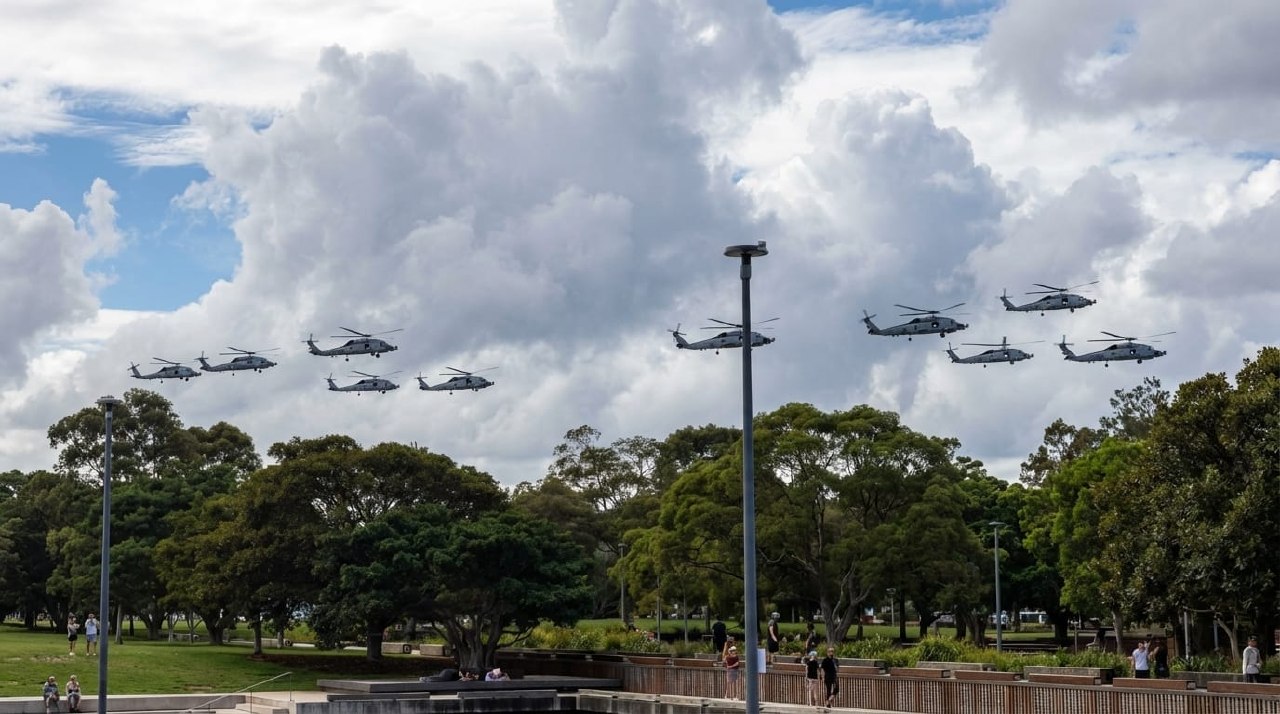
MH-60R Seahawks in formation over Sydney as spectators watch from below.
A ceremonial gun salute at 3:45pm punctuated the review, with the sound rolling across the water and echoing off the harbour's sandstone cliffs.
Why This Matters Now
Australia has spent the past decade pivoting its defence posture. AUKUS brought nuclear-powered submarines into the force structure plan. The Defence Strategic Review identified the Indo-Pacific as the primary area of strategic concern. Military spending has risen from 2% to over 2.4% of GDP.
None of this spending matters if Australia cannot operate effectively with its partners. A navy is only as useful as its ability to integrate with allied forces in a crisis.
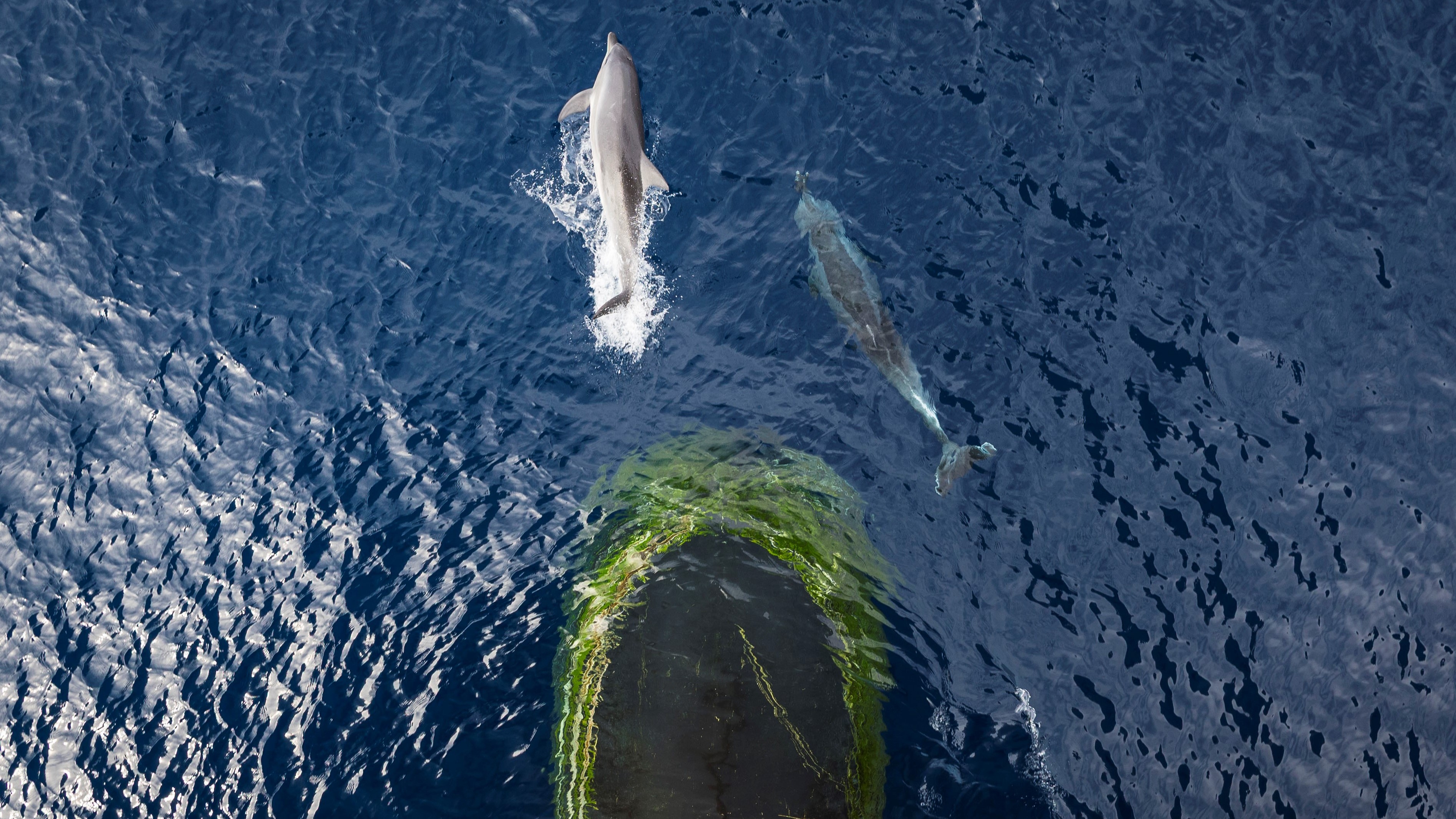
Dolphins bow-riding during the fleet transit to Sydney. Photo: Defence Australia
The fleet review provides the ceremony while Exercise Kakadu provides the practice, and the distinction between practice and application has narrowed considerably in the past 18 months.
Vice Admiral Hammond framed the anniversary around partnership: "For 125 years, Australia's Navy has defended our nation, protected our maritime approaches, and supported regional stability but we have never done it alone. Our partners and allies have played a critical role in our 125-year history."
The next 125 years will test whether those partnerships hold when the stakes are higher than ceremonial gun salutes.
Exercise Kakadu: From Ceremony to Training
Following the ceremonial events in Sydney, the assembled forces will disperse for maritime training exercises, from constabulary operations to high-end warfare scenarios. The exercise area spans waters from Darwin to Cairns and down the eastern coast to Jervis Bay in New South Wales.
More than 6,000 personnel from the 19 participating nations will take part in the training phases. The scenarios they practise will include submarine detection, air defence, maritime interdiction, and humanitarian assistance.
The day concluded with a historical flotilla procession at 6:45pm, with vessels tracing a route from Farm Cove around Fort Denison, past the Opera House, and under the Harbour Bridge to Blues Point.
Tens of thousands of spectators lined the foreshore from North Head to Circular Quay. They witnessed a rare display of naval tradition and multinational cooperation, and perhaps something more than ceremony given the state of the world beyond the harbour heads.
SOURCES & CITATIONS
- Department of Defence, 'Historic Fleet Review launches Exercise Kakadu in Sydney Harbour', 21 March 2026
- Royal Australian Navy, 'Exercise Kakadu Fleet Review', 21 March 2026
- Department of Defence, 'Six navies align for Exercise Kakadu', 16 March 2026
- The Guardian, 'Israel launches fresh strikes on Tehran and Beirut', 21 March 2026
- Defence Australia Twitter, Exercise Kakadu imagery, March 2026
FREQUENTLY ASKED QUESTIONS