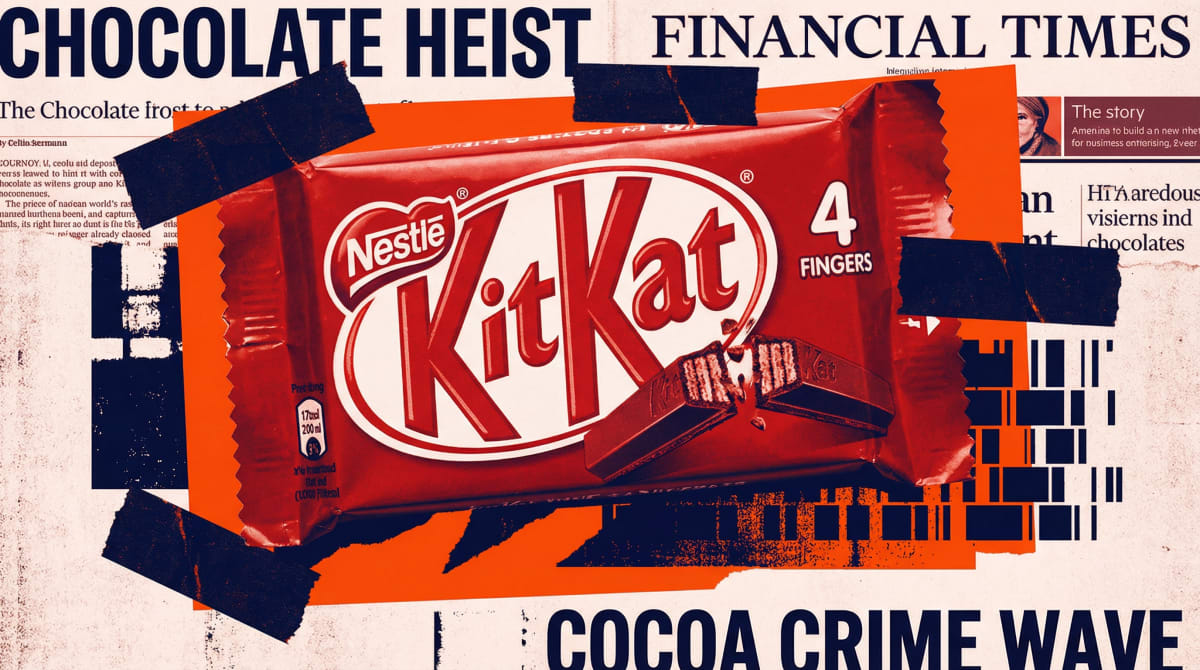
Someone made off with 12 tonnes of KitKat bars between Italy and Poland in late March 2026.
KEY TAKEAWAYS
The truck was hijacked in transit. It carried 413,793 bars, including Formula One-branded chocolate from Nestlé's new range. Nestlé reported the theft on March 28, and authorities are investigating.
The numbers alone don't tell you much. Twelve tonnes sounds enormous until you compare it to the Great Maple Syrup Heist of 2011-12, where thieves drained 3,000 tonnes of syrup from a Quebec warehouse over months. That operation netted C$18.7 million. This chocolate heist is smaller, faster, and messier.
Heist genealogy: why this matters
Great heists share three elements: audacity, specificity, and a product people recognise. The Maple Syrup Heist worked because syrup is bulk-tradable and fungible. You can drain barrels, refill them with water, and sell the syrup to buyers who don't ask questions. It took months to detect because the warehouse stored strategic reserves.
Chocolate bars are trickier. They're branded, date-stamped, and traceable. Moving 413,793 bars without raising flags requires buyers who won't check provenance or retailers who don't verify supply chains. That's harder than offloading generic syrup.
The Italian Job (1969) made heists look glamorous. Ocean's Eleven (2001) added polish. Real heists look different: trucks hijacked on highways, warehouses emptied overnight, and stolen goods flooding discount retailers or grey markets. The Maple Syrup Heist involved a warehouse worker, barrels of water, and years of patient theft. This chocolate heist probably involved a driver, a GPS jammer, and a very short window.
What makes this story interesting is the F1 branding. Nestlé launched Formula One-branded KitKat bars as part of a new product range, and thieves stole a shipment that included them. Timing matters. New product launches create publicity, and publicity creates opportunities for stunts, crimes, or accidents.
Theory 1: marketing stunt
Nestlé gains attention from the theft. F1-branded chocolate becomes a talking point. Social media amplifies the story, and brand awareness increases without paid advertising. The downside: this theory assumes Nestlé would risk theft charges, insurance fraud allegations, and regulatory scrutiny for marginal publicity gains.
Large corporations rarely stage thefts because the legal exposure outweighs the marketing benefit. If this were a stunt, someone at Nestlé approved faking a police report, lying to insurers, and coordinating fake news coverage across multiple jurisdictions. That's implausible.
Theory 2: organised crime
Trucks carrying high-value consumer goods are common targets for organised theft rings. Chocolate has resale value, especially branded products people recognise. Thieves can offload bars to discount retailers, market stalls, or cross-border distributors who don't verify provenance.
The hijacking occurred in transit between Italy and Poland, suggesting thieves knew the route, timing, and contents. That requires intelligence: someone tipped them off about the shipment, or they tracked the truck through GPS, manifests, or logistics databases. Transit heists happen regularly across Europe, targeting electronics, pharmaceuticals, and luxury goods. Chocolate fits the pattern.
Reselling 413,793 bars takes infrastructure. You need storage, distribution channels, and buyers who won't report stolen goods. Grey market operators in Eastern Europe, discount chains with lax sourcing standards, or even legitimate retailers facing supply shortages could absorb that volume without suspicion.
Theory 3: security blunder
Logistics companies move thousands of trucks daily. Security protocols vary. Some shipments get GPS tracking, escorts, and real-time monitoring. Others get a driver, a manifest, and hope. If the chocolate shipment lacked adequate security, thieves could have hijacked it opportunistically.
Insider knowledge makes this easier. A warehouse worker, dispatcher, or logistics coordinator who knows route details, timing, and cargo contents can sell that information to theft rings. The Great Maple Syrup Heist succeeded partly because an insider facilitated access and covered tracks. This chocolate heist may follow the same pattern.
Nestlé's statement that it is "working with authorities" suggests they're treating this as a crime, not a publicity stunt. If the theft resulted from a security gap, expect tighter logistics protocols, GPS mandates, and escorts for high-value shipments.
Have a break, have a supply chain audit
KitKat's slogan is "Have a break." The thieves did.
This heist reveals how vulnerable supply chains remain. A truck carrying nearly half a million chocolate bars disappeared between two countries, and nobody noticed until it failed to arrive. That's a tracking failure, a security failure, and a process failure. The theft itself may be opportunistic, but the conditions that enabled it are structural.
Companies optimize logistics for cost and speed. Security often ranks lower than efficiency. Real-time tracking, GPS immobilizers, and escort vehicles add expense and complexity. For low-margin consumer goods like chocolate, those costs reduce profitability. That calculation works until something like this happens, and then the cost of theft, insurance claims, and reputational damage exceeds the savings from lax security.
The Maple Syrup Heist changed how Quebec manages strategic reserves. This chocolate heist may prompt Nestlé and other consumer goods manufacturers to rethink transit security for new product launches, high-value shipments, or cross-border routes. Whether that happens depends on how often thieves target chocolate trucks. If this becomes a pattern, expect industry-wide protocol changes. If it remains a one-off, expect business as usual.
TLDR
Thieves hijacked a truck carrying 12 tonnes of KitKat bars (413,793 bars) between Italy and Poland during March 26-28, 2026. The shipment included Formula One-branded chocolate from Nestlé's new range. The heist occurred in transit, and authorities are investigating. While smaller than the 2011-12 Great Maple Syrup Heist (3,000 tonnes, C$18.7M), the incident highlights supply chain vulnerabilities.
SOURCES & CITATIONS
FREQUENTLY ASKED QUESTIONS