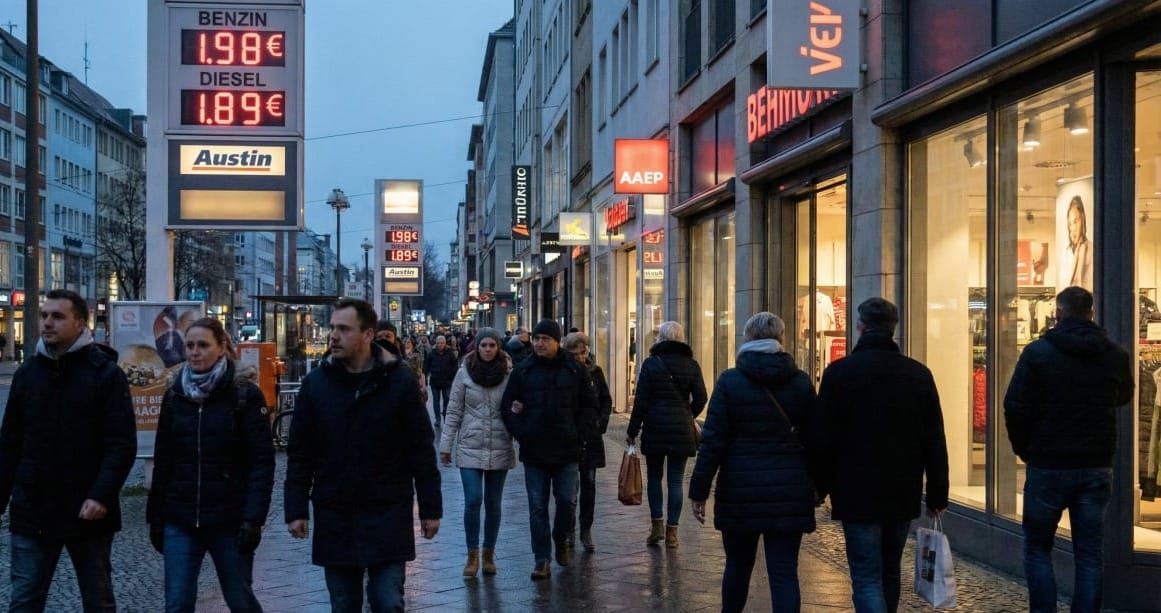
The Federal Statistical Office (Destatis) said Monday that Germany's inflation rate jumped to 2.8% in March 2026, driven by surging energy costs tied to escalating conflict in the Middle East.
KEY TAKEAWAYS
The March spike to 2.8% is the highest inflation rate Germany has recorded since January 2025, reversing months of steady progress toward the European Central Bank's 2% target and complicating the ECB's monetary policy calculus for the rest of the year.
"The inflation rate in Germany is expected to be +2.7% in March 2026," Destatis said in a preliminary release. "It is measured as the change in the consumer price index compared with the same month a year earlier." The office later confirmed the rate at 2.8% using harmonized European Union methodology.
North Rhine-Westphalia, Germany's most populous state, saw its annual inflation rate climb to 2.7% in March from 1.8% in February, Reuters reported, driven by higher energy costs. Similar jumps appeared across other states as households and businesses absorbed higher heating and transport costs.
Iran's escalating involvement in regional conflict has pushed oil prices above $110 per barrel and tightened global energy markets. Europe, still rebuilding energy security after cutting Russian gas supplies in 2022-2023, remains heavily exposed.
The Local Germany reported that "German inflation in March jumped to its highest level since January 2024 on the back of rocketing energy prices due to the Middle East war." Goldman Sachs raised its U.S. recession probability to 30% earlier in March, citing similar oil-driven inflation risks.
Core inflation, which strips out volatile food and energy prices, held steady at 2.5% in March. Services inflation remained unchanged at 3.2%, while goods inflation cooled slightly to 0.8% from 1%, according to Trading Economics data. The divergence between headline and core readings suggests energy is the primary driver, but the persistence of elevated services inflation indicates broader price stickiness.
Reuters polling of economists shows expectations for eurozone-wide harmonized inflation to hit 2.7% when March figures are released Tuesday. That would mark a sharp jump from the 2.0% reading Europe's monetary union recorded in recent months.
The European Central Bank held its main refinancing rate at 2.15% at its March meeting, betting that disinflation would continue and growth would hold steady. The March inflation spike challenges that assumption.
Then the core inflation rate is likely to pick up again both in Germany and across the euro area, forcing the ECB to decide whether to counter this trend with interest rate hikes.
— Commerzbank analysts, March 30, 2026
ECB March baseline projections forecast headline inflation averaging 2.6% across the eurozone in 2026, falling to 2.0% in 2027 and 2.1% in 2028, assuming energy prices would stabilize. Middle East tensions pushing oil higher for longer could force the ECB to confront renewed price pressures just as economic growth weakens.
ING economist Carsten Brzeski told Reuters in January that Germany's "disinflationary story is also supported by the ongoing drop in producer and import prices, normally a good leading indicator for headline inflation." That narrative has now been complicated by exogenous shocks the ECB cannot easily control.
Financial markets showed muted reaction to Monday's data. The euro held steady around $1.18, while German Bund yields remained near 2.88%. Equity markets edged higher, with the Euro STOXX 50 up 0.3%, suggesting investors are waiting for the full eurozone reading before repositioning.
German price trends typically lead broader eurozone movements, as Europe's largest economy sets the pace. If energy-driven inflation persists, the ECB will face a choice between fighting price pressures with rate hikes or supporting fragile growth in southern Europe.
Europe's economy ended 2025 on relatively solid footing, with GDP growth holding steady and unemployment low. Oxford Economics told Reuters in January it expects "rates to remain stable this year and continue to think further easing would require major downside surprises, either on the growth or inflation front." The March data throws that forecast into question.
If energy shocks slow growth while pushing inflation higher, the ECB faces the same uncomfortable tradeoff that plagued central banks in the 1970s. March's German data suggests stagflation risks are no longer hypothetical.
Raising rates to fight inflation risks deepening any economic slowdown, especially in Italy and Spain where government debt remains elevated. Holding rates steady allows inflation to run hot, eroding purchasing power and risking de-anchored expectations. The bank's credibility as an inflation fighter, rebuilt painstakingly after the 2010s debt crisis, is again being tested.
German households are already feeling the pressure. Heating costs surged across North Rhine-Westphalia and other populous states as March temperatures remained below seasonal averages. Transport fuel prices followed oil markets higher, squeezing disposable incomes just as wage growth begins to moderate after strong gains in 2024-2025.
Eurostat releases harmonized inflation figures for the entire currency bloc Tuesday. If the eurozone reading matches or exceeds Germany's 2.8%, pressure on the ECB to act will intensify. For now, policymakers are watching energy markets and hoping the spike proves temporary.
But as Germany's March figures show, inflation can reverse quickly when geopolitical shocks hit energy-dependent economies. The ECB's 2% target, within reach just weeks ago, now looks further away.
TLDR
Germany's inflation rate jumped to 2.8% in March 2026, up from 1.9% in February, driven by surging energy prices tied to Middle East conflict. The spike reverses months of declining price pressures and forces the European Central Bank to reconsider its monetary policy stance. Eurozone-wide inflation is expected to register 2.7% when figures are released Tuesday.
SOURCES & CITATIONS
FREQUENTLY ASKED QUESTIONS