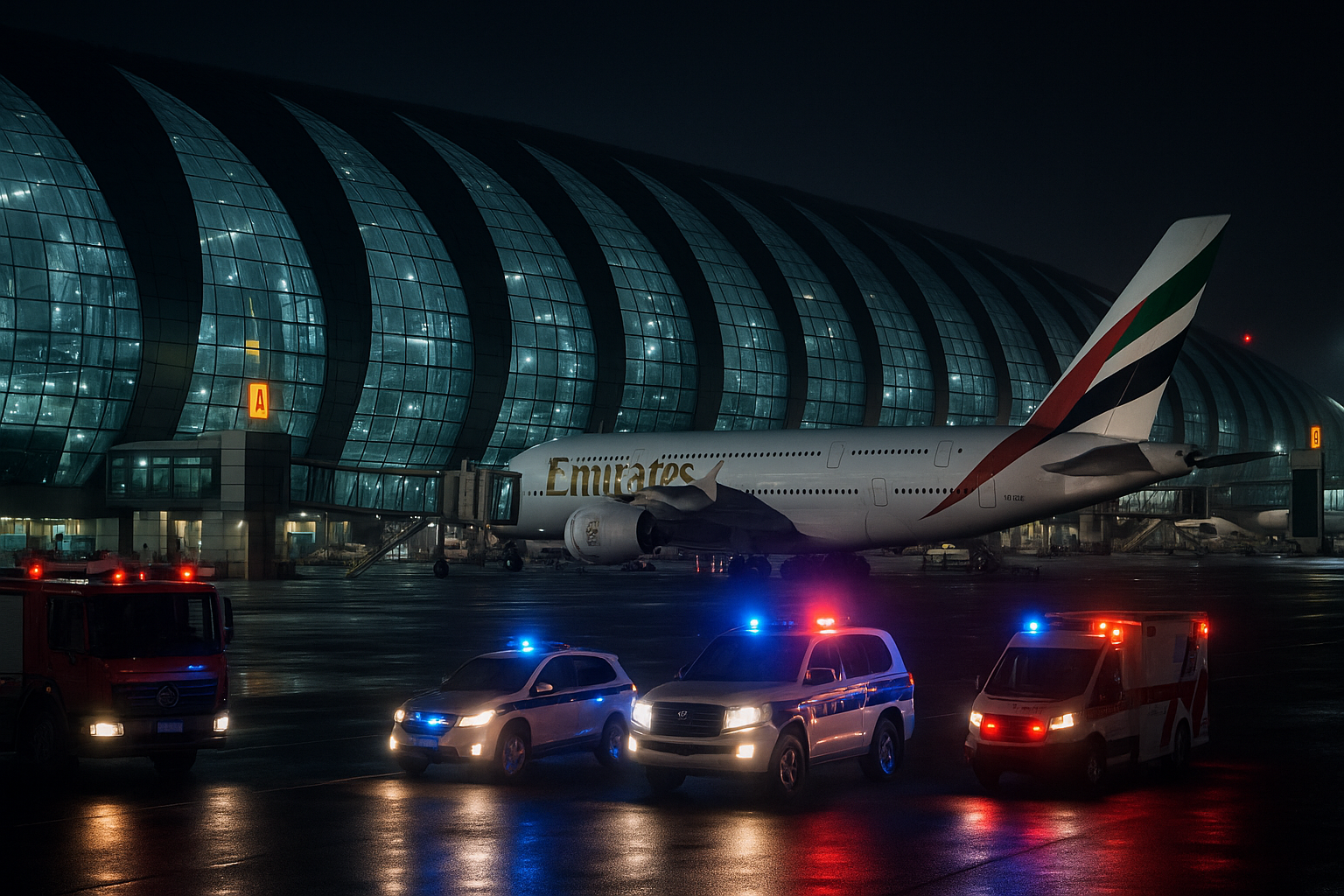
Iranian drones struck Dubai International Airport overnight. The attack disrupted operations at the busiest international airport in the world.
TLDR
Iranian drones struck Dubai International Airport overnight, disrupting flights at the world's busiest international hub. The Australian government has upgraded its travel advice for the UAE to 'do not travel' and is urging citizens to leave immediately. Emirates and Etihad have cancelled most services.
KEY TAKEAWAYS
The Australian government responded within hours. Smartraveller upgraded its travel advice for the United Arab Emirates to 'do not travel', the highest warning level. The Department of Foreign Affairs and Trade is urging all Australians in the country to leave immediately.
What happened
The strike occurred around 2am local time on Monday. UAE authorities confirmed multiple drones entered Emirati airspace from the north. Air defence systems intercepted some but not all of the incoming weapons.
Damage to the airport's Terminal 3 forced its closure. Terminal 1 and Terminal 2 remain operational but with reduced capacity. Flight delays and cancellations are widespread.
No casualties have been reported at the airport. A separate strike on an oil storage facility in Fujairah killed three workers.
Flight disruptions
Emirates cancelled most outbound flights on Monday. Etihad, operating from Abu Dhabi, also suspended services to destinations in Europe, Asia and Australia.
Qantas flight QF2 from Sydney to London via Dubai has been rerouted to avoid UAE airspace. Passengers already in Dubai are being accommodated in hotels until alternative arrangements can be made.
Dubai Airports advised passengers not to travel to the airport unless they have confirmed seats on operating flights.
What to do if you're in the UAE
The Australian government is advising all citizens to leave the UAE as soon as possible. Flights are operating from Abu Dhabi with limited capacity.
- Register with DFAT's crisis registration portal immediately
- Contact your airline to rebook onto operating services
- Consider alternative routes: Oman, Bahrain, or Saudi Arabia may have flights
- Avoid government buildings, military installations, and oil infrastructure
- Keep away from Israeli, US and Jewish-affiliated locations
- Follow local emergency warnings and shelter if attacks occur
Smartraveller advice
The Smartraveller page for the UAE now displays a red 'do not travel' warning. The previous advice level was 'reconsider your need to travel'.
If you're in the UAE, prioritise your safety. Monitor developments closely and follow local authorities' advice. Avoid government, military or energy infrastructure.
— Smartraveller.gov.au
DFAT has activated its 24-hour consular emergency line. Australians requiring assistance can call +61 2 6261 3305.
Insurance implications
Most travel insurance policies exclude coverage for travel to destinations with 'do not travel' warnings. Australians who purchased insurance before the upgrade may still be covered for trip cancellation but not for incidents that occur after the warning was issued.
Travellers with upcoming bookings to the UAE should contact their insurance provider to understand their coverage.
Why Dubai matters
Dubai International Airport is the busiest airport in the world for international passengers. More than 80 million travellers passed through its terminals in 2025. For Australians, it serves as the primary transit hub for flights to Europe, Africa and the Middle East.
The airport's strategic importance makes it a high-value target. Until this week, the UAE had avoided direct Iranian strikes despite its support for US operations in the region. That immunity has now ended.
Emirates airline operates one of the largest fleets in the world from Dubai. The carrier connects Australia to more than 150 destinations. Disruptions to its hub operations affect passengers far beyond the Middle East.
Alternative routes
Passengers needing to reach Europe have limited options. Qatar Airways continues operating from Doha but that airport may face similar risks. Singapore Airlines offers connections through Changi, adding several hours to most European itineraries.
Qantas is reportedly considering temporary routing changes for its London service. The current Dubai stopover could shift to Singapore or be replaced with a direct Perth-London leg using the Project Sunrise aircraft.
Business travellers with urgent European meetings face difficult choices. Some are booking circuitous routes through Asia. Others are postponing travel entirely until the security situation clarifies.
Long-term implications
The strike on Dubai signals a new phase in Iran's military campaign. Previously, Iranian forces targeted military installations and oil infrastructure. Civilian airports represent a significant escalation.
Aviation analysts warn that Gulf airports may remain risky for months. The conflict shows no signs of de-escalation. Airlines are reviewing their exposure to the region and considering permanent routing changes.
Wider context
The Dubai strike marks an escalation in Iran's targeting of Gulf Arab states. Previous attacks had focused on Saudi Arabia and Bahrain. The UAE had largely avoided direct hits until now.
Iran has not officially claimed responsibility. State media characterised the strikes as retaliation for UAE support of US military operations in the Persian Gulf.
The UK government has also upgraded its advice for the UAE to 'do not travel' and is reportedly planning evacuation flights for British nationals.
SOURCES & CITATIONS
FREQUENTLY ASKED QUESTIONS