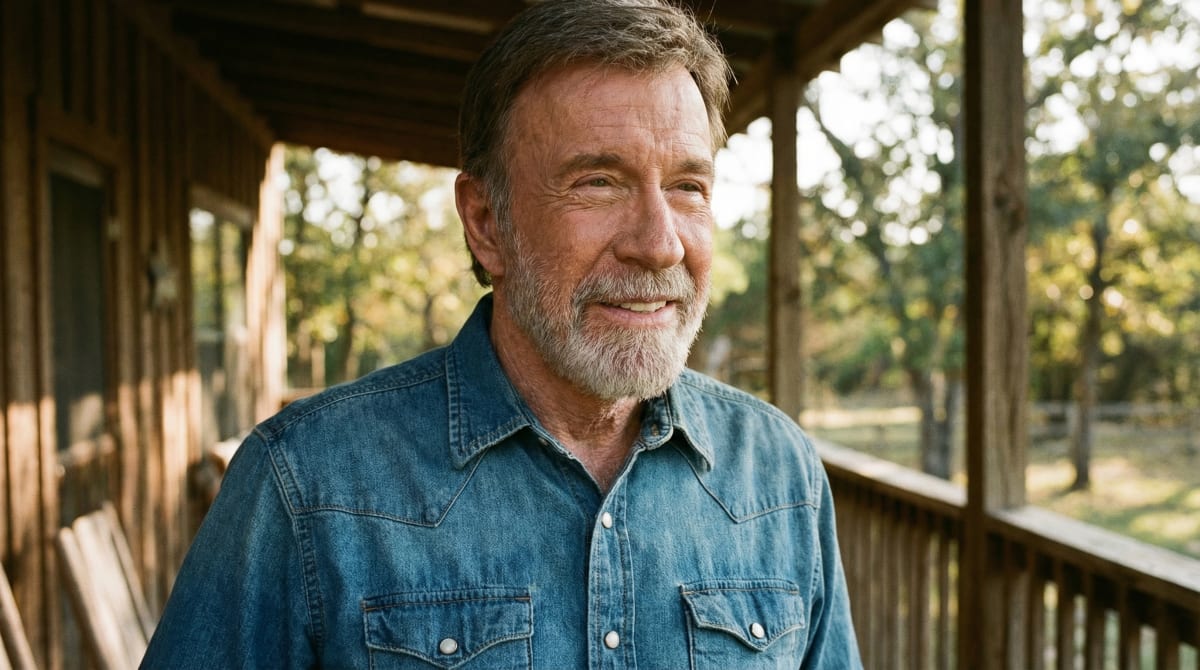
There is a particular kind of American fame that arrives after the career should have ended, a second act that exists independent of the work that preceded it. Betty White spent her final decades as a beloved punchline rather than the television pioneer she had been. William Shatner remains preserved in cultural amber as Captain Kirk regardless of what he did afterward. And Chuck Norris, in perhaps the strangest iteration of all, spent the last two decades of his life as something between a meme and a myth.
TLDR
Chuck Norris, the martial arts champion turned action star who became one of the internet's first and most enduring memes, died Thursday at 86 in Hawaii. His family announced the death via Instagram. From his legendary fight with Bruce Lee in the Roman Colosseum to 200+ episodes of Walker, Texas Ranger, Norris built a career on playing the good guy who always won. Then the internet made him a god.
KEY TAKEAWAYS
Carlos Ray Norris died Thursday at his home in Hawaii at the age of 86, with his family announcing the death on Instagram to his 1.2 million followers. The tributes began immediately, many of them invoking the very jokes that made him immortal online.
The real fighter
Before the memes, there was a genuine martial artist with credentials that would have impressed even his most ardent online mythologisers. Born in Ryan, Oklahoma, in 1940, Norris grew up poor as the son of an alcoholic truck driver and a homemaker mother. He joined the Air Force at 18, discovered Tang Soo Do while stationed in South Korea, and began accumulating black belts the way other men collect watches.
By the time he retired from competitive fighting, Norris held a 10th-degree black belt in Chun Kuk Do (a system he invented), an 8th-degree black belt in Taekwondo, a 5th-degree in Karate, a 3rd-degree in Brazilian Jiu-Jitsu, and a black belt in Judo. He won the Professional Middleweight Karate champion title and defended it six consecutive times, establishing himself as one of the most decorated martial artists of his generation.
He found success not merely due to his knack for action or his tremendous martial arts skill. But because of his heart. People want to see the good guy win, a true good guy. And he was just that: a genuinely good guy.
— Nia Peeples, Walker, Texas Ranger co-star
The Colosseum fight
The moment that should have defined Norris's legacy came in 1972, in the belly of the Roman Colosseum where Bruce Lee had written, directed, and starred in The Way of the Dragon, casting Norris as his final opponent. Lee's production had no permits and no official access, so he bribed officials and smuggled cameras past security by posing his crew as tourists.
The fight they filmed remains one of the most celebrated sequences in martial arts cinema, a confrontation between two genuine fighters circling each other in the ruins of an empire that once watched men kill for entertainment. Norris loses in the end, as villains must, but he loses beautifully, with the dignity that would become his signature on screen.
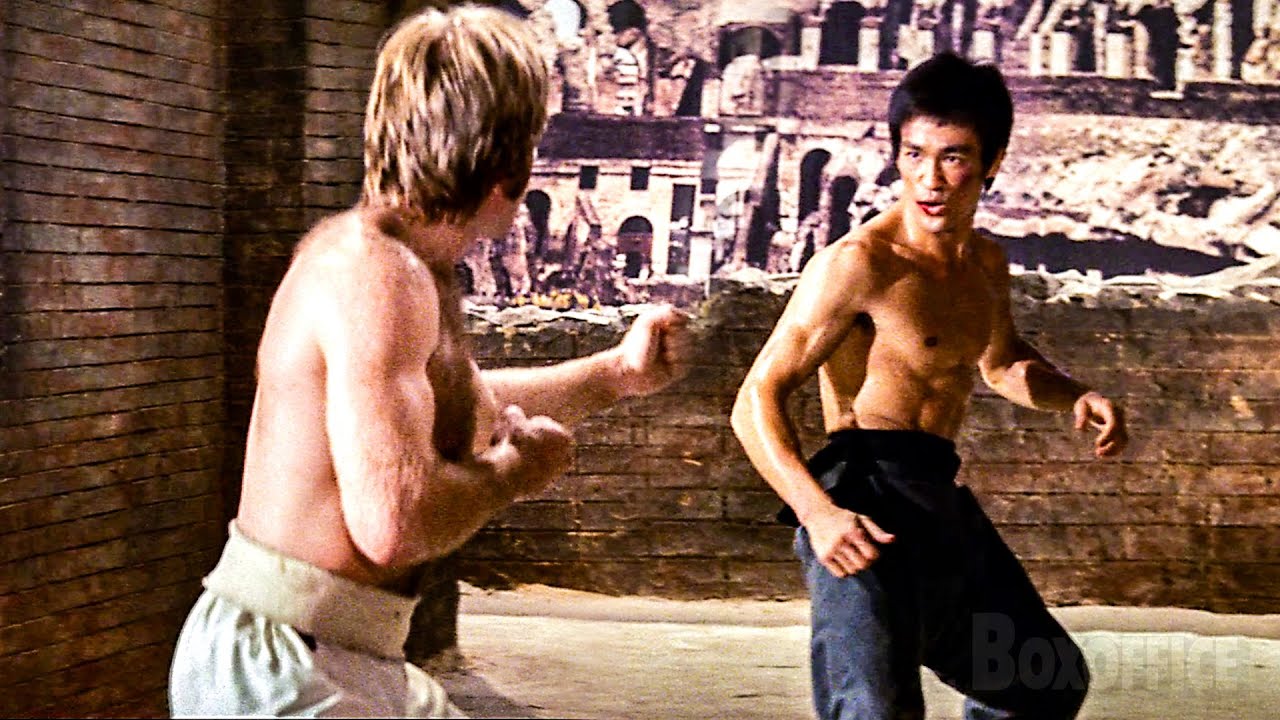
The legendary Colosseum fight between Bruce Lee and Chuck Norris in The Way of the Dragon (1972)
That fight should have been his defining monument, the climax of a martial arts career that began in Air Force gyms in South Korea and culminated opposite the greatest action star of the era. Instead, it became a footnote to what came decades later.
Walker, Texas Ranger
By 1993, Norris had made dozens of action films with titles like Missing in Action, Delta Force, and Code of Silence, none of which had been particularly good but all of which had been profitable. When CBS offered him Walker, Texas Ranger, he accepted what should have been a career wind-down, a graceful exit into syndication-friendly television.
The show ran for 203 episodes across eight seasons, and sophisticated television it was not. Cordell Walker, Norris's character, was a Vietnam veteran, a martial arts expert, a Texas Ranger, and a widower with a complicated relationship to due process, every episode following the same formula in which evil arrives in Texas and Walker roundhouse kicks it into submission. The show was comfort food for an audience that wanted simple morality tales with reliable violence.
Walker made Norris wealthy, and more importantly, it made him omnipresent through years of syndication in living rooms across America and eventually around the world.
The invention of immortality
Something Awful was an internet forum known for generating memes before the word 'meme' had entered common usage, and in early 2005, users began posting absurdist 'facts' about Vin Diesel that parodied his tough-guy image. The format spread rapidly, and someone substituted Chuck Norris, at which point the internet found its new god.
Chuck Norris counted to infinity twice, the jokes claimed. Chuck Norris doesn't do pushups but instead pushes the earth down. When Chuck Norris enters a room, he doesn't turn the lights on because he simply turns the dark off. The jokes followed a consistent logic in which Norris was not merely tough but omnipotent, a comic-book deity whose powers exceeded physical law.
The timing was accidental but perfect because Walker, Texas Ranger had ended in 2001, leaving Norris in the cultural position of a retired athlete who was fondly remembered, occasionally referenced, and not quite relevant. The memes resurrected him, and suddenly everyone under 30 knew who Chuck Norris was even if they had never seen a single episode of his show.
The politics
Norris was a conservative, vocally so, campaigning for Mike Huckabee in 2008, endorsing Donald Trump twice, appearing at Republican events, and writing a column warning that Barack Obama's re-election might bring a thousand years of darkness. He opposed same-sex marriage, supported prayer in public schools, and believed America was founded as a Christian nation.
These positions alienated some fans and endeared him to others, but what is notable is how little they affected his meme status, for the Chuck Norris of the internet had no politics. He existed in a realm beyond ideology, a pure distillation of masculine capability that transcended the messy opinions of the actual man.
This is the peculiar bargain of modern fame, in which the internet creates versions of people that float free from their sources. Norris understood this, at least commercially, publishing a book of the facts in 2009, licensing his image to video games, and generally embracing the joke rather than fighting it.
The unkillable man
Norris outlived Bruce Lee by 53 years and Steve McQueen by 46, surviving the entire B-movie action era that made him famous while watching Stallone and Schwarzenegger give way to CGI and franchise universes. He appeared briefly in The Expendables 2 in 2012 for a cameo that functioned as a tribute to his own iconography.
His wife Gena had been his caregiver for years after they married in 1998, when he was 58 and she was 34, and she gave up her modelling career to manage his life. By most accounts, he had mellowed in old age, spending his final years on his ranch and largely withdrawing from public life.
He is survived by Gena, five children, and a legacy that refuses simple categorisation because he was a legitimate martial artist who made illegitimate movies, a conservative activist who became a bipartisan joke, and a symbol of American toughness created by a Korean martial art and perfected by anonymous forum users.
I had a great time working with Chuck. He was a true warrior and a good man.
— Sylvester Stallone, via Instagram
The Chuck Norris facts will outlive the man, circulating in group chats and comment sections long after anyone remembers the films that inspired them, and this is perhaps the only form of immortality available in the internet age: becoming a format, a template, a joke that regenerates itself forever.
Death dies, the memes insisted, but Chuck Norris was also a man named Carlos Ray, born in Oklahoma, who loved his wife and his country and his craft, and who passed away on Thursday at the age of 86. The internet will remember the god, and those who knew him will remember the man.
SOURCES & CITATIONS
FREQUENTLY ASKED QUESTIONS