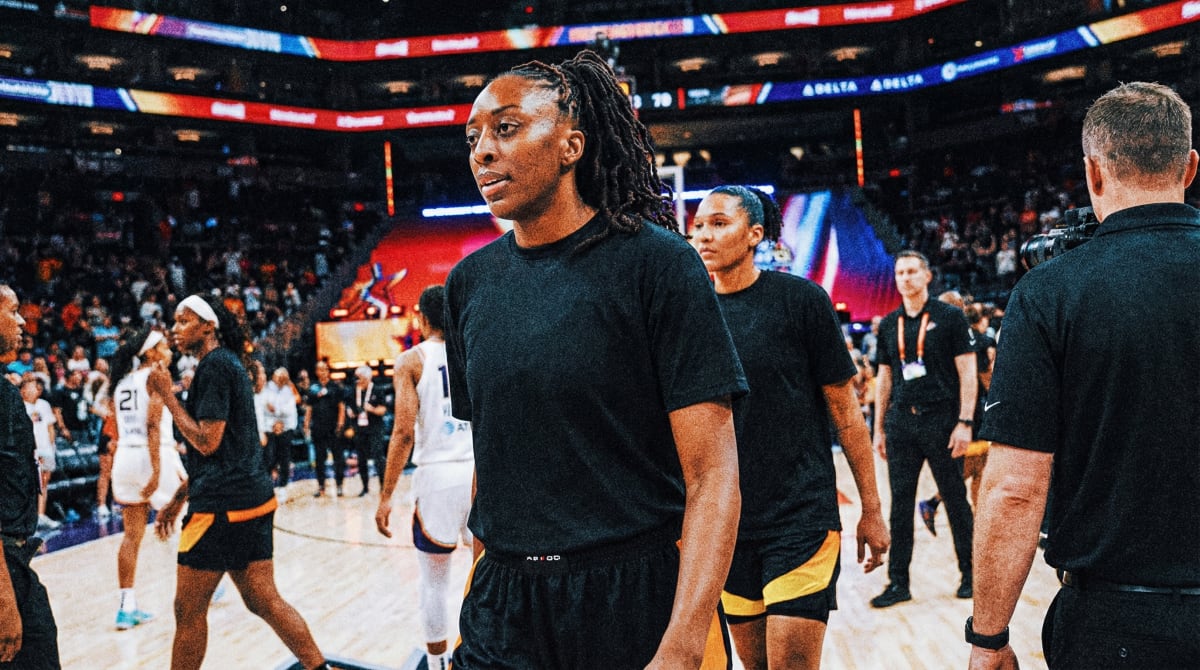
WNBA players voted unanimously on March 23 to approve a seven-year collective bargaining agreement that raises the salary cap from $1.5 million to $7 million and creates the league's first million-dollar contracts.
KEY TAKEAWAYS
The agreement, reached after eight days of marathon negotiations that stretched past 3 a.m. on multiple nights, averts a strike that threatened to cancel the league's 30th anniversary season, which begins May 17.
"This deal is going to be transformational," Breanna Stewart, WNBPA vice president and New York Liberty forward, told reporters after the vote. "It's going to build and help create a system where everybody is getting exactly what they deserve and more, from on-the-court and off-the-court aspects."
The salary cap increase, nearly five times the 2025 level, represents the largest single-year jump in professional sports labor history as a percentage of previous pay. The NBA's salary cap jumped 35 percent in 2016 after the league's television deal, which was considered unprecedented at the time. The WNBA's 366 percent increase dwarfs that by comparison.
The Numbers Behind the Deal
This deal is going to be transformational. It's going to build and help create a system where everybody is getting exactly what they deserve and more.
The league's top players will sign contracts worth more than $1.4 million per year under the new CBA, which begins with the 2026 season and runs through 2032. Average salaries will exceed $583,000, with minimum salaries ranging up to $300,000 depending on years of service.
WNBA officials set the salary cap at exactly $7.0 million for 2026, with annual adjustments based on league and team revenue growth. Commissioner Cathy Engelbert projects it will rise above $11 million by 2032.
"We're just really grateful to be able to come to a deal," said Nneka Ogwumike, WNBPA president and Seattle Storm forward. "We're proud of ourselves, and quite frankly, we always told you all we were going to stand on business, and that's what this looks like."
The agreement also includes expanded revenue sharing, upgraded travel conditions, better retirement benefits, and veteran recognition payments. Players will now receive a percentage of league revenues tied to performance metrics, a structure that union leadership described as positioning the league for "exponential" salary cap growth if viewership and sponsorship continue their recent trajectory.
How We Got Here
The union and league began negotiations in February, but talks quickly hit roadblocks. The WNBA's initial proposal included a $6.2 million salary cap for 2026, which players countered with demands for a higher floor and clearer revenue-sharing terms.
Talks stalled by early March after a leaked letter from the union's executive committee revealed internal frustration with the pace of negotiations and concern that the league was undervaluing the players' recent surge in visibility.
"Despite our differences and tough moments, we must make crystal clear that we are focused, we are resolute, and we are together," the WNBPA executive committee wrote on March 6. "We want to play basketball in 2026."
Negotiators reached a breakthrough during an eight-day stretch in Indianapolis starting March 10, with multiple sessions lasting until 3 a.m. or later before finalizing a verbal agreement around 3 a.m. on March 19.
"The deal was contentious at times," WNBA Commissioner Cathy Engelbert said in a statement. "But both sides showed up ready to negotiate in good faith."
What Changed
WNBA officials timed this CBA to reflect the league's recent commercial surge. League executives signed a media rights deal in 2024 worth $2.2 billion over 11 years, nearly triple the value of the previous contract, while viewership for the 2025 season averaged 1.2 million per game, up 48 percent from 2024.
Union negotiators gained leverage from those numbers. WNBPA leadership used the threat of a strike during the league's 30th anniversary season, arriving in the middle of a broader cultural moment around women's sports, to pressure league executives who had more to lose than in past negotiations.
Players faced different stakes under the previous salary structure, which forced many to spend off-seasons playing overseas to earn a living wage. Stewart has played in Russia, Turkey, and China during WNBA off-seasons, a schedule that wears on bodies and limits time with families.
"I really feel like a lot of what we were at the table for was for the next generation," Ogwumike told reporters. "When we consider the next 10 years, this is really going to continue to catapult us."
What Happens Next
The CBA includes an opt-out clause after the 2031 season, meaning either side can reopen negotiations after six years if revenue growth exceeds projections or if it stalls.
Teams face a salary cap that more than quadrupled overnight when the 2026 season starts May 17, forcing changes to roster construction. The league's biggest stars will command contracts that weren't possible a year ago, mid-tier players will see raises, and rookies will start on minimums that exceed what veterans earned three years ago.
"The salary cap will adjust annually based on league and team revenue growth," the term sheet released by the WNBA states. Players tied their financial futures directly to the league's commercial success, a negotiating move that's rare in labor agreements. Most unions push for guaranteed floors, not variable ceilings. The WNBPA bet on growth. If viewership keeps climbing and sponsors keep showing up, salaries will keep rising. If the growth plateaus, so will the cap.
The league avoided a strike, players secured a deal reflecting their growing market value, and the 30th anniversary season will tip off on time.
"We're proud of ourselves," Ogwumike said. "And that's what this looks like: standing on business."
TLDR
WNBA players unanimously approved a seven-year collective bargaining agreement that increases the salary cap nearly five-fold, from $1.5 million in 2025 to $7 million in 2026. Top salaries will exceed $1 million for the first time. The deal includes expanded revenue sharing, better retirement benefits, and upgraded travel conditions. Negotiations went past 3 a.m. on multiple nights and narrowly avoided a strike that would have derailed the league's 30th anniversary season.
SOURCES & CITATIONS
- WNBA And WNBPA Reach Tentative Deal on Historic CBA, WNBA staff, WNBA.com, 18 March 2026
- WNBA players unanimously approve a new 7-year collective bargaining agreement through 2032, AP staff, Associated Press, 23 March 2026
- What the 2026 WNBA CBA means for league, players, salaries, Michael Voepel, ESPN, 20 March 2026
- WNBA news: Nneka Ogwumike, Breanna Stewart react to new CBA agreement, ClutchPoints staff, ClutchPoints, 18 March 2026
- After leaked letter, Breanna Stewart says WNBPA 'back on track' in CBA talks, Lindsay Schnell, USA Today, 6 March 2026
FREQUENTLY ASKED QUESTIONS