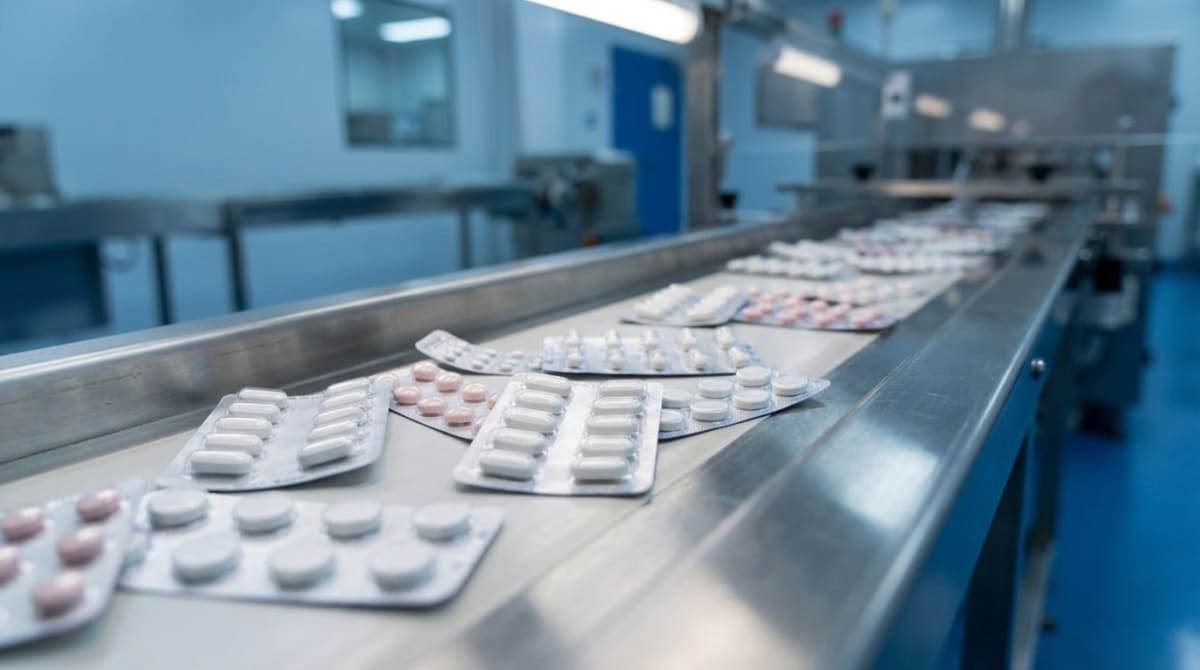
President Donald Trump signed an executive order Tuesday imposing up to 100% tariffs on patented pharmaceutical imports, a move the White House labelled 'national security' policy but which threatens Australia's $1.3 billion pharmaceutical export relationship with the United States.
TLDR
Trump signed 100% tariffs on patented pharmaceutical imports. CSL likely exempt, but smaller Australian exporters face a four-month deadline to negotiate US manufacturing deals or pay double.
KEY TAKEAWAYS
The tariffs come into effect in 120 days for certain large companies, and 180 days for smaller firms. Patented medications and their active ingredients face the full 100% levy, while generic drugs, biosimilars, and orphan drugs for rare diseases are currently exempt.
Health Minister Mark Butler said the government would study the announcement carefully but confirmed Australia would not negotiate changes to the Pharmaceutical Benefits Scheme in exchange for tariff relief. He appeared on Sunrise Friday morning and told host Natalie Barr: 'The big drug companies keep getting in the US administration's ear, trying to unpick the PBS here in Australia and equivalent schemes in other countries around the world. There is no negotiating on those fundamentals.'
CSL likely exempt, smaller exporters at risk
Australia's largest pharmaceutical exporter, biotechnology giant CSL, has substantial US manufacturing operations. Butler said the government is confident CSL can be carved out through the White House's 'onshoring and pricing agreements' pathway.
Companies that enter Most Favored Nation pricing agreements with the Department of Health and Human Services and onshoring deals with the Department of Commerce will face a 0% tariff through January 2029. Firms that only commit to US-based manufacturing face a reduced 20% tariff. Trade deal countries including the EU, Japan, Korea, Switzerland, and Liechtenstein face a 15% tariff. The UK has its own separate deal.
CSL announced $2.3 billion in US manufacturing expansions in November 2025, a move widely interpreted as tariff insurance. The company operates major facilities in Kankakee, Illinois, alongside plants in Bern, Marburg, and Broadmeadows.
Smaller Australian pharmaceutical exporters without existing US footprints face a tighter squeeze. Data from the UN's Comtrade shows Australian pharmaceutical exports to the US totalled $1.32 billion in 2025, with some estimates placing the 2025 figure closer to $1.91 billion depending on classification.
White House cites 'threat to national security'
The White House fact sheet frames the tariffs as a response to a Section 232 investigation by the Department of Commerce, which found 'patented pharmaceuticals and associated pharmaceutical ingredients are being imported into the United States in such quantities and under such circumstances as to threaten to impair the national security.'
The statement claims the tariffs have already spurred approximately $400 billion in new investment commitments from US and foreign pharmaceutical companies, to be spent in the United States during Trump's current term.
Trump administration officials have long blamed foreign drug pricing schemes for forcing American consumers to subsidise pharmaceutical innovation. The US pays significantly more for prescription medicines than Australia, a disparity that has frustrated Trump as cost-of-living pressures persist ahead of November's midterm congressional elections.
Australian response: supportive rhetoric, no concessions
Opposition Leader Angus Taylor told Sunrise the Coalition would support government efforts to secure exemptions for Australian exporters. He said free trade principles should apply to pharmaceuticals and called the tariff unwelcome news. 'The government needs to work and assert themselves to get exemptions for Australian exporters and to ensure this doesn't have any impact on the price of drugs and the cost of drugs in Australia,' Taylor said.
But Butler ruled out price negotiations on the PBS, which subsidises medications for Australians and caps patient co-payments. Any American demand to raise Australian drug prices in exchange for tariff relief would be politically toxic and policy incoherent.
Trade policy used to be about lowering barriers. Now it's about extracting concessions on unrelated domestic policies. This is how Trump governs. Threaten industries, demand compliance, claim victory.
— Senate Economics Committee staffer (anonymous), speaking to reporters Tuesday
Pharmaceutical industry groups in the US have spent years lobbying for tariffs on countries with 'reference pricing' schemes like Australia's PBS, arguing foreign governments free-ride on American drug development. Economists counter that reference pricing reflects genuine negotiating power and that US drug prices are inflated by patent abuse and regulatory capture, not foreign subsidies.
120 days to comply, or pay double
The tariff proclamation establishes strong monitoring and enforcement mechanisms, including external audits and tariff increases on future and past imports if commitments are not met.
Australian pharmaceutical executives now have four months to either negotiate US manufacturing commitments or price agreements with Washington, relocate production, or absorb a doubling of export costs that would effectively lock them out of the American market.
Butler said the government would be working with all affected exporters to understand the impact on Australian jobs. The tariff would not affect medication prices in Australia, he added.
Trump's pharmaceutical tariffs join an expanding trade regime that now includes industrial metals, semiconductors, and critical minerals. The administration has launched Section 232 investigations into personal protective equipment, medical consumables, robotics, and medical devices, signalling more tariffs may be coming across healthcare supply chains.
SOURCES & CITATIONS
- Fact Sheet: President Trump Imposes Tariffs on Patented Pharmaceutical Products
- TV interview with Minister Butler, Sunrise – 3 April 2026
- Trump sets 100% drug tariffs on companies that haven't lowered prices
- Trump administration sets up to 100% tariffs on some imported drugs
- Trump threatens 100% tariff on US drug makers
FREQUENTLY ASKED QUESTIONS