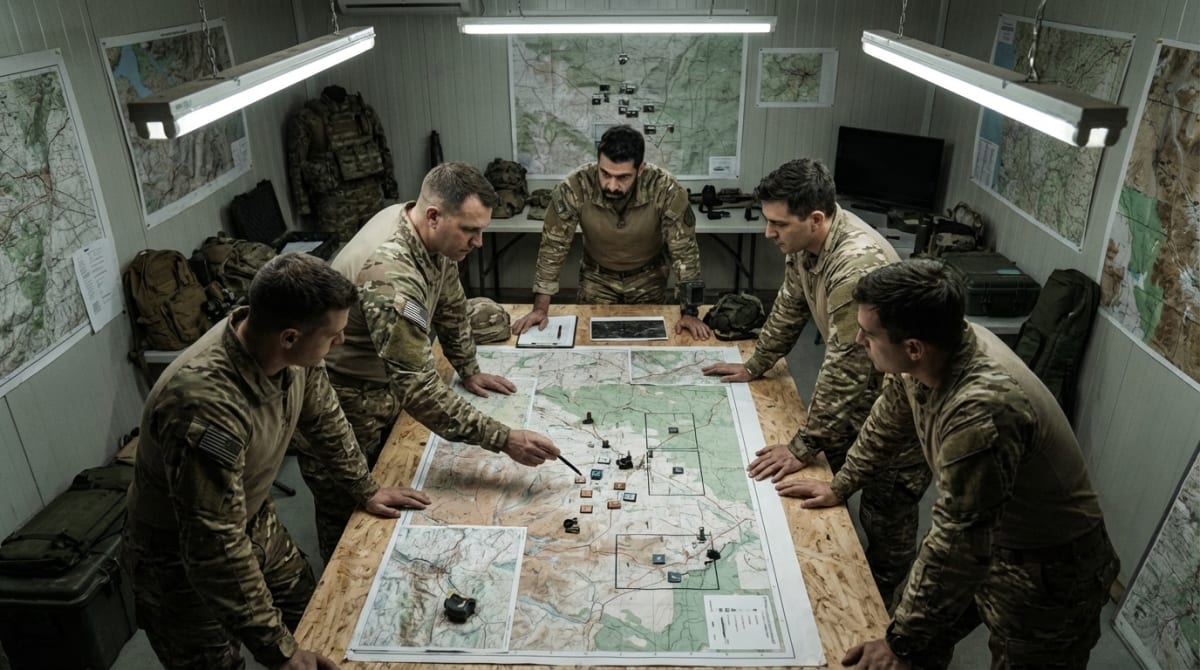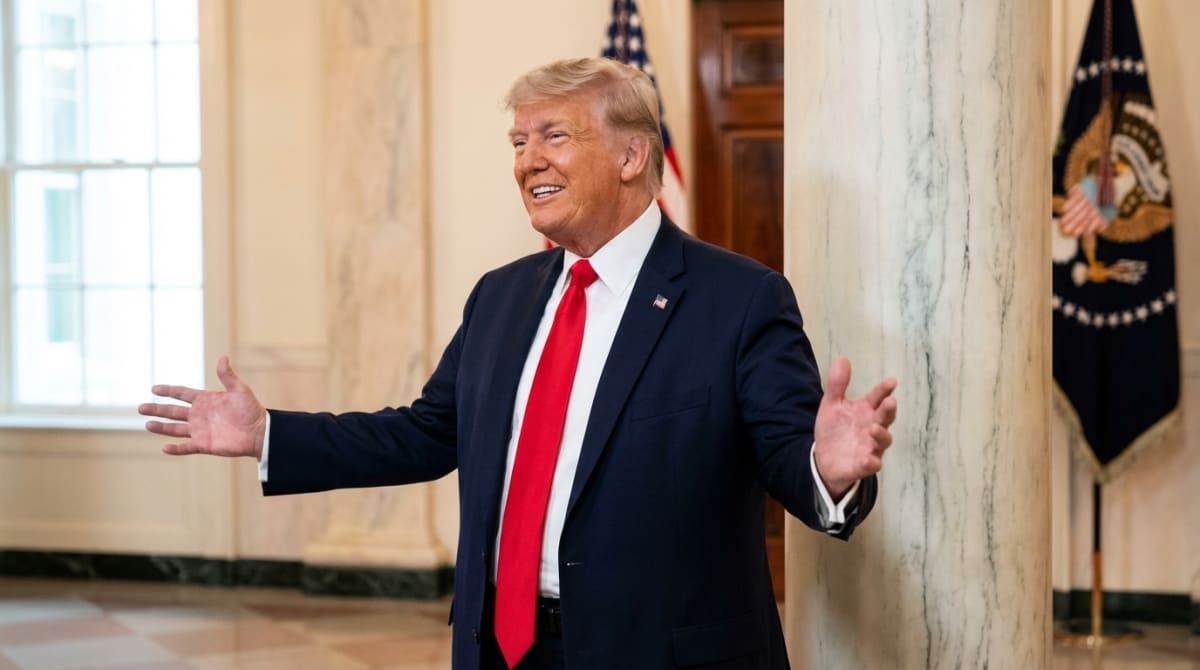
Donald Trump delivered his first formal Oval Office address on the Iran conflict on Thursday. Trump declared the military campaign named Operation Epic Fury is nearing an end. The President offered an absolute assessment of Iranian conventional military capability following weeks of intensive strikes.
TLDR
US President Donald Trump used his first Oval Office address on the conflict to declare Operation Epic Fury is nearing completion. He claimed Iran's military is in ruins and its leadership is dead. The conflict has disrupted global energy markets, sending US petrol prices past $4 a gallon. Prime Minister Anthony Albanese called an emergency cabinet meeting to address Australia's worsening fuel crisis.
KEY TAKEAWAYS
Trump told the American public the war is "nearing completion" while simultaneously promising "extremely hard" attacks over the next two to three weeks.
The Commander in Chief painted a picture of total devastation when addressing the state of enemy forces directly.
Thirteen US service members have died since Operation Epic Fury began. The Pentagon has not released the specific units involved in the casualties. Defence officials maintain operational security as forces reposition across the Middle East theater.
Trump claimed Tehran had requested a ceasefire during the address. Iranian state media denied this assertion an hour after the broadcast ended. The Iranian foreign ministry released a statement rejecting any back-channel negotiations. Iranian diplomats vowed continued resistance against American assets.
Global energy markets reacted immediately to the televised speech. United States petrol prices passed $4 a gallon by Thursday evening. Energy analysts at Wood Mackenzie warned the cost could hit $5. Commercial shipping operators halted all vessels through the Strait of Hormuz.
Anthony Albanese convened an emergency cabinet meeting in Canberra on Friday morning. Albanese seeks to address the worsening domestic fuel crisis. Australia's national reserve sits dangerously below the International Energy Agency mandated 90-day supply threshold. Australian markets carry heavy exposure to the ongoing Middle East supply chain disruptions.
Japan's Nikkei index dropped 1.4 per cent within hours of the opening bell. South Korea's Kospi fell 2.82 per cent. Investors priced in prolonged regional instability across the Asia-Pacific trading day.
Trump addressed the issue of Iran's nuclear program with outright dismissal.
Trump's administration objectives appear to have shifted dramatically since the campaign commenced last month.
Trump told the camera.
The President made no mention of diplomatic negotiations. Trump omitted any reference to deploying ground troops to secure strategic locations.
Houthi rebels in Yemen entered the war on Wednesday. Houthi forces launched ballistic missiles against Israeli targets. The Israel Defense Forces deployed the Arrow 3 anti-ballistic missile system. IDF units intercepted the incoming munitions over the Red Sea.
The Military Assessment
US Central Command intelligence assessments challenge the claim that the Iranian navy is "gone". The Islamic Republic of Iran Navy operates a split maritime force. Conventional deep-water vessels patrol the Gulf of Oman. The Islamic Revolutionary Guard Corps Navy controls the shallow waters of the Persian Gulf.
Planet Labs satellite imagery shows extensive damage to the naval facility at Bandar Abbas. Three Kilo-class submarines appear submerged at their moorings. Two Moudge-class frigates show severe structural damage from precision guided munitions.
IRGCN commanders operate hundreds of fast attack craft dispersed along the jagged coastline of the Strait of Hormuz. US Fifth Fleet admirals view these asymmetric assets as a persistent threat. Fifth Fleet surveillance teams find complete destruction of this distributed fleet nearly impossible to verify from the air.
Iranian air defences relied heavily on aging F-14 Tomcats and Russian-supplied MiG-29s before Operation Epic Fury commenced. United States stealth aircraft established air supremacy within the first 48 hours of the bombing campaign. United States bombing runs destroyed radar installations and surface-to-air missile batteries. Iranian airspace remains entirely unprotected.
Washington Reacts
Chuck Schumer offered a blunt assessment of the Oval Office address during a late-night press conference. Schumer split the political response along predictable partisan lines.
Schumer called the speech "rambling, disjointed, pathetic".
Lindsey Graham took the exact opposite view. Graham has advocated for military action against Tehran for two decades. Graham viewed the address as a vindication of his hawkish stance.
Graham called the address the "best speech I could've hoped for".
Researchers at the Center for Strategic and International Studies published a briefing paper on Tuesday detailing the catastrophic risks of state collapse. CSIS analysts warned that regime failure in Tehran would trigger a regional sectarian war. Neighbouring states would intervene to fill the power vacuum. Defence planners at the Pentagon remain deeply alarmed by the absence of post-conflict stabilisation plans.
The Regional Expansion
Houthi militant groups control the Yemeni capital of Sanaa. The IRGC Quds Force provides extensive training and munitions to these proxy fighters. Houthi entry into the conflict introduces a dangerous southern front against US interests operating in the Red Sea.
Houthi forces launched a massive barrage of Burkan-3 ballistic missiles toward the Israeli port city of Eilat. IDF spokespeople reported successful interceptions by the Arrow system. Arrow batteries prevented civilian casualties while confirming the expansion of the threat envelope.
Lloyd's Market Association categorises the entire Persian Gulf and the Gulf of Oman as extreme high-risk areas. Ship owners face an impossible financial calculation between the exorbitant cost of insurance and the total value of their cargo. Dozens of tankers remain anchored nervously off the coast of Fujairah in the United Arab Emirates.
The Australian Exposure
Albanese government officials face a severe domestic vulnerability due to systemic underinvestment in strategic reserves. Australia imports over 90 per cent of its refined petroleum products through vulnerable supply chains stretching through Singapore and South Korea. Asian refineries rely entirely on crude oil sourced from the Middle East.
Department of Climate Change, Energy, the Environment and Water officials maintain the Liquid Fuel Emergency Act to manage severe shortages. Albanese's emergency cabinet meetings in Canberra focused intensely on these rationing protocols. The legislation grants the federal government sweeping powers to control fuel distribution across all states and territories.
Richard Marles spoke to reporters outside Parliament House on Friday morning.
"The government is monitoring the strategic situation in the Middle East closely," Marles said. "Our focus is the security of maritime trade routes."
Royal Australian Navy commanders operate two Anzac-class frigates currently capable of regional deployment. Government officials have not announced any plans to join United States maritime security operations in the Persian Gulf.
The Nuclear Question
Three previous presidential administrations formed their core strategic objective around the prevention of an Iranian nuclear weapon. Trump's casual dismissal of the enriched uranium issue directly contradicts decades of established United States foreign policy. International Atomic Energy Agency inspectors lost all access to Iran's nuclear facilities in 2024. The international community remains blind to recent developments.
Fordow Fuel Enrichment Plant sits deep inside a mountain near the city of Qom. The facility houses advanced IR-6 centrifuges. Military analysts highly doubt conventional munitions can penetrate the reinforced concrete bunkers protecting the sensitive enrichment cascades.
Global Economic Impact
Disruption of the vital shipping lanes through the Red Sea forces massive container vessels to route around the treacherous Cape of Good Hope. Economic impacts of the conflict extend far beyond the immediate volatility seen in global energy markets. This massive diversion adds ten days to the transit time between manufacturing hubs in Asia and consumer markets in Europe.
Retailers face massively increased freight costs that they will pass directly to consumers. Manufacturers face component shortages that halt production lines entirely. Supply chain delays will inevitably trigger a severe secondary inflation shock across Western economies. Central banks in Europe and North America will struggle mightily to balance the intense inflationary pressure against the looming threat of a global economic slowdown.
Reserve Bank of Australia board members will review the deteriorating economic data at their next scheduled meeting. RBA policymakers face an incredibly difficult policy environment driven by external geopolitical factors. Imported inflation from the global fuel crisis heavily restricts the board's ability to cut interest rates to support the domestic economy.
Trump's declaration of a war "nearing completion" sets an artificial political timeline that ignores facts on the ground. Strategic ambiguity surrounding the United States administration's desired end state creates a dangerous political void. Military reality operates on a completely different schedule determined by friction, logistics, and enemy resilience.
What to Watch
When I covered the Beirut port explosion, the sheer scale of the destruction masked the immediate political consequences. Management of the subsequent power vacuum always requires vast resources, infinite patience, and a highly coherent diplomatic strategy. Destruction of an enemy's conventional forces represents the easiest phase of any modern military conflict. The Oval Office address provided none of these essential elements.
Houthis in Yemen, Hezbollah in Lebanon, and heavily armed Shia militias in Iraq possess the capability to sustain a low-level insurgency for years against Western interests. The proxy network provides Tehran with immense strategic depth that conventional bombing cannot erase. Decapitation of the central Iranian leadership does not sever the operational capacity of these highly autonomous, distributed militant groups.
SOURCES & CITATIONS
FREQUENTLY ASKED QUESTIONS