Donald Trump's messaging on Iran has been erratic, but two physical realities don't care about his Truth Social posts. The first: when you close the Strait of Hormuz, 20 million barrels of oil per day disappear from the market. The second: when you fire thousands of interceptor missiles in sixteen days, you run out.
KEY TAKEAWAYS
Four weeks into the conflict, those twin crises are converging in ways that make an off-ramp less a political choice and more an industrial necessity.
Oil Markets Haven't Caught Up to Reality
Jason Bordoff, a US energy policy expert at Columbia University's Center on Global Energy Policy, told the New York Times this week that the closure of the Strait is "the mother of all nightmare scenarios."
"If someone had said: we're going to close a strait with 20 million barrels a day, you'd be talking about US$150, $200 a barrel," Bordoff said. "It's striking that oil prices are just a bit over $100, which historically is not an excessively high price. It's high, but it's not crazy high."
He said that discrepancy reflects "a general market perception that this was going to result in Trump pulling back." But if the conflict continues, he warns: "We haven't seen anything yet in terms of how high energy prices are going to go."
The gap between paper prices set by traders and the physical reality of depleted supply is unsustainable. At some point, Bordoff said, "physical reality has to catch up and prices need to rise high enough to destroy 10 million barrels a day of global demand. We don't exactly know what that price is, but it's really high, a lot higher than the price is today."
Australian motorists are already hearing reports of petrol stations running out of fuel. The question is how long markets can price in optimism before scarcity forces a correction.
The Munitions Math Doesn't Work
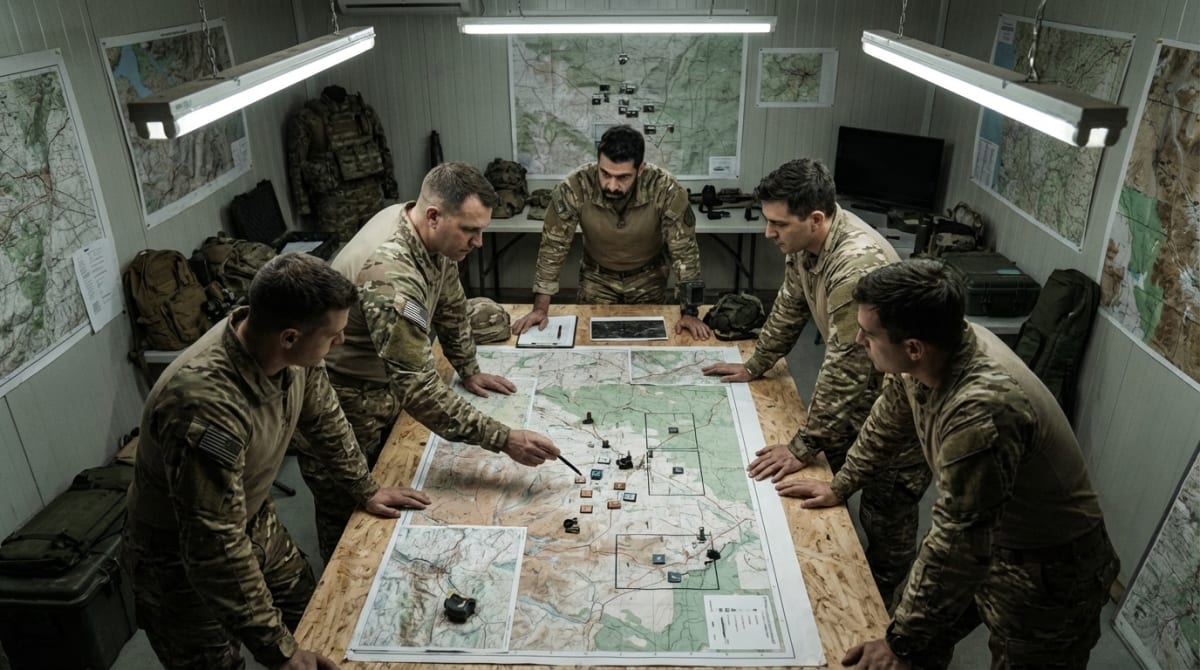
The second crisis is quieter but equally urgent. According to analysis published by the Royal United Services Institute (RUSI) this week, coalition forces expended 11,294 munitions in the first 16 days of the conflict, at an estimated cost of $26 billion.
The problem isn't the total cost. It's what they fired.
"The US military is approximately a month, or less, away from running out of ATACMS/PrSM ground-attack missiles and THAAD interceptors," the RUSI paper warns. "Israel is in an even more precarious spot, with its Arrow interceptor missiles likely to be completely expended by the end of March."
Germany's defence minister, Boris Pistorius, put the scale in perspective during a visit to Canberra this week: "The Gulf states used more interceptors, Patriots for example, in just a couple of weeks than Ukraine [used] in more than four years."
The CEO of Rheinmetall, the German defence giant, assessed last week that global stockpiles are "empty or nearly empty," and that if the war continues another month, "we nearly have no missiles available."
The constraint isn't money but manufacturing capacity. The RUSI paper states that "a munition becomes critical when its replenishment is gated by thin suppliers, long qualification cycles, or constrained components like rocket motors and guidance electronics."
Worse: some of those components, like sulphur, are in short supply with the Strait of Hormuz closed.
"Without Clear Objectives, Without a Clear Strategy"
Germany's Pistorius was blunt in his assessment. The war, he said, had been started "without clear objectives, without a clear strategy and especially without any exit strategy."
That lack of clarity is now meeting physical constraints. If Trump wants to continue striking Iran, he can, but the coalition will have to accept "greater risk for aircraft and tolerating more missile and drone 'leakers' damaging forces and infrastructure," as RUSI puts it.
An off-ramp is the alternative. But as Pistorius said, "withdrawing all the actions by the US out of the region, would leave the region in a situation of severe and critical instability."
Trump has oscillated wildly between claiming peace is near and ordering more troops to the Gulf. He extended his ultimatum for Iran to reopen the Strait by ten days on March 26, pausing strikes on Iranian energy infrastructure. The move suggests he knows he needs a way out.
What Trump hasn't said publicly is that the decision may no longer be his to make. The oil isn't flowing with Iran blocking the Strait, and the missiles are running out faster than they can be replaced.
And neither problem cares about the next Truth Social post.
TLDR
Four weeks into the US-Iran conflict, two physical realities are forcing Trump's hand: the closure of the Strait of Hormuz has removed 10% of global oil supply, and the coalition has burned through advanced missiles faster than they can be replaced. Germany's defence minister says the war started "without clear objectives, without a clear strategy and especially without any exit strategy."
SOURCES & CITATIONS
- Trump struggles to find an off-ramp as an oil crisis meets a munitions crisis
- Over 11,000 munitions in 16 Days of the Iran War: 'Command of the Reload' Governs Endurance
- Iran Live Updates: Trump Extends Deadline for Iran to Open Strait of Hormuz or Face Power Grid Strikes
- Trump's Iran war oil shield is cracking
- Boris Pistorius interview, Canberra
FREQUENTLY ASKED QUESTIONS