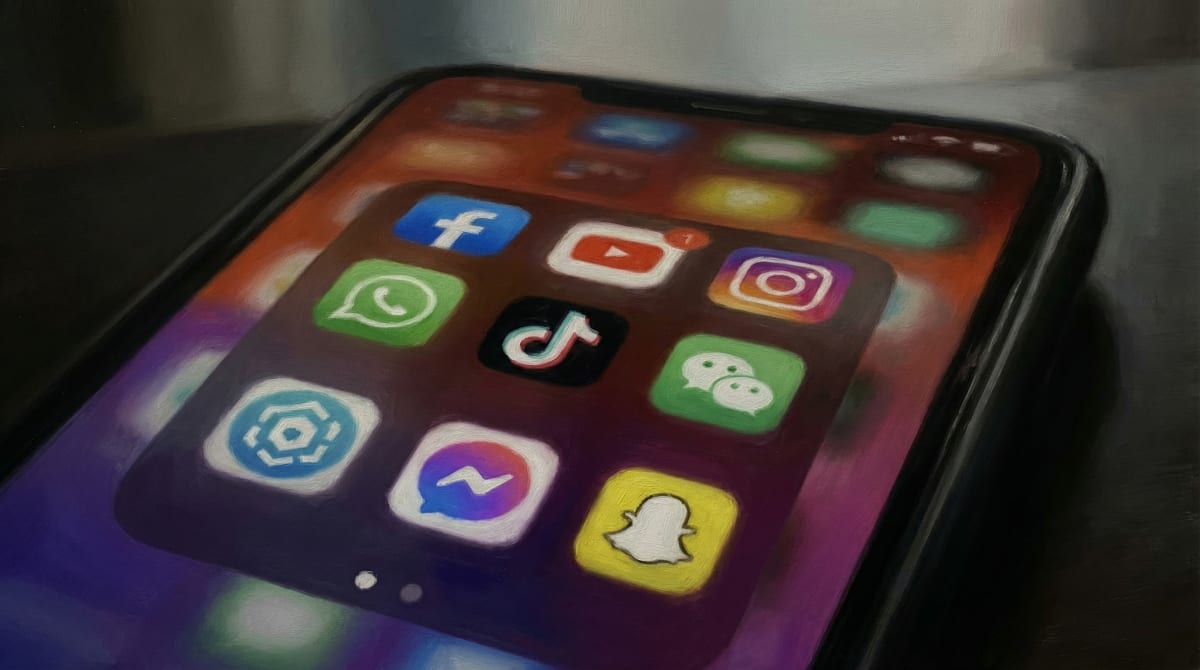
Video platforms spent a decade attempting to defy financial gravity. Media executives assumed that distributing content over IP networks changed the basic rules of distribution. They pursued pure subscription models, projecting infinite addressable markets and near-zero churn rates, but by 2026, gravity reasserted itself across the entire media ecosystem.
KEY TAKEAWAYS
Business mechanics of a subscription streaming service require massive capital before a single user signs up. A platform pays fixed prices for content production or licensing, and those costs must amortize over the subscriber base. Reaching scale requires millions of concurrent users to reduce the per-user cost of a $100 million series, which forces aggressive marketing expenditure to acquire the necessary audience volume.
Years ago, Customer Acquisition Cost sat comfortably below the Lifetime Value of a subscriber. Investors cheered when a platform spent $40 to acquire a user who stayed for three years paying $10 a month, creating significant free cash flow.
The Math of Churn
This math eventually broke. As the market saturated, acquisition costs tripled while consumers learned to optimize their behavior, subscribing for a specific premiere, consuming the series in a weekend, and canceling before the second billing cycle hits. Anyone who costs $120 to acquire and leaves after paying $15 generates a $105 loss, and platforms cannot make that up in volume.
Executives faced a simple reality: they had to increase revenue per user without triggering mass cancellations, and advertising provided the necessary mechanism to bridge the gap.
Deloitte Insights data from March 2026 quantifies the consumer response:
Adoption of ad-supported streaming video on demand (AVOD) services continues to increase, with 68% of SVOD subscribing households now having at least one AVOD service.
People tolerate interruptions to defend their monthly budgets. Replacing lost subscription fees with ads repairs the broken unit economics. An ad-supported tier priced at $7 generates approximately $11 in advertising revenue per user per month. This combined $18 ARPU (Average Revenue Per User) exceeds the $15 premium subscription price.
Viewers on ad tiers also exhibit lower churn rates across most major streaming platforms. Avoiding the psychological friction of a large monthly charge keeps retention high. Users leave those subscriptions active year-round, treating them as utility bills.
Mobile-First Infrastructure
This shift happens alongside a change in how people watch video. Hardware dictates the advertising format, and the distribution mechanism is increasingly handheld.
An SNS Insider report details the revenue distribution:
The smartphone segment was the leading contributor toward the growth of the Digital Media Market, generating around 42% of the total revenue, driven by widespread smartphone usage for content consumption.
Watching on phones forces engineering teams to rebuild inside streaming companies. Any platform optimizing for a 65-inch living room screen builds different infrastructure than one optimizing for a smartphone. Cellular networks introduce significant latency and bandwidth constraints that engineering teams must solve. Developers spend their cycles building adaptive bitrate algorithms that maintain video quality on a 5G connection dropping to 4G in a tunnel.
Financial success now depends on backend engineering rather than front-end design. Apps serve merely as the presentation layer for a high-frequency ad-bidding engine.
The New Ad-Tech Stack
Inserting ads server-side requires millions of dollars in server infrastructure. When millions of concurrent users hit an ad break, the platform must query an ad exchange, bid on the inventory, select the winning creative, and stitch the video file into the content stream in milliseconds. Network failures mean the user sees a black screen. Sluggish processing makes the video buffer. Streaming platforms function primarily as [ad-tech companies](/tag/technology/) today. Current valuation depends heavily on the latency of their ad-stitching microservices.
Handheld screens change the advertising product directly. Traditional commercials sell brand awareness, while mobile ads drive direct response. Someone holding a touchscreen can click, download, or purchase immediately. Netflix and Disney are rebuilding their ad stacks to capture direct-response budgets, moving away from simple video insertions toward interactive, trackable units.
Market Saturation
Digital delivery now operates as the primary way people watch video.
Nielsen's Q1 2026 Total Audience Report provides the baseline for this dominance:
Streaming now accounts for 47.3% of all U.S. TV viewing, confirming a broader trend of digital-first consumption across all demographics.
Broadcast survives almost exclusively as a live sports and news delivery system. Most other content is moving toward IP network distribution models. Cable television bundles from 1998 look exactly like the business models operating on those IP networks today.
Subscribers pay a base access fee to the platform. Marketers subsidize the massive content costs through programmatic buying. Media networks aggregate audiences and sell their attention. Internet packet switching replaced coaxial cables, and programmatic ad exchanges replaced upfront media buys. Core math hasn't changed: media companies buy content at a fixed cost and sell the resulting attention at a variable rate.
Wall Street analysts know subscriber counts represent a vanity metric. Average Revenue Per User dictates valuation. Engagement matters deeply; a platform with 50 million highly engaged users viewing three hours of ad-supported video daily holds vastly more value than a platform with 100 million users who log in once a month for an ad-free movie.
Modern media companies rebuilt television instead of replacing it. Content distribution pipes changed, but the math of aggregating human attention hasn't changed.
TLDR
Subscription fatigue destroyed the unit economics of ad-free streaming. Platforms responded by aggressively expanding ad-supported tiers, shifting their engineering focus from subscriber acquisition to programmatic ad delivery.
SOURCES & CITATIONS
FREQUENTLY ASKED QUESTIONS