The Pentagon is preparing for weeks of ground operations in Iran, U.S. officials said, an escalation beyond the air and naval campaign launched on February 28.
KEY TAKEAWAYS
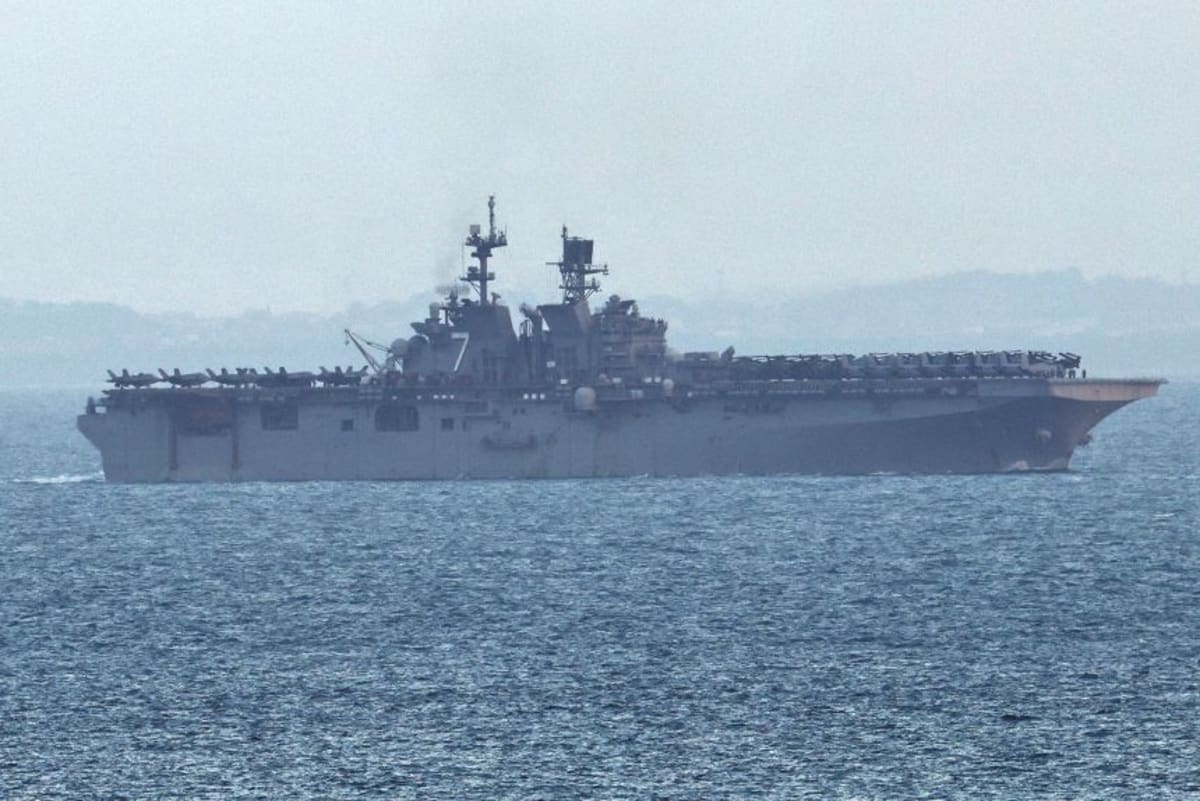
More than 3,500 Marines and sailors from the 31st Marine Expeditionary Unit arrived in the Middle East on March 27 aboard the USS Tripoli, an America-class amphibious assault ship. U.S. Central Command announced the deployment in a statement the following day, describing the unit as an amphibious strike force with transport aircraft and tactical assets.
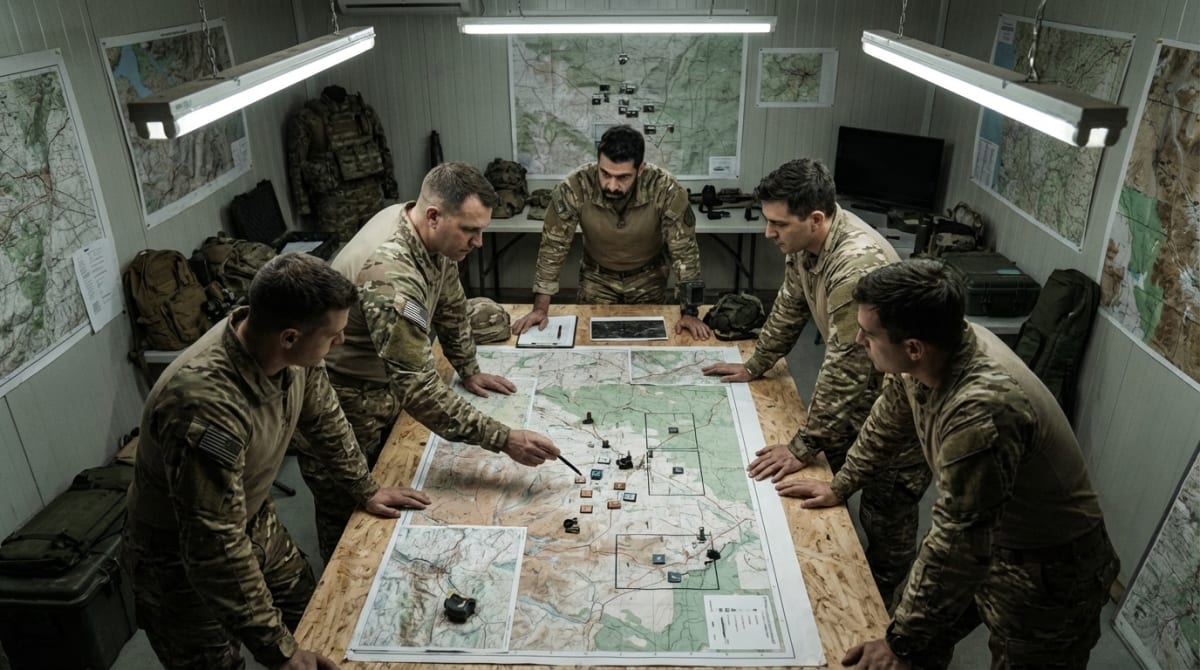
The Washington Post reported on March 28 that Pentagon planners are preparing for limited ground operations lasting several weeks. Officials quoted in the report said potential targets include Kharg Island, Iran's main oil export terminal in the northern Persian Gulf, and coastal facilities near the Strait of Hormuz.
A separate deployment of Army paratroopers has also arrived in the region, though the Pentagon has not disclosed their location. The New York Times reported on March 29 that the paratroopers are positioned within striking distance of Iran and could be used to seize Kharg Island or conduct raids on coastal infrastructure.
Kharg Island handles 90% of Iranian oil exports
Kharg Island sits 25 kilometres off Iran's coast in the Persian Gulf. The island's oil terminal complex handles approximately 90% of the country's crude exports, according to maritime intelligence firm TankerTrackers.com.
Since U.S.-Israeli strikes began on February 28, Kharg has exported 13.7 million barrels of oil, at a rate of 1.1 to 1.5 million barrels per day. The terminal has storage capacity for 30 million barrels.
Tankers capable of carrying up to 2 million barrels dock at the island's jetties to load crude. The terminal's destruction or seizure would eliminate Iran's ability to export oil at scale, cutting off the primary revenue stream funding the country's military operations.
The island also houses pipelines connecting it to onshore refineries and fields. Damage to this infrastructure would take months or years to rebuild, energy analysts told the BBC in recent days.
White House frames operations as ending nuclear threat
President Donald Trump announced Operation Epic Fury in a White House statement on March 26. The operation aims to "crush the Iranian regime and end the nuclear threat," according to the release.
The White House statement described the campaign as "peace through strength" and said it would "eliminate Iran's capacity to threaten American interests or our allies in the region."
Trump told reporters on March 27 that he was considering deploying up to 10,000 additional troops to the Middle East, Fox News reported. "We're looking at all options to make sure Iran never has a nuclear weapon," Trump said.
Defense Secretary Pete Hegseth has not confirmed specific troop numbers or operational timelines. Pentagon spokesman Air Force Brigadier General Pat Ryder said on March 29 that the department would not discuss "operational details that could jeopardize the safety of our forces."
Total American presence in Middle East exceeds 50,000
The 31st MEU deployment brings total military personnel in the region above 50,000, The New York Times reported on March 29. That is the largest concentration of American forces in the Middle East since operations in Iraq and Syria peaked in 2017.
Washington has also deployed the aircraft carrier USS Gerald R. Ford and its strike group, B-2 stealth bombers operating from Diego Garcia, and fighter squadrons to bases in Qatar, the UAE, and an undisclosed location.
CBS News reported on March 29 that the Marine deployment includes CH-53E Super Stallion heavy-lift helicopters, MV-22 Osprey tiltrotor aircraft, and F-35B Lightning II strike fighters operating from the USS Tripoli's flight deck.
The 31st MEU is based in Okinawa, Japan, and had been conducting exercises in the Western Pacific before receiving orders to redeploy to the Middle East.
Lawmakers divided on ground operations
The Guardian reported on March 29 that congressional leaders received a classified briefing on the ground operations plan earlier in the week. Reactions split along party lines.
Senator Tom Cotton, a Republican from Arkansas, told reporters the plan was "necessary to end Iran's nuclear ambitions once and for all." Senate Majority Leader John Thune said Republicans would support the president's authority to conduct operations.
Democratic lawmakers raised concerns about mission scope and duration. Senator Chris Murphy of Connecticut told reporters on March 28 that "limited ground operations" could expand into a protracted occupation. "We've been down this road before," Murphy said, referencing the Iraq War.
Representative Adam Smith, the ranking Democrat on the House Armed Services Committee, said he had not received adequate assurances about force protection or exit strategy. "What is the definition of success? When do our troops come home?" Smith asked during a press conference on March 29.
Iran warns of 'total war' if ground invasion proceeds
Iran's Supreme Leader Ayatollah Ali Khamenei said on March 28 that any ground invasion would be met with "total war," according to Iranian state media. "The Americans will face a graveyard if they set foot on our soil," Khamenei said in remarks broadcast on state television.
Iran's Revolutionary Guard Corps has mobilised reserves and positioned anti-ship missile batteries along the Persian Gulf coast, according to satellite imagery analysed by the Institute for the Study of War.
The Iranian Navy has also deployed fast attack craft and midget submarines near the Strait of Hormuz, posing a threat to U.S. amphibious forces, defence analysts said.
Al Jazeera reported on March 29 that Iran has appealed to the UN Security Council to condemn the planned U.S. operations as a violation of international law. Russia and China have signalled they would support Iran's position, though a formal vote has not been scheduled.
Australia watching operations closely
Australian Defence Minister Andrew Hastie told Parliament on March 29 that Australia was monitoring the situation through Five Eyes intelligence channels but had not committed forces to ground operations.
"We support our American allies, but we have not been asked to participate in any ground campaign," Hastie said. He added that RAAF aircraft conducting surveillance missions in the region would continue operations.
Prime Minister Anthony Albanese said on March 30 that Australia's priority was de-escalation. "We continue to call for restraint and a diplomatic path forward," Albanese told reporters in Canberra.
Former Australian ambassador to Iran Lyndall Sachs told ABC News on March 30 that a ground invasion would destabilise the entire region. "This isn't just about Iran. It's about what happens to Iraq, Syria, Lebanon, and the Gulf states when this conflict expands," Sachs said.
What to watch: Marine amphibious operations require weeks of logistics buildup. The USS Tripoli's arrival timeline suggests any ground action wouldn't begin before mid-April. Pentagon statements about "operational security" usually precede moves by 10-14 days based on previous Middle East deployment patterns.
TLDR
The Pentagon is preparing for weeks of limited ground operations in Iran, U.S. officials told The Washington Post on March 28. More than 3,500 Marines and sailors from the 31st Marine Expeditionary Unit arrived in the region aboard the USS Tripoli on March 27. Potential targets include Kharg Island, which handles 90% of Iran's oil exports, and coastal sites near the Strait of Hormuz. Army paratroopers are also deploying within striking distance of Iranian territory.
SOURCES & CITATIONS
- Peace Through Strength: President Trump Launches Operation Epic Fury, The White House, 26 March 2026
- CENTCOM statement on 31st MEU deployment, U.S. Central Command, 28 March 2026
- Pentagon prepares for weeks of ground operations in Iran, Shane Harris and Dan Lamothe, The Washington Post, 28 March 2026
- The U.S. Now Has Over 50,000 Troops in the Middle East, Helene Cooper, The New York Times, 29 March 2026
- Lawmakers react to reports Pentagon preparing for ground operations in Iran, Guardian staff, The Guardian, 29 March 2026
- Why is Iran's Kharg Island so important?, Sky News, 29 March 2026
FREQUENTLY ASKED QUESTIONS