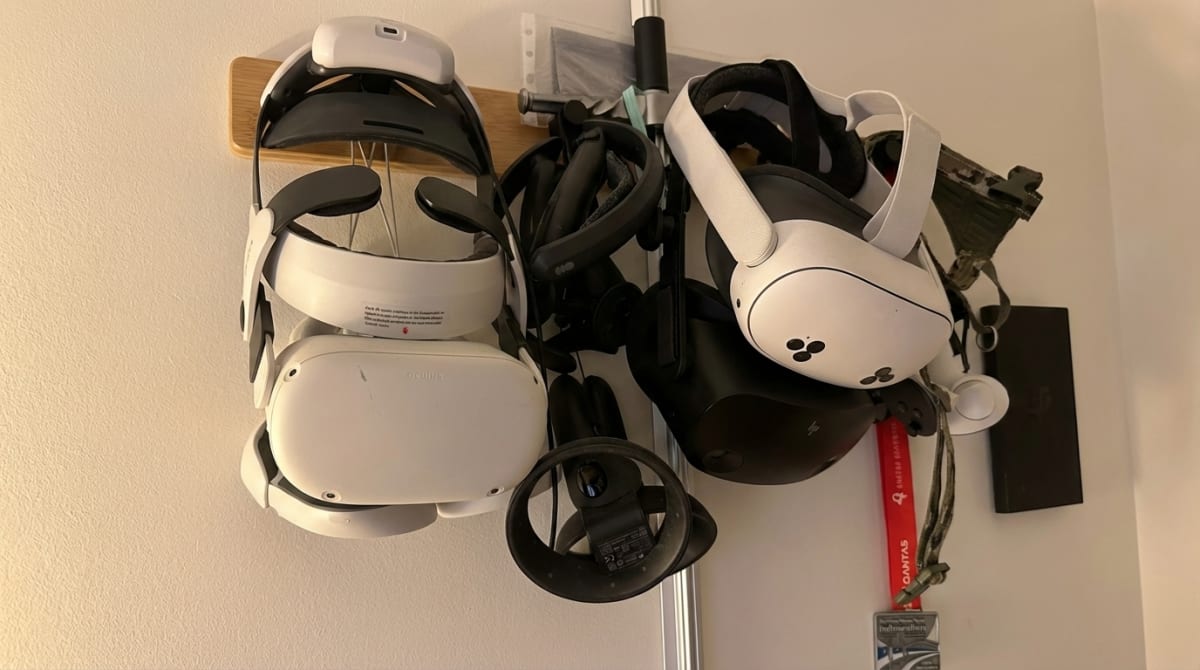
Meta laid off 168 employees in Washington state on March 31, 2026, according to a filing with the state's Employment Security Department. The cuts hit offices in Seattle, Bellevue, and Redmond, along with remote workers.
KEY TAKEAWAYS
The layoffs targeted Meta's Reality Labs division, which makes Quest VR headsets and the Horizon Worlds virtual social network. A Meta spokesperson said the company is "finding other opportunities for employees whose positions may be impacted."
The cuts follow a memo obtained by Business Insider that described a broader overhaul of Reality Labs. A 1,000-employee team within the division is being reorganized into AI-native "pods" with new titles and a flatter structure.
'AI builders' and flatter hierarchy
The memo said everyone in the affected division will have one of three titles: AI Builder, AI Pod Lead, or AI Org Lead.
"Our ultimate goal is to drive a step change in engineering productivity and product quality," the memo said. "To achieve this, we're fundamentally rewiring how we operate, how we are structured, and how we support each other."
Each pod consists of a small group of AI builders focused on specific outcomes, often working across disciplines. Engineers could take on design work depending on the task.
Pod Leads oversee day-to-day operations. Org Leads manage performance reviews and promotions, supported by AI systems. The memo said overall team size will remain the same.
A Meta spokesperson told Business Insider the reorganization is not related to the March 31 layoffs.
Zuckerberg: AI will change work in 2026
Meta CEO Mark Zuckerberg said in January that 2026 is the year AI will begin to "dramatically change the way we work." Projects that once required large teams could be handled by one "very talented" person, Zuckerberg said.
A report from February claimed Meta expects 65% of its engineers to write 75% or more of their code using AI by mid-2026. In specific divisions, targets reach 50-80% AI-assisted code for machine learning teams.
The Reality Labs cuts add to earlier layoffs at the division. In January 2026, Meta cut 331 Washington state jobs and shut down several VR game studios, eliminating about 10% of Reality Labs staff.
Meta shares rose nearly 3% in mid-March after Reuters reported the company could slash more than 20% of its workforce. A Meta spokesperson said at the time that report was "speculative" and about "theoretical approaches."
AI-for-AI trade-off across tech
Meta is pouring billions of dollars into artificial intelligence to catch up to rivals like OpenAI, Anthropic, and Google. The company cut hundreds of jobs on March 25, 2026, across Reality Labs, Facebook, global operations, recruiting, and sales.
Research firm Challenger, Gray, and Christmas found AI has been cited as rationale behind 92,000 job cuts at US companies since 2023. Nearly two-thirds came in 2025.
But a survey from consulting firm Robert Half in late 2025 found 29% of 2,000 hiring managers said they have reopened positions previously eliminated after implementing AI. Fifty-five percent said they planned to increase contract or temporary workers in the first half of 2026.
Advisory firm Gartner predicted half of companies cutting customer service staff and ascribing the shift to AI will look to rehire people for similar roles by next year.
Kathy Ross, a senior director analyst at Gartner, told Business Insider most layoffs right now aren't actually happening due to AI. "AI might have played a role, but they're not a result necessarily of AI successes," Ross said. "Instead, the layoffs seem to be part of a broader strategy to reinvest funds in AI, hoping for success down the line."
TLDR
Meta cut 168 jobs in Washington state on March 31, 2026, targeting its Reality Labs virtual reality division. The cuts follow a broader restructuring that reorganizes 1,000 Reality Labs employees into AI-native 'pods' with new titles: AI Builder, AI Pod Lead, and AI Org Lead. CEO Mark Zuckerberg said AI will change how people work this year, with projects that once required large teams now handled by individuals.
SOURCES & CITATIONS
FREQUENTLY ASKED QUESTIONS