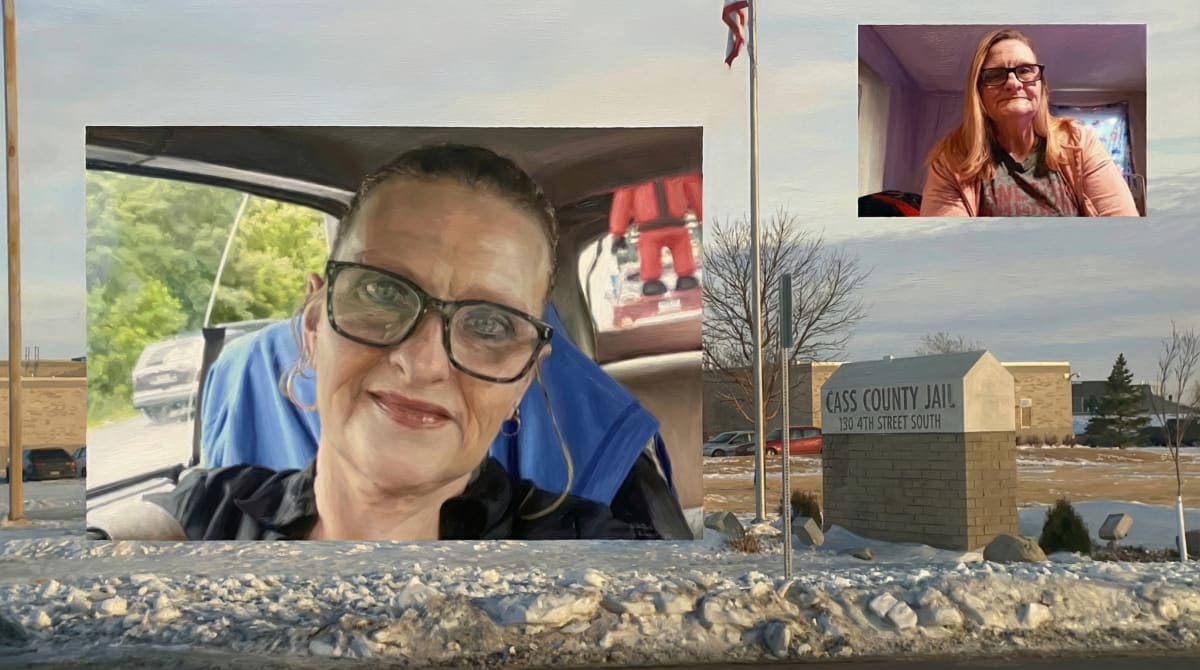
Angela Lipps spent Christmas Eve 2025 walking out of a North Dakota jail in summer clothes. It was minus 12 degrees. She'd been locked up for five months: arrested in Tennessee, extradited over 1,000 miles north, charged with bank fraud in a state she'd never seen before.
KEY TAKEAWAYS
The evidence against her? An AI facial recognition system said she looked like someone on a fake ID.
The evidence clearing her? Bank records showing she was buying cigarettes and depositing Social Security checks in Tennessee at the exact times police placed her in Fargo.
Those records existed from day one. Police didn't look at them until December 19, after Lipps had already been in custody since July 14.
How an algorithm becomes probable cause
West Fargo police ran surveillance footage through Clearview AI, the controversial facial recognition company that scraped billions of photos from social media without permission. The system flagged Lipps as a "potential suspect" based on an image from a fake ID used in a fraud case.
West Fargo police shared that match with Fargo police. Fargo police assumed their neighbours had also sent surveillance photos for comparison. They hadn't. Fargo police never submitted those photos to North Dakota's State and Local Intelligence Center, which is trained and certified in facial recognition analysis.
A Cass County judge signed an arrest warrant July 1. Nationwide extradition. Felony theft. Felony unauthorized use of personal identifying information. Angela Lipps, 50-year-old grandmother from Tennessee, was arrested at her rental home two weeks later.
She had no idea she was wanted for crimes in North Dakota. She'd never been on a plane before. "I was terrified and exhausted and humiliated," she wrote on a verified GoFundMe after her release.
Three months to notify, two weeks to clear
Lipps was arrested in Tennessee on July 14. Tennessee authorities emailed North Dakota law enforcement that same day, according to her attorneys. But it took until October for Tennessee to officially notify Cass County Sheriff's Office that they had Lipps' extradition waiver.
Fargo police told CNN they couldn't determine why the notification took so long: whether Lipps was serving time for a probation violation or fighting extradition. Her lawyers say the notification went out immediately. Someone dropped the ball. Lipps sat in a Tennessee jail for three months while the paperwork moved.
She was extradited to North Dakota in October. Her court-appointed lawyer, Jay Greenwood, immediately asked for bank records. Once they arrived, Fargo police met with Greenwood and Lipps on December 19. She'd been in jail for more than five months.
Bank records were definitive. Lipps was in Tennessee during the fraud. On December 23, the detective, the state's attorney, and the judge "mutually agreed to dismiss the charges without prejudice to allow for further investigation," according to Fargo police. Lipps walked out Christmas Eve.
What a life costs when the algorithm is wrong
Lipps is a mother of three and grandmother of five. When she was arrested, she lost her rental home. She lost her car. She lost her dog. Everything she owned was gone when she got out.
"The trauma, loss of liberty, and reputational damage cannot be easily fixed," her lawyers told CNN. Lipps is exploring civil rights claims but hasn't filed a lawsuit yet.
Her legal team says the real question is why police didn't do basic investigation before ruining someone's life.
"Officers knew that Angela was a Tennessee resident, and we have seen no investigation by officers to determine whether she traveled to or was in North Dakota at the time of the bank thefts," her attorneys said in a statement. "Instead, an officer used AI facial recognition as a shortcut for basic investigation, resulting in an innocent woman being detained and transported halfway across the country to answer for charges that she had nothing to do with."
Police chief apologises to the community, not to Lipps
Fargo Police Chief Dave Zibolski held a press conference on March 24, acknowledging "a couple of errors" in the investigation. He apologised for the impact on "trust in the community." He did not apologise to Angela Lipps.
"At this juncture, we still don't know who's involved and who's not involved in the fraud cases. We're going to have to whittle through all of this kind of vast network of people and who's involved."
The case is still open. Charges against Lipps were dismissed "without prejudice," meaning they could be refiled if police find new evidence. Chief Zibolski wouldn't rule it out.
Fargo Police Department has since banned the use of West Fargo's AI facial recognition system and pledged to work only with certified state and federal systems. Monthly reports on facial recognition use will go to the Investigations Division commander "so that we can keep a closer eye on this evolving technology."
Chief Zibolski also said there's a structural problem: no automatic mechanism exists for police to know when someone arrested on their warrant arrives in custody. Fargo is "considering improvements," including daily booking roster reviews.
Disciplinary action against the officers involved remains under consideration. "What I can tell you, from what I know right now, is that the persons involved are also very upset by this. They pride themselves on their thoroughness," Zibolski said. "No one wants to see someone detained, arrested unnecessarily."
This is not the first time
Lipps' case is one of at least six documented wrongful arrests linked to facial recognition errors in the United States since 2020. Five of those six cases involved Black defendants. Lipps is the first widely reported case involving a white woman.
Facial recognition systems perform worse on women and people of colour. The National Institute of Standards and Technology tested 189 algorithms in 2019 and found higher false-positive rates for Asian and Black faces compared to white faces. Women showed the worst disparities.
Ian Adams, an assistant professor of criminology at the University of South Carolina, told CNN that police departments are adopting AI tools faster than they can evaluate whether they work.
"We're doing it so quickly that all agencies really have to rely on is vendor promises. The overwhelming amount of the time, it's not just a technology problem, it's a technology and people problem. We get nightmare scenarios when we don't have people doing what they're supposed to do, with technology that they're using inappropriately."
Adams says the power of AI tools creates complacency. "It's very easy to get lulled into a sense of complacency. Your detectives need to be really, really careful to make sure that they're putting their human eyes on these algorithmic results."
Clearview AI's controversial business model
Clearview AI scraped over 30 billion images from Facebook, Instagram, YouTube, and other platforms without permission. The company now sells access to its database exclusively to law enforcement and government agencies, at least since a 2022 settlement with the ACLU prohibited Clearview from selling to "most businesses and other private entities."
Multiple countries and jurisdictions have banned or restricted Clearview's operations. Australia's Privacy Commissioner found the company breached privacy law in 2021. The UK Information Commissioner's Office fined Clearview £7.5 million in 2022. Canadian privacy commissioners called it illegal mass surveillance.
Clearview continues operating in the United States. West Fargo police confirmed to CNN they use the platform. No federal law restricts how police use facial recognition. Cities and states have imposed their own bans or moratoria. North Dakota hasn't joined them.
The systemic failure no one wants to own
Angela Lipps was arrested after police treated an algorithmic suggestion as sufficient evidence. The algorithm didn't fail; the humans did. She spent five months in jail while no one checked whether the algorithm was right, not until her lawyer forced them to.
The bank records that cleared her were "readily available," according to her legal team. Police could have requested them before filing charges. They didn't. They could have requested them after the arrest. They didn't. They requested them in December, after her lawyer asked for them.
Jay Greenwood, Lipps' attorney in the fraud case, summarised the problem: "If the only thing you have is facial recognition, I might want to dig a little deeper."
That baseline for competent policing shouldn't require a court-appointed lawyer to remind trained investigators that correlation is different from evidence.
Lipps told local station WDAY she's "just glad it's over." She has no plans to return to North Dakota. "I'll never go back," she said.
Lipps' lawyers are still investigating why she was held so long, and exploring civil rights claims, though no lawsuit has been filed yet. The fraud case remains open. Somewhere in North Dakota, police are still looking for whoever actually committed the crimes that put Angela Lipps in jail for five months.
The algorithm isn't the villain here. The people who believed it without checking are.
TLDR
Angela Lipps, a Tennessee grandmother, spent five months in jail after Clearview AI facial recognition flagged her for bank fraud in North Dakota, a state she'd never visited. Police had bank records proving she was in Tennessee during the crimes but didn't check them until December, after her lawyer requested them. Fargo police said they made 'errors' but stopped short of apologizing to Lipps.
SOURCES & CITATIONS
- Police used AI facial recognition to arrest a Tennessee woman for crimes committed in a state she says she's never visited
- Woman Spent Five Months in Jail After A.I. Linked Her to Bank Fraud Case
- AI error jails innocent grandmother for months in North Dakota fraud case
- Fargo police refuse to apologize for jailing a Tennessee grandma on bogus AI evidence
FREQUENTLY ASKED QUESTIONS