TLDR
Donald Trump has set a Tuesday, April 8 deadline for Iran to reopen the Strait of Hormuz, threatening military action. Oil prices have climbed over $119 per barrel, and Australia's fuel security is under review.
KEY TAKEAWAYS
Global oil markets were thrown into turmoil on Monday after former US President Donald Trump announced a new deadline for Iran. He demanded the immediate reopening of the Strait of Hormuz by Tuesday, April 8. Prices for Brent crude jumped 8 percent to trade above $119 a barrel on the news.
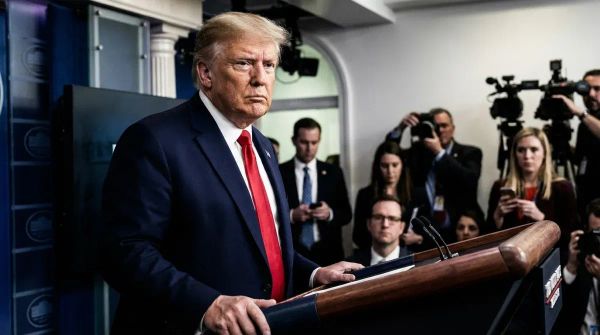
The ultimatum came via a post on Trump's Truth Social platform late on April 6. The post was characteristically blunt. Trump wrote that Iran "can be taken out in one night, and that might be the answer."
A senior White House official, speaking from Washington on Monday, confirmed the deadline was firm. "The President has made his position clear," the official told reporters. "Freedom of navigation through the Strait of Hormuz is non-negotiable. The deadline is 12:00 PM Eastern Standard Time on April 8."
Trump issues stark military ultimatum
In a follow-up post just two hours later, Trump elaborated on his military threat. He said he would "bomb every bridge and power plant" in Iran if his demands were not met. The post sent shockwaves through diplomatic channels and financial markets.
The United States Fifth Fleet, based in Bahrain, has maintained a heightened state of readiness for over three weeks. An unnamed naval commander confirmed two aircraft carrier strike groups are currently deployed in the region. The deployment includes dozens of F-35 fighter jets.
"We are prepared for any contingency," Admiral John Harker of US Naval Forces Central Command said in a statement released on April 7. "Our mission is to deter aggression and ensure regional stability. We have over 25,000 personnel ready."
Tehran's defiant response
Iran's government swiftly rejected a US-backed ceasefire proposal that was presented through Omani intermediaries over the weekend. The Foreign Ministry in Tehran issued a terse statement on Monday morning. It called the proposal "unacceptable" and an attempt at coercion.
Foreign Ministry spokesman Nasser Kanaani told state television on April 7 that Iran would not negotiate under duress. "The Islamic Republic will not surrender its sovereign rights to American threats," Kanaani said. "Any aggression against Iranian territory will be met with a decisive and overwhelming response."
An editorial in the state-aligned Kayhan newspaper on April 7 accused Trump of political grandstanding. "The American president is playing with fire to distract from his domestic problems," the paper said. "Iran's armed forces, numbering more than 600,000 active personnel, are prepared to defend the nation's honour."
Markets react with alarm
The immediate market reaction saw Brent crude, the global benchmark, surge to $119.45, its highest level in 18 months. Commodity traders are bracing for further volatility ahead of the Tuesday deadline. The Strait of Hormuz is the transit point for around 20 percent of the world's total oil consumption.
Amrita Sen, chief oil analyst at Energy Aspects in London, told Bloomberg TV the situation was precarious. "We are one step away from a conflict that could send oil prices rocketing past $150 a barrel," Sen said. "The market has not fully priced in the risk of a full-scale shutdown of the 21 million barrels per day that transit Hormuz."
Global shipping lines are already rerouting vessels away from the Persian Gulf. A spokesperson for Maersk in Copenhagen confirmed on Monday that at least 12 of its container ships were being diverted around the Cape of Good Hope. This adds up to 15 days to their voyage time.
Australia's fuel security under pressure
The crisis prompted an immediate diplomatic response from key US allies. The office of Japanese Prime Minister Sanae Takaichi announced she is planning an urgent visit to Australia next week. Discussions will centre on securing alternative fuel supply chains for the Indo-Pacific region.
In Canberra, Climate Change and Energy Minister Chris Bowen addressed the nation's preparedness. "Australia currently holds 39 consumption days of petrol and 29 consumption days of diesel in our onshore reserves," Bowen told Parliament on Tuesday, April 7. "We are monitoring the international situation very closely."
John Coyne, a defence analyst at the Australian Strategic Policy Institute, said the numbers were concerning. "Those reserve figures are below the 90-day minimum recommended by the International Energy Agency," Coyne said. "A prolonged disruption lasting more than four weeks would have a serious impact on our transport and logistics sectors."
Motorist groups are already warning of sharp price increases at the bowser. An NRMA spokesperson said Australian drivers could expect petrol prices to climb by as much as 30 cents per litre within the next 10 days if the strait remains closed.
FREQUENTLY ASKED QUESTIONS
Why is the Strait of Hormuz so important?
What are Australia's fuel reserve levels?
What could happen to oil prices if there is a conflict?
SOURCES
- Trump, Donald. Post on Truth Social, April 6, 2026.
- Statement from Admiral John Harker, U.S. Naval Forces Central Command, April 7, 2026.
- Iranian Foreign Ministry Statement, Islamic Republic News Agency, April 7, 2026.
- Sen, Amrita. Interview on Bloomberg Television, 'Bloomberg Markets', April 7, 2026.
- Bowen, Chris. Parliamentary Address, Hansard, Parliament of Australia, April 7, 2026.
- Coyne, John. 'Fuel Security in the Hormuz Crisis', Australian Strategic Policy Institute, April 7, 2026.
- Brent Crude Oil Prices, Intercontinental Exchange (ICE), April 7, 2026.