AEMO released its 2026 Gas Statement of Opportunities on Thursday, pushing forecast structural gas supply gaps out to 2030. That is a year later than the operator warned in 2025. It is five years later than the alarm it raised in 2024.
KEY TAKEAWAYS
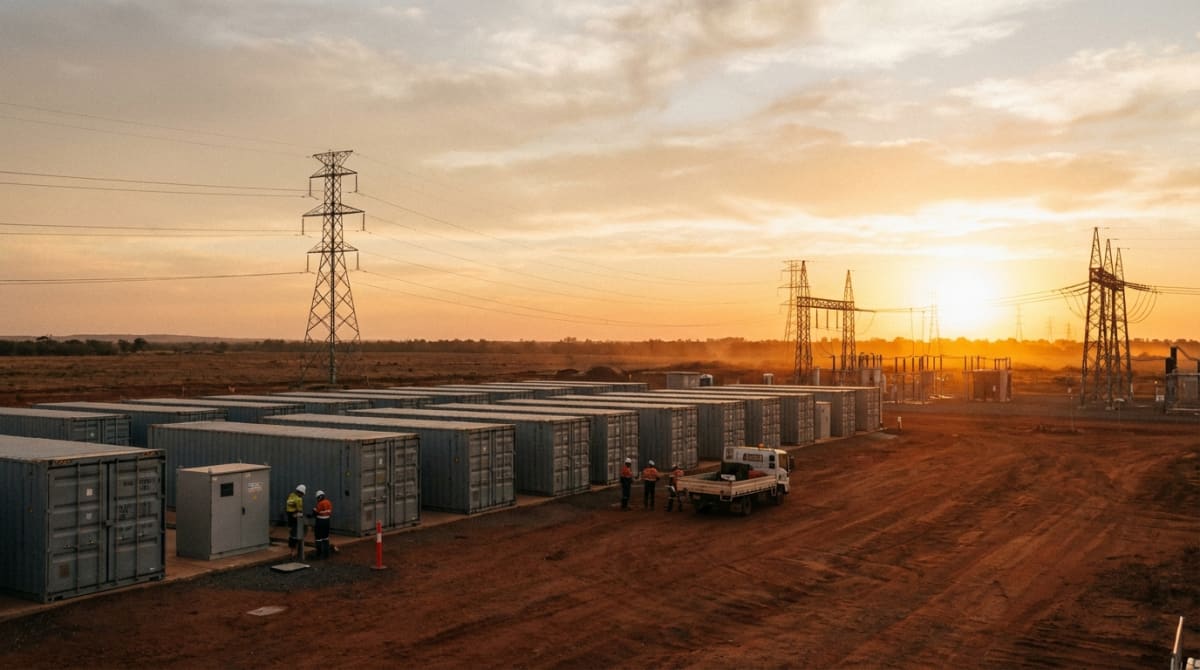
Batteries did the heavy lifting. Roughly 30 GW of battery storage is now under development across Australia, a pipeline that barely existed at this scale two years ago. Nine large-format batteries totalling 2 GW have been shortlisted for reliability payments, locking in dispatchable capacity that displaces the need for gas-fired peaking plants on the hottest and coldest days of the year.
Victoria, South Australia and Tasmania face the most acute exposure. Peak day shortfall risk in those southern states is still forecast for 2029 under a sustained high gas usage scenario, and legacy gas fields in Bass Strait and the Otway Basin are running down faster than new supply can replace them.
Three years of retreating deadlines
March 2024: AEMO told industry that peak-day shortfalls could hit as early as 2025, with broader supply gaps from 2026. Canberra treated the warning as a five-alarm fire.
March 2025: the operator revised both dates outward, to 2029. Gas consumption had fallen faster than modelled.
March 2026: another year, another revision. Shortfalls now sit at 2030.
Each year, the same pair of forces has driven the correction. Households and businesses are switching off gas appliances and switching on electric ones. And developers are flooding the pipeline with battery projects that can firm renewable generation without burning molecules.
Industrial electrification steeper than expected
AEMO found that electrification rates are running steeper than its 2025 projections. The sharpest shift is in the industrial sector, where manufacturers are swapping gas boilers for electric heat pumps and replacing gas-fired process heat with induction and resistance systems.
Residential gas use is dropping too. Victorian households, once the country's heaviest gas consumers per capita, are disconnecting at record rates. South Australian new-build housing has largely abandoned gas connections altogether.
Total gas consumption across the National Electricity Market footprint is in structural decline. That trend is not a forecast. It is showing up in meter data now.
What 2 GW of shortlisted batteries means for the grid
Nine big batteries made the shortlist for AEMO's reliability payments. Combined, they deliver 2 GW of dispatchable capacity to the grid at short notice.
Reliability payments guarantee revenue for generators and storage operators willing to be available during forecast supply shortfalls. For battery developers, the payments de-risk projects that might not stack up on energy arbitrage alone. For the grid, they replace gas peakers that would otherwise run for a handful of hours each year at steep cost.
30 GW sits behind those nine. The broader pipeline of battery projects under development dwarfs the 2 GW shortlist, and AEMO's modelling assumes a growing share of that pipeline will reach financial close over the next four years.
Coal retirements add pressure from 2030
Batteries and electrification are buying time. They are not buying a permanent reprieve.
AEMO's report is blunt on this point. New gas supply investment is still needed from 2030 as legacy production in southern states declines and ageing coal plants retire on schedule. Liddell closed in 2023. Eraring is set to follow. Yallourn has a firm closure date. Each retirement strips thermal generation from the system, and on windless winter evenings in Melbourne or Adelaide, gas remains the fallback fuel.
Structural supply gaps emerge from 2030 under most weather conditions in AEMO's central scenario. Even with faster electrification and a fatter battery pipeline, the maths does not close without fresh gas molecules entering the market.
Bowen frames the numbers
Federal Energy Minister Chris Bowen seized on the report within hours of its release.
"More renewables, more batteries and sensible gas policy are improving energy security and putting Australia in a stronger position," Bowen said.
Bowen has staked his political brand on the energy transition delivering lower prices and firmer supply. A third consecutive year of retreating shortfall dates fits that narrative neatly. His critics in the Coalition will point to the same report's warning that gas investment cannot stop.
Both readings are in the document. AEMO is not picking sides.
What comes next
AEMO's 2026 Gas Statement of Opportunities covers the outlook to 2034. The operator will update the forecast again in March 2027.
Between now and then, the variables are straightforward. If battery deployments accelerate and industrial electrification keeps outrunning the models, the 2030 deadline will shift again. If gas field declines steepen or a coal plant closes ahead of schedule, it could snap back.
Three years ago, 2025 was the crisis year. It came and went. The crisis is still coming. It is just walking slower than anyone expected.
TLDR
AEMO's 2026 Gas Statement of Opportunities has pushed forecast gas shortfalls out to 2030, a year later than its 2025 forecast and five years later than it warned just two years ago. Accelerating electrification and approximately 30 GW of battery storage under development are driving the shift.
SOURCES & CITATIONS
FREQUENTLY ASKED QUESTIONS