
TLDR
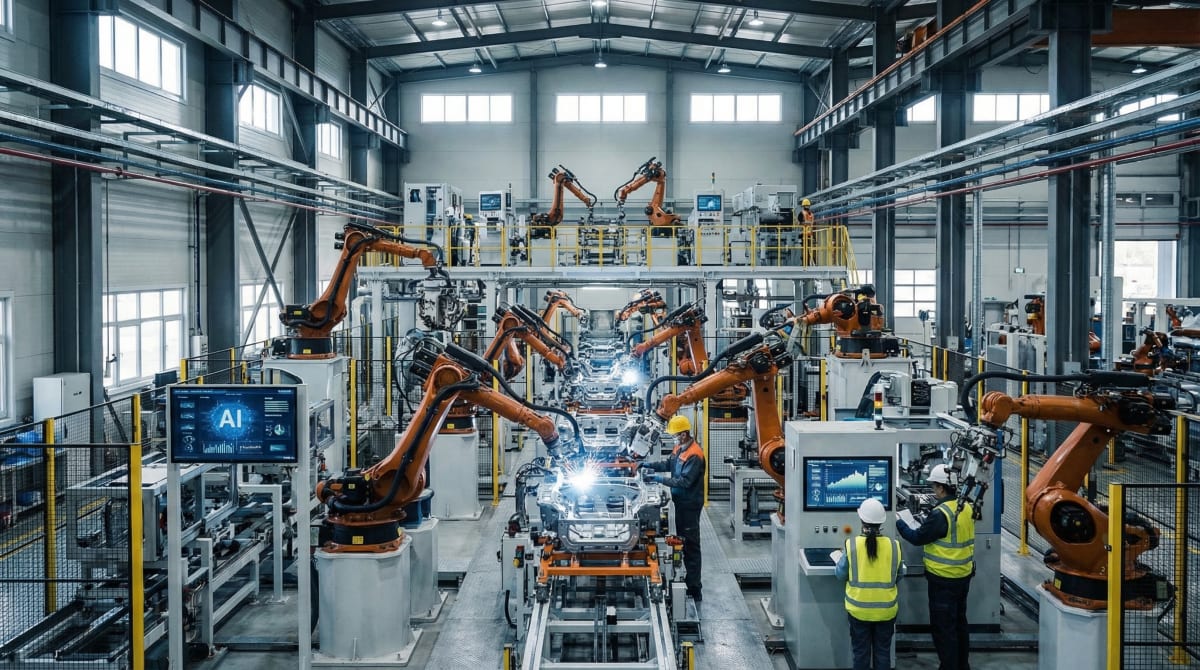
Jeff Bezos is reportedly raising $100 billion to acquire and automate manufacturing companies with AI through Project Prometheus. The fund is said to target the aerospace, semiconductor, defence, and automotive sectors. The scale of the fund has prompted analysis of its potential effects on manufacturing employment and the ownership of strategic industrial assets.
KEY TAKEAWAYS
Jeff Bezos is reportedly seeking to raise $100 billion for a fund to acquire and automate US manufacturing companies using artificial intelligence. The capital is being sought from international sources, including sovereign wealth funds in Singapore and the Gulf states.
Project Prometheus Details
Recent reports indicate the fund is connected to Project Prometheus, an AI venture where Bezos serves as co-CEO alongside former Alphabet executive Vik Bajaj. Project Prometheus, which launched with $6.2 billion in initial funding, develops AI models designed to learn from physical manufacturing processes rather than from digital data.
The fund's target sectors reportedly include aerospace, semiconductor, defence, and automotive companies. These industries are considered critical to US national security and supply chains.
We're building AI that learns from the real world rather than from digital information.
— Project Prometheus founding statement
The United States has approximately 12 million manufacturing workers with a median annual wage of around $45,000, according to the Bureau of Labor Statistics. The proposed $100 billion fund represents an investment of approximately $8,333 per worker in automation capital.
Capital Raising and Foreign Investment
Bezos has reportedly met with managers of sovereign wealth funds in Singapore, Dubai, and Abu Dhabi to raise capital. The use of foreign state-backed funds to acquire companies in strategic sectors such as defence and semiconductors has prompted commentary from policy analysts regarding the control of national industrial assets.
Reported Investment Strategy
The fund's reported strategy is to acquire manufacturing companies, then deploy AI systems to implement automation, reduce labour costs, and increase output. The objective is to generate returns for investors from improved profit margins.
Bezos aims to raise $100 billion for AI manufacturing fund.
— Wall Street Journal, March 2026
Potential Labour and Economic Impacts
The scale of the proposed fund has led to analysis by economists and policy experts on its potential to accelerate labour displacement in the manufacturing sector. Such an injection of automation capital could create challenges for workforce retraining and reallocation.
Further analysis focuses on the ownership of the industrial assets and the distribution of financial returns. The reported model would see foreign capital used by a private US entity to acquire and control these assets, with returns flowing to the fund's investors.
SOURCES & CITATIONS
FREQUENTLY ASKED QUESTIONS





_(cropped).jpeg?ref=bushletter.com)