Foreign Minister Penny Wong will log on to a secure virtual summit from Canberra at 10pm tonight to discuss the Strait of Hormuz blockade alongside representatives from 35 nations. The United States won't participate.
TLDR
Foreign Minister Penny Wong joins 35 nations tonight for diplomatic talks aimed at reopening the Strait of Hormuz. The United States will not attend following a rift with traditional allies. The blockade has stranded 1,000 ships and disrupted the Asian supply chains that provide almost all Australian transport fuel.
KEY TAKEAWAYS
Washington's absence from the UK-led talks marks a clear diplomatic division. US President Donald Trump berated traditional allies last week for refusing to join American military operations against Iran.
UK Prime Minister Keir Starmer is hosting the summit. He told the House of Commons his government promises "all viable diplomatic and political measures" to address the crisis.
The reality is that Australian financial media often covers diplomatic rifts as domestic political events, but observers in Tokyo and Singapore view the situation strictly commercially. Roughly 20 per cent of the world's oil and gas transited the Strait of Hormuz before the conflict escalated. Almost all of Australia's transport fuel arrives via the Middle East, refined through facilities in Singapore and Malaysia.
Prime Minister Anthony Albanese is preparing to visit Singapore and Malaysia to secure fuel supply guarantees. Albanese understands the arithmetic of Australia's energy vulnerability.
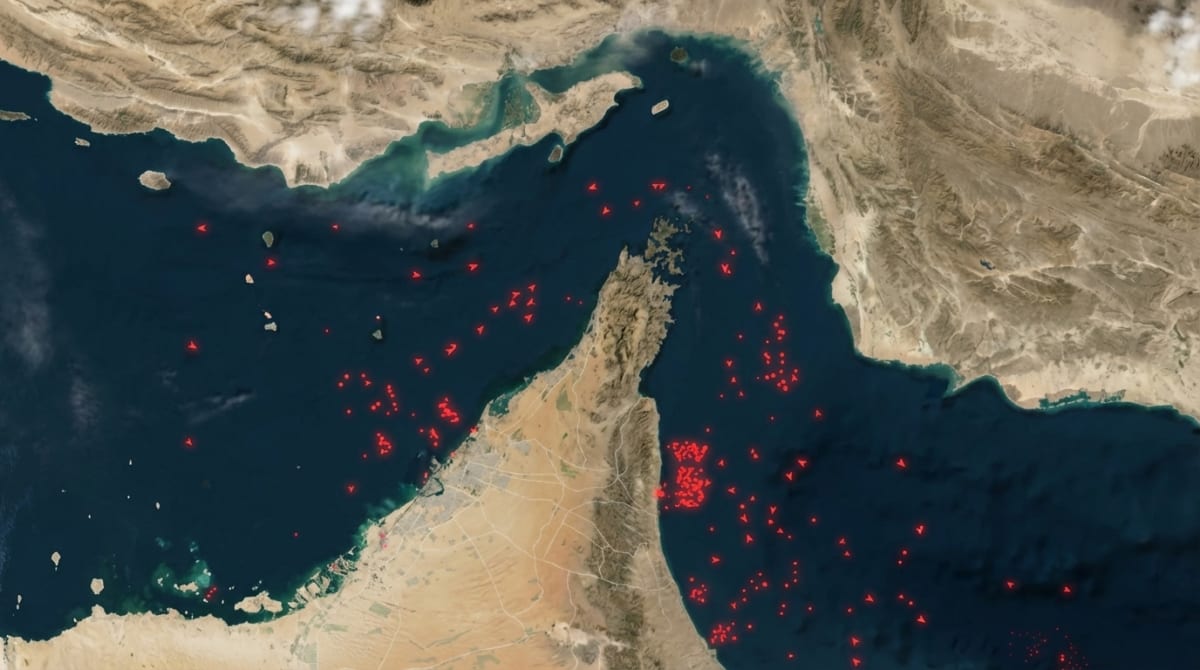
Around 1,000 commercial ships and thousands of sailors remain stranded by Iran's partial blockade. Nikkei Asia reported on Wednesday that Japanese shipping companies have rerouted 40 per cent of their fleet around the Cape of Good Hope, a diversion that adds three weeks to transit times and doubles insurance premiums.
Australia signed a UK-led statement on Tuesday condemning Iran's attacks on commercial vessels. Marles described the strait as a "critical waterway being held hostage by the Iranian regime".
France, Germany, Italy, the Netherlands, Japan, Canada, South Korea, New Zealand, the United Arab Emirates, and Nigeria will dial in tonight. Participating nations are unwilling to launch joint military action until a ceasefire is reached.
The Military Reality
Canberra deployed an E-7A Wedgetail surveillance aircraft and 85 personnel to the United Arab Emirates. This airborne platform provides early warning data to allied forces in the region.
Defence Minister Richard Marles defended the level of Australian involvement. "All of those countries have an interest in seeing the Strait opened as soon as possible," he said.
Defence experts doubt Australia can contribute a warship to the theatre. The Royal Australian Navy commissioned the Anzac-class frigates in the late 1990s. These vessels remain poorly equipped to counter drone swarm attacks. Hobart-class air warfare destroyers require scheduled upgrades before operating in a high-threat environment.
Opposition Leader Angus Taylor criticised the state of the naval fleet. "The lack of investment in defence capability is putting us in a position where we have limited capacity," he told reporters.
The Asian Trade Impact
Economic damage compounds daily across the region. Caixin Global published data showing shipping rates from Shanghai to European ports have tripled since January. Chinese manufacturers warehouse goods rather than pay spot rates.
Australian businesses import the inflation directly. Diesel prices at the terminal gate in Melbourne have risen 18 cents a litre in three weeks. Supermarkets pass the freight costs to consumers after the transport sector absorbs the immediate hit.
Refineries in Singapore rely on crude from the Persian Gulf. Singaporean authorities have started drawing on strategic reserves to maintain output. Australian diesel reserves provide roughly 20 days of cover under normal demand conditions.
Albanese acknowledges this math ahead of his Southeast Asia visit. Diplomatic sources in Singapore said the city-state will prioritise domestic requirements and long-term contracts over spot-market buyers if crude supplies tighten further.
Frankly, South Korea imports 60 per cent of its crude oil through the Strait of Hormuz. Japan brings in 80 per cent of its crude through the same waterway. Both Asian nations sent senior delegations to the UK summit.
The Energy Arithmetic
The whole Australian economy needs a steady flow of diesel to keep the mining sector, agriculture, and road freight running.
Australia closed two of its four remaining domestic oil refineries in 2021. The Kwinana facility in Western Australia converted to an import terminal. The Altona facility in Victoria followed suit.
Lytton refinery in Brisbane and Geelong refinery in Victoria process crude oil into transport fuels. These two facilities supply roughly 30 per cent of domestic demand. The remaining 70 per cent arrives as refined product on chemical tankers.
The problem is that mega-refineries in Singapore, South Korea, and Malaysia handle the tanker loads. Those overseas refiners buy crude oil from Saudi Arabia, the UAE, and Iraq. The crude oil transits the Strait of Hormuz.
Vulnerability across the Asian refining hub is absolute. A total closure of the strait cuts the primary artery, leaving West African and American crude as the only secondary options.
The Next 48 Hours
The virtual summit concludes in the early hours of Wednesday morning in Australia. The joint statement will go through multiple drafts to calibrate the wording regarding Iran. Diplomats will condemn the blockade without triggering the red lines that would force a military response.
What matters here is that the gap between diplomatic posturing and commercial reality remains vast. All 35 participating nations agree on the severity of the problem. The US absence removes the primary military lever from the table.
A thousand stranded ships drift on their anchors. The global supply chain rewires itself in real time. The Australian consumer prepares to pay the bill.
SOURCES & CITATIONS
FREQUENTLY ASKED QUESTIONS