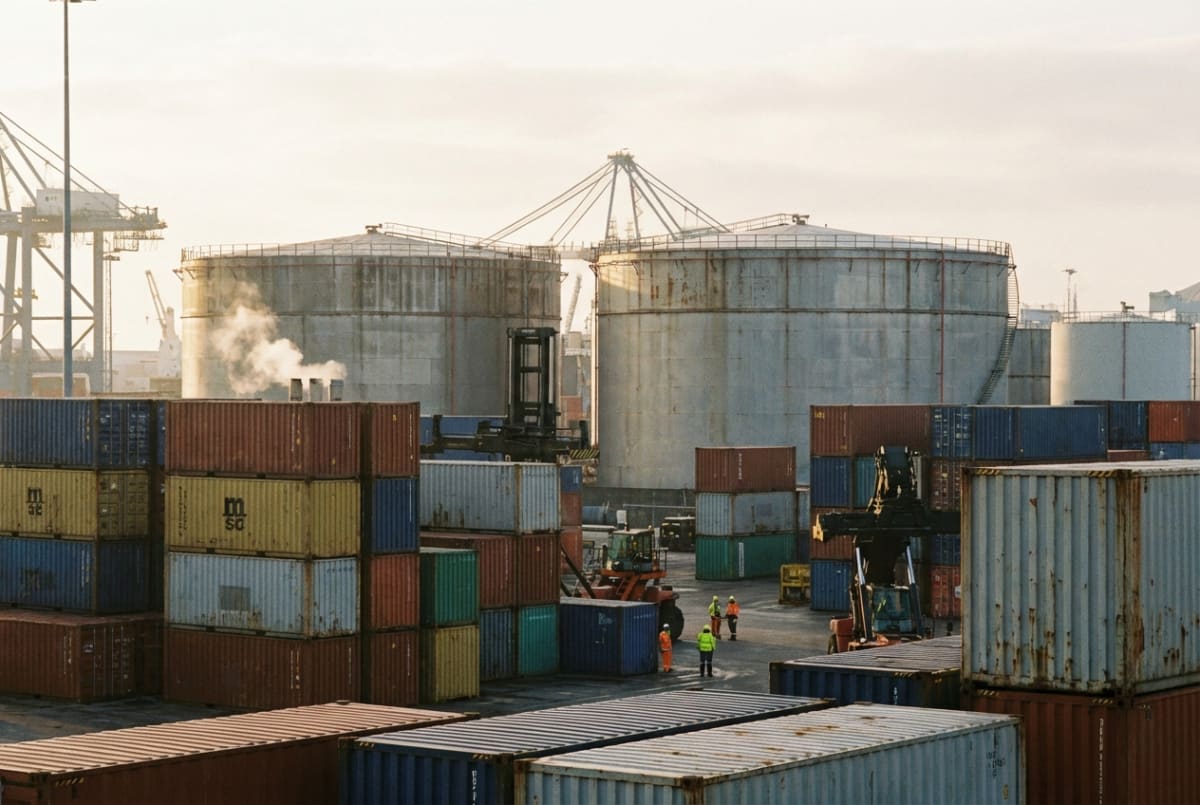
Disruptions to shipping routes in the Strait of Hormuz since late February have contributed to a 31.8% increase in national average fuel prices, impacting transport costs for households and industry.
TLDR
National average petrol prices reached 219.5 cents per litre, a 31.8% increase since late February, while diesel rose to 245.6 cents. The price increase translates to higher monthly transport costs for households. The government has released emergency reserves, and formal rationing is a possibility if supply disruptions continue. The ACCC is investigating potential price gouging.
KEY TAKEAWAYS
Impact on Consumers and Industry
The Australian Institute of Petroleum reported the national average for unleaded petrol at 219.5 cents per litre for the week ending March 15, up from 166.5 cents four weeks earlier. Diesel reached 245.6 cents, climbing from 175.2 cents in late February. Prices at some service stations in Sydney's northern beaches exceeded $3 per litre, while prices of $3.60 were reported on Fraser Island.
Based on a vehicle with average fuel economy of 7.5L/100km, the price increase translates to higher monthly costs for households:
- A 40km daily commute uses approximately 66 litres per month.
- At 166.5c/L: $110 per month
- At 219.5c/L: $145 per month
- Increase: $35 per month, per commute
- A two-car household could see costs rise by $70-$150 per month.
Regional areas may face greater impacts due to longer travel distances. The freight industry reports significant cost increases, with media reports indicating a single round trip between Townsville and the Gulf of Carpentaria now costs an additional $2,112 in fuel compared to one month prior, with the total fuel cost rising from $5,256 to $7,368.
Panic-buying might be justified for the individual, but it is harmful to society. It is a classic example of a collective action problem and a self-fulfilling prophecy. If everyone fills up today, it overwhelms the system and creates the shortage that was feared.
— Dr Scott French, Senior Lecturer in Economics, UNSW
Geopolitical Tensions and Consumer Behaviour
The price increase has been attributed to geopolitical factors, including disruptions to oil shipments in the Strait of Hormuz. Six tankers scheduled to arrive in Australia in April have reportedly been turned back or deferred.
These supply concerns have reportedly led to consumer panic buying, which has contributed to localised shortages. Reports indicated 107 service stations in NSW were without diesel and 42 were without any fuel, with demand jumping 50% in some areas.
Energy Minister Chris Bowen stated there was "no change to the amount of fuel available in the country" and "no need to panic buy."
Australia's Fuel Security and Import Dependence
Australia imports 90% of its refined fuel and has two operational refineries: Ampol Lytton in Brisbane and Viva Energy in Geelong.
Australia's fuel reserves are at 36 days for petrol, 29 days for jet fuel, and 32 days for diesel, including stock on tankers at sea. The International Energy Agency (IEA) recommends member countries hold reserves equivalent to 90 days of net imports. Macrobusiness Chief Economist Leith van Onselen described Australia's fuel security position as the result of decades of policy inaction.
The government has authorised the release of 762 million litres from emergency stockpiles this month, equivalent to six days of petrol and five days of diesel consumption.
What Happens Next
Formal fuel rationing is a possibility if shipping disruptions continue past mid-April. Australia last implemented fuel rationing during the 1970s oil crisis. The Liquid Fuel Emergency Act 1984 provides the legislative framework for imposing purchase limits.
Associate Professor Devika Kannan from Adelaide University said rationing becomes a possibility if a major supply disruption exceeds 30 days.
The Australian Trucking Association (ATA) has released a crisis plan, with Chair Mark Parry stating the terminal gate price of diesel has increased by more than 105 cents per litre. The ATA is calling for access to disaster recovery funding and a temporary reduction of the road user charge from 32.4 cents per litre to zero, a measure estimated to cost $248 million per month.
Price Comparison: Then and Now
- Unleaded petrol late February 2026: 166.5 cents per litre
- Unleaded petrol week of March 15: 219.5 cents per litre (up 31.8%)
- Diesel late February 2026: 175.2 cents per litre
- Diesel week of March 15: 245.6 cents per litre (up 40.1%)
- Some Sydney northern beaches stations: $3.00 per litre
- Fraser Island stations: $3.60 per litre
- Outback Queensland freight hubs: $2.80-3.00 per litre
Fuel Conservation Measures
The International Energy Agency has previously urged measures such as working from home to conserve fuel during supply shocks. One day of remote work per week can reduce an individual's weekly commute fuel consumption by 20%.
Analysis of transport costs indicates that for some commuters, public transport may offer savings. In Sydney, a weekly Opal cap of $50 compares to potentially higher weekly fuel costs for daily drivers.
Data suggests that reducing highway speeds from 110km/h to 100km/h can improve fuel economy by approximately 7-10%. Vehicle efficiency experts also note that combining errands into a single trip can reduce fuel consumption by 20-30% compared to multiple short trips from a cold start.
The ACCC has launched an investigation into fuel supplier conduct and is accepting public submissions regarding potential price gouging at accc.gov.au. The probe includes major suppliers Ampol, BP, Mobil, and Viva Energy, with a focus on regional markets.
Broader Economic Impacts
The impact of higher diesel prices is expected to extend to supply chains. Adelaide University's Professor Kannan has warned that surging diesel prices could lead to higher food costs and disrupt logistics networks. The trucking industry has advised members to bring forward fuel levy adjustments, with these costs expected to be passed on to consumers within weeks.
SOURCES & CITATIONS
- Australian Institute of Petroleum Weekly Fuel Price Data, Week Ending March 15, 2026
- International Energy Agency Emergency Oil Reserves Guidelines
- ACCC Investigation into Fuel Supplier Conduct, March 2026
- Science Media Centre Expert Reaction: Petrol Panic Buying, March 2026
- Australian Trucking Association Crisis Response Plan, March 2026
- Heavy Vehicle Industry Australia Fuel Security Update, March 20, 2026
FREQUENTLY ASKED QUESTIONS