A global scientific collaboration has identified 158 discrete ocean habitats in Australian waters where sharks, rays, and chimaeras depend on specific areas for their survival. The mapping, led by the IUCN Species Survival Commission Shark Specialist Group, represents the most detailed assessment of Australian chondrichthyan habitat requirements ever compiled.
TLDR
Scientists have identified 158 Important Shark and Ray Areas across Australia and the Southeast Indian Ocean, with 143 falling within state and territory waters. The mapping provides governments with clear geographic targets for protection but creates no new legal obligations. Whether this translates into actual conservation measures depends entirely on political will at the state level.
KEY TAKEAWAYS
The regulatory implications are significant, though not in the way conservation groups might hope. Of the 158 Important Shark and Ray Areas (ISRAs) identified, 143 fall within state and territory waters. This places the primary responsibility for any conservation action with state fisheries ministers, not the federal Environment Minister.
What the mapping reveals
The ISRA assessment, published in February 2026, identifies areas that meet strict scientific criteria for species persistence. These include breeding sites, nursery habitats, migratory corridors, and feeding grounds. The process drew on decades of research from Australian universities, with Charles Darwin University contributing particular expertise on northern Australian river systems.
The scale of the extinction threat provides context for the mapping exercise. According to IUCN Red List data, more than one-third of shark, ray, and chimaera species globally face extinction. Australian waters harbour several species for which the continent represents the last significant population stronghold.
ISRAs provide a really clear indication of just how important Australian waters are for protecting the world's most endangered sharks and rays. With more than a third of the world's sharks and rays facing extinction, we're a global 'lifeboat' and for species like sawfish, northern Australia is their last global stronghold.
— Dr Leonardo Guida, shark scientist, Australian Marine Conservation Society
The compendium catalogues 95 species across the identified areas. These range from the great white shark, whose aggregation sites appear across southern Australian waters, to the critically endangered largetooth sawfish, confined to river systems in the Northern Territory and Western Australia.
The gap between mapping and protection
ISRAs are scientific designations, not marine protected areas, and the IUCN has been explicit about this distinction from the project's inception. The identification process follows what the organisation describes as an 'evidence-driven, purely biocentric process' based on scientific criteria, producing maps that tell governments where species need protection without compelling any government to provide it.
The Australian Marine Conservation Society has identified two areas requiring immediate regulatory attention. The first is Macquarie Harbour in Tasmania, now formally recognised as an ISRA, where Atlantic salmon farming operations are driving the endemic Maugean skate toward extinction. The second comprises the Daly, Roper, and Alligator river systems in the Northern Territory, where sawfish and river sharks face ongoing threats from commercial barramundi gillnetting.
Tasmania's salmon farming industry operates under state jurisdiction. The Northern Territory's commercial fishing regulations fall to the NT Fisheries Division. In neither case does the federal government hold direct regulatory power over the identified threats.
The enforcement problem
Australian environmental law splits marine jurisdiction at the three-nautical-mile mark, with state and territory governments controlling waters from the coastline to this boundary and the Commonwealth taking over beyond. The majority of ISRAs identified in this mapping exercise fall on the state side of that line.
The jurisdictional split creates a structural challenge for conservation, because while the federal Environment Protection and Biodiversity Conservation Act 1999 can apply to matters of national environmental significance including listed threatened species, the Act's reach into state waters remains contested and politically sensitive. State governments have historically resisted federal intervention in fisheries management.
Dr Joni Pini-Fitzsimmons, a research fellow at Charles Darwin University who contributed to the Top End assessments, frames spatial management as essential: 'Protected areas or areas that are managed to conserve species are really good for the management and conservation of marine and freshwater environments in the context of the global decline of sharks and rays.'
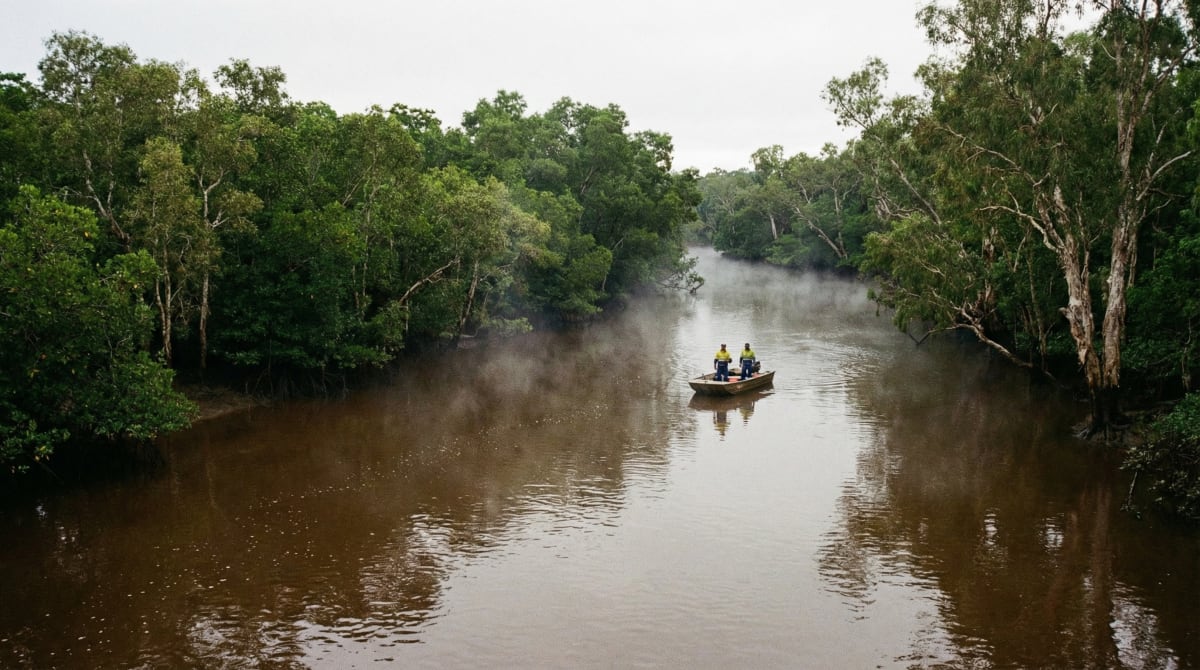
Nine ISRAs were identified in the Northern Territory alone, spanning river systems, estuaries, and offshore oceanic habitats, with sawfish populations in these waters representing remnants of a distribution that once extended across northern Australia before gillnet bycatch reduced them to their current fragmented state.
The political landscape
The NT Government committed in 2024 to phase out commercial barramundi gillnetting by 2028, though conservation groups argue this timeline allows four more years of sawfish mortality in waters now globally recognised as their final stronghold. The ISRA designation may add international pressure, but state governments have historically moved at their own pace on fisheries reform.
In Tasmania, the salmon industry operates under state aquaculture licences. The Maugean skate, found nowhere else on Earth, requires the specific cool, tannin-rich waters of Macquarie Harbour. Dissolved oxygen levels in the harbour have declined as salmon farming has intensified. The AMCS calls for 'farmed Atlantic salmon to be removed from Macquarie Harbour within the next 12 months' to prevent extinction.
The salmon farming industry employs approximately 2,000 people in Tasmania and generates hundreds of millions in export revenue. State governments rarely choose conservation over employment numbers.
What happens next
The IUCN intends for ISRAs to be incorporated into marine spatial planning, fisheries management, and threatened species recovery plans. The compendium provides the scientific foundation. Translation into regulatory action requires state and territory governments to treat the designation as more than a map.
The 35 additional 'Areas of Interest' flagged in the assessment indicate locations where data suggests importance for shark and ray populations but where evidence does not yet meet ISRA criteria. These represent future research priorities rather than immediate conservation targets.
Conservation law operates on timescales that poorly match extinction risk: the EPBC Act lists species as threatened, recovery plans follow after multi-year consultation periods, and implementation typically lags further still while populations continue to decline. The Maugean skate may not survive a regulatory process designed for species with more forgiving population dynamics.
The ISRA mapping gives Australian governments something previous conservation efforts lacked: precision, with habitats now delineated, species requirements documented, and threats identified in a single compendium. The gap that remains lies between knowing what needs protection and mustering the political will to provide it.
SOURCES & CITATIONS
- IUCN SSC Shark Specialist Group - Australia and Southeast Indian Ocean Regional Compendium
- Important Shark and Ray Areas Interactive Atlas
- Australian Marine Conservation Society - ISRAs Identified in Australian Waters
- IUCN Red List - Chondrichthyan Fishes
- Environment Protection and Biodiversity Conservation Act 1999
FREQUENTLY ASKED QUESTIONS