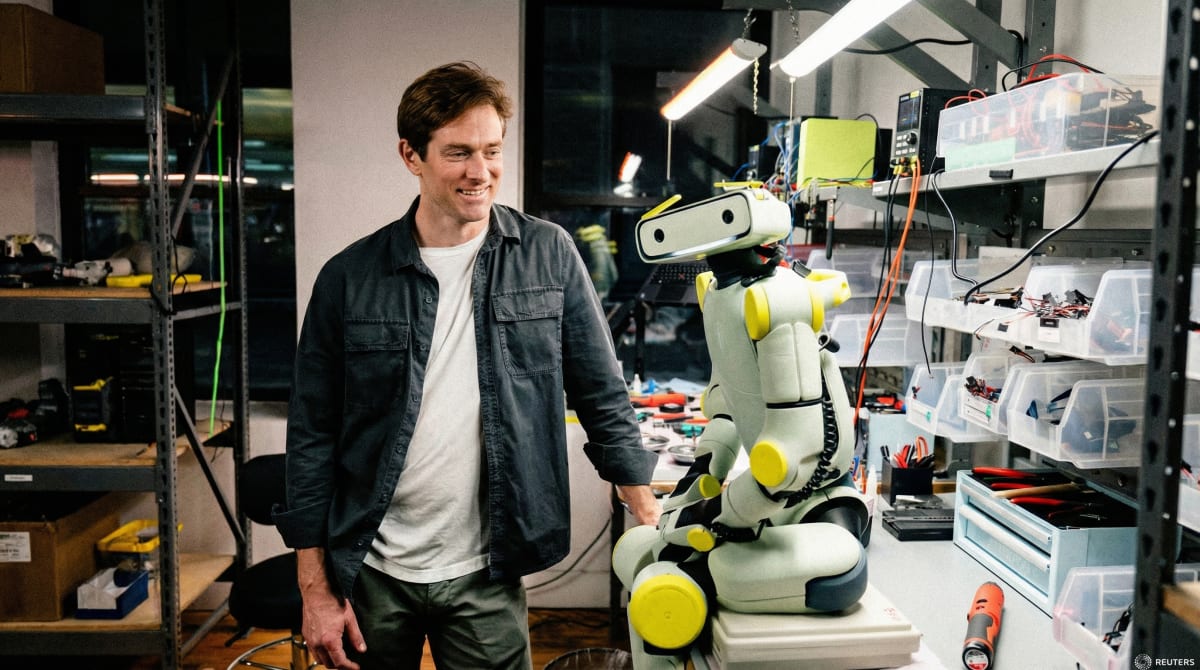
Amazon confirmed the acquisition of Fauna Robotics on Tuesday, bringing the two-year-old humanoid startup in-house for approximately $350 million. Rob Cochran, Fauna CEO, told reporters he was "incredibly excited to share that Fauna Robotics has officially joined the Amazon family." The deal gives Amazon immediate access to Sprout, a 3.5-foot soft-bodied humanoid designed for safe operation in homes, schools, and entertainment venues.
KEY TAKEAWAYS
The New York-based company will operate as "Fauna Robotics, an Amazon company," retaining its brand and roughly 50 employees, Cochran said. Elon Musk previously announced Tesla plans to start production of 1 million Optimus humanoid robots by the end of 2026, with a target price of $20,000 per unit, according to company filings. Amazon's consumer robotics record includes the Astro home robot, which launched in 2021 but never moved beyond invite-only availability, according to industry tracking.
What Fauna Built
Fauna Robotics designed Sprout to stand 3.5 feet tall, weigh 50 pounds, and move on wheels rather than bipedal legs, according to product specifications. Engineers equipped the robot with cameras, LiDAR for navigation, and arm manipulators capable of picking up toys, folding laundry, and carrying small objects. Fauna designed the soft exterior to bump into children without causing injury, Cochran said.
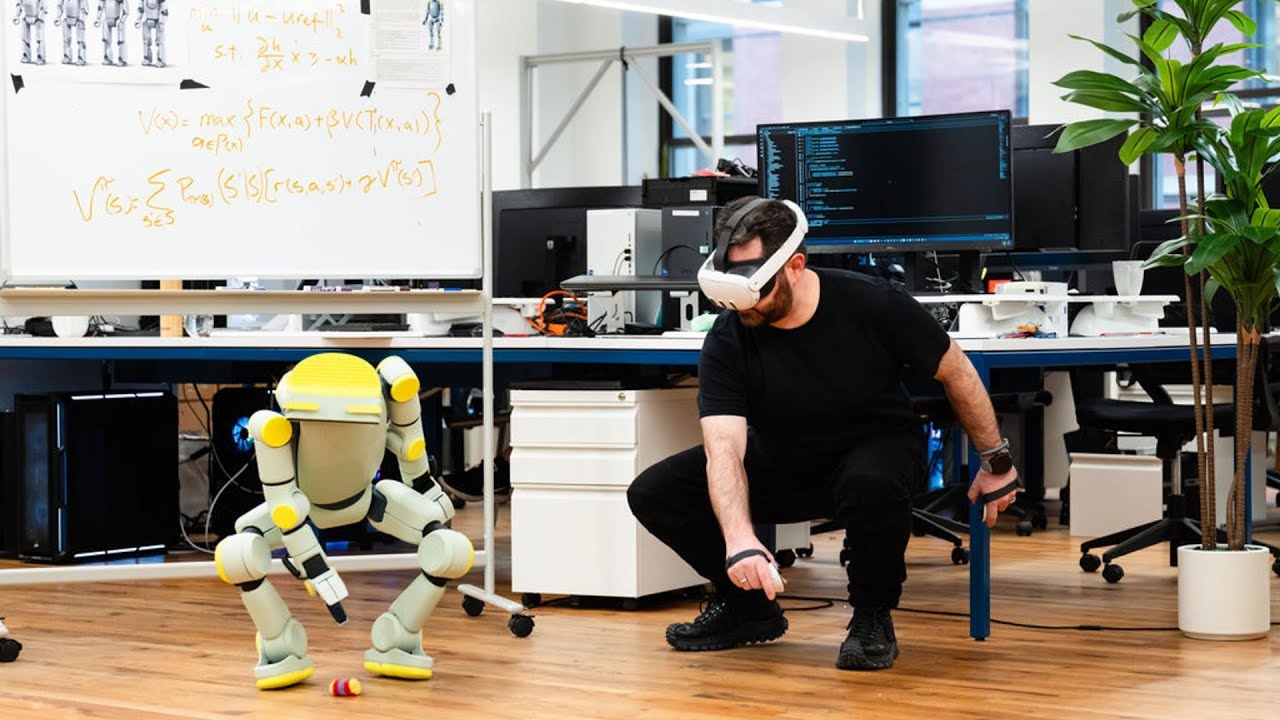
Amazon's acquisition of Fauna Robotics and the Sprout humanoid robot
Sequoia Capital led Fauna's $52 million Series A funding round in February 2024, according to company disclosures. Fauna Robotics shipped its first units to customers in late 2024 at $50,000 per unit. Disney theme parks and Boston Dynamics became early customers, using Sprout for demonstration purposes at robotics conferences, Cochran said.
Josh Merel, a Google DeepMind researcher, and Cochran, former head of AI at Meta's Reality Labs, founded the company in 2024. Cochran wrote on LinkedIn Tuesday that "we set out with a clear mission to build capable, safe, and fun robots for everyone." Fauna's deep learning expertise gives it an edge over hardware-focused humanoid startups.
The Tesla Optimus Problem
Elon Musk told investors in June 2024 that Tesla Optimus would reach limited production in 2025, with plans for over 1,000 units in Tesla facilities and external sales starting in 2026. Tesla targets a $20,000 price point for mass-market units, well below Fauna's current $50,000, according to Teslarati analysis.
Tesla designed Optimus to stand 5 feet 8 inches, walk on two legs, and perform factory work and household tasks, the company said. Engineers at Tesla demonstrated units folding clothes, sorting objects, and walking up stairs at its 2024 AI Day. Tesla plans production intent prototypes of Optimus Version 3 for early 2026, with a one million unit production line targeted by year-end, according to job listings reviewed by Teslarati.
Tesla already runs high-volume production lines for vehicles and batteries, giving Optimus a real manufacturing edge over startups. Scaling to 1 million robots requires major capital expenditure, but Tesla has the factory experience. Fauna has shipped approximately 200 units total, according to industry estimates. That's prototype territory, plain and simple.
Consumer humanoids and factory humanoids solve different problems, robotics researchers said. Optimus focuses on repetitive warehouse tasks, Tesla said. Sprout focuses on social interaction with humans who lack robotics training, Cochran told reporters.
Amazon's Track Record
Amazon launched Astro in 2021, a wheeled home robot with cameras, Alexa integration, and security monitoring capabilities, priced at $1,599. Three years later, Astro remains invite-only and hasn't scaled beyond a few thousand units, according to industry tracking. The robot struggled with utility, technology analysts said.
The problem is utility. Consumer robotics researchers told CNET that a $1,600 robot that rolls around the house and occasionally brings you a beer doesn't solve a problem worth $1,600. Ring surveillance cameras cost $200. Amazon Echo voice assistants already sit on kitchen counters.
Fauna's pitch targets a clearer need, consumer robotics analysts told reporters. "A robot that picks up toys, folds laundry, and entertains kids competes directly with hiring help," one analyst said. Full-time nannies in Sydney cost roughly $70,000 per year, according to Seek salary data. Sprout reaches break-even in under 12 months if the robot works as advertised, the analyst said.
The Economics
Tesla's $20,000 target pricing for Optimus assumes mass production at vehicle-scale margins, according to Standard Bots analysis. At one million units, Tesla could hit gross margins of 30-40%, similar to its vehicle business, the analysis said. Achieving that requires aggressive cost-cutting on actuators, sensors, and compute.
Fauna Robotics' $50,000 pricing reflects prototype-scale economics, covering R&D, low-volume manufacturing, and early customer support. Competing with Tesla at $20,000 requires Fauna to cut costs by 60%, according to market projections.
Amazon spent $42 billion on R&D in 2025, according to company filings. Losing $500 million to $1 billion ramping humanoid production is acceptable if the payoff is owning the consumer robotics category. An Amazon spokesperson told Fortune the company is "excited about Fauna's vision to build capable, safe, and fun robots for everyone," adding that "together with Amazon's robotics expertise and decades of experience earning customer trust in the home through our retail and Alexa businesses, we see a path to making humanoid robots accessible to millions of households."
The Path Forward
Amazon now has a working humanoid, a team that understands how to build them, and the capital to scale production. The real question: whether Amazon can move fast enough to compete with Tesla's head start.
Tesla targets factory and household tasks with a bipedal design, according to company presentations. Fauna targets social interaction and assistance tasks with a wheeled design, Cochran said. "These are adjacent markets, not identical ones," one robotics consultant told TechCrunch.
Amazon's approach will determine the outcome, analysts said. "Slow iteration and conservative scaling like Astro will fail," one venture capital investor told Bloomberg. "Massive upfront investment and aggressive pricing like AWS or Prime could work."
The humanoid robot market is forming now, according to IDC research. "The winner will be the company that ships at scale first," IDC analyst Jitesh Ubrani told reporters. The key point: demo videos don't win, production capacity does.
TLDR
Amazon confirmed the acquisition of Fauna Robotics for approximately $350 million. The New York startup builds Sprout, a 3.5-foot humanoid robot designed for homes and schools. Fauna launched in February 2024 with $52 million in Series A funding. The deal positions Amazon against Tesla's Optimus, which targets $20,000 pricing for mass production.
SOURCES & CITATIONS
FREQUENTLY ASKED QUESTIONS