
Prime Minister Anthony Albanese announced the creation of a national fuel supply taskforce on Thursday morning in Hobart, appointing former Australian Energy Regulator chief Anthea Harris as coordinator.
TLDR
The federal government has established a national fuel supply taskforce led by former energy regulator Anthea Harris while the ACCC launches a formal investigation into four major fuel suppliers over alleged anti-competitive conduct in regional diesel markets. The dual response reflects growing pressure on the Albanese government to address fuel availability and pricing concerns.
The taskforce will be based in the Department of Prime Minister and Cabinet. Harris started immediately.
The announcement came hours before the Australian Competition and Consumer Commission confirmed it had opened a formal investigation into four major fuel suppliers over alleged anti-competitive conduct in regional and rural diesel markets.
We are taking decisive action to ensure fuel security for all Australians.
— Anthony Albanese, Prime Minister
Taskforce structure
Harris previously served as CEO of the Australian Energy Regulator and chaired the Energy Security Board. She will coordinate state and territory responses to fuel supply disruptions.
Each state and territory will appoint a liaison person to work directly with the taskforce. The structure mirrors emergency coordination arrangements used during natural disasters.
Each state and territory will appoint a liaison person to work directly with the taskforce.
— Anthea Harris, Fuel Supply Taskforce Coordinator
The government has released 20 per cent of diesel and fuel reserves in response to supply pressures. The International Energy Agency called the current situation the biggest shock to global energy markets in history.
ACCC investigation
The ACCC investigation covers Ampol, BP Australia, Mobil Oil Australia and Viva Energy. The watchdog rarely announces investigations publicly but did so in this case due to the significance of the allegations.
The investigation focuses on diesel availability to independent wholesalers in regional and rural areas. The ACCC is examining whether the four companies engaged in anti-competitive conduct that restricted supply to independent operators while maintaining availability to their own retail networks.
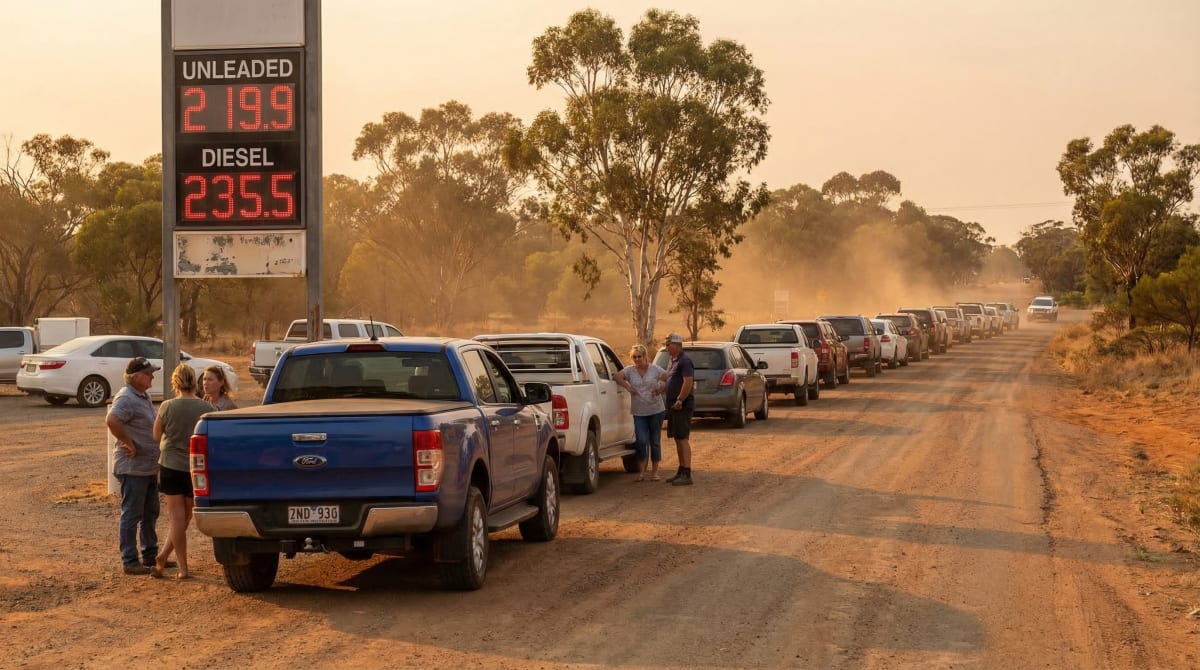
Demand has doubled or more in some areas. Regional diesel users, particularly in agricultural sectors, have reported difficulty accessing fuel at any price.
Industry response
The Australian Petroleum Institute, representing the major fuel suppliers, said the investigation was an unwelcome distraction during a genuine crisis.
This investigation is an unwelcome distraction during a genuine crisis.
— Australian Petroleum Institute spokesperson
The National Farmers Federation welcomed the ACCC probe. A spokesperson said farmers need fuel to feed the nation and accountability was overdue.
Farmers need fuel to feed the nation. This investigation is welcome.
— National Farmers Federation representative
Supply disruption details
The fuel crisis began to intensify in early March following unprecedented demand. The International Energy Agency described the situation as the biggest shock to global energy markets in history.
Australia holds strategic fuel reserves equivalent to approximately 68 days of consumption under IEA methodology. The 20 per cent release announced Thursday represents roughly 13 days of national diesel consumption.
Regional areas have been hit hardest. Independent operators in western New South Wales, regional Queensland and northern Victoria reported diesel shortages from early March. Several grain growers told Not Retired they postponed autumn planting because they could not secure fuel for tractors.
Branded service stations operated by the major oil companies maintained regular deliveries throughout the period. Independent wholesalers received allocations 40 to 60 per cent below normal levels.
Political context
The dual announcement on Thursday came after two weeks of pressure from the opposition and crossbench. Liberal leader Peter Dutton called for an ACCC investigation on 5 March. Independent MP Allegra Spender raised concerns about regional supply allocation in question time on 12 March.
The government initially resisted calls for an investigation, saying it did not want to interfere with commercial decisions during a supply crisis. That position changed following reports from regional MPs about constituent complaints.
The decision to announce the taskforce and investigation simultaneously suggests coordination between the Prime Minister's office and the ACCC. Both announcements cited the need to balance immediate supply coordination with longer-term market oversight.
What the investigation will examine
The ACCC investigation will examine diesel allocation decisions made by Ampol, BP Australia, Mobil Oil Australia and Viva Energy between 1 March and the present. The watchdog has powers to compel documents and interview company executives under oath.
The focus is whether the four companies coordinated to restrict diesel availability to independent wholesalers while maintaining supply to their own retail networks. Such conduct would violate sections 45 and 47 of the Competition and Consumer Act.
Penalties for proven anti-competitive conduct can reach 10 per cent of annual turnover or three times the benefit obtained, whichever is greater. The ACCC has not indicated whether it is pursuing civil or criminal penalties.
Harris background and appointment
Anthea Harris served as CEO of the Australian Energy Regulator from 2018 to 2023. She previously chaired the Energy Security Board during its review of the National Electricity Market.
Harris holds a Master of Public Policy from the Australian National University and worked in the Department of Industry for 12 years before moving to the AER. She is considered an expert in energy market regulation and crisis coordination.
The taskforce position is a statutory appointment under the National Emergency Declaration Act. Harris has authority to direct state and territory officials to implement fuel distribution priorities. She reports directly to the Prime Minister.
What happens next
Harris commenced her role on Thursday 19 March. State and territory liaison appointments are expected by Monday 22 March. The first coordination meeting is scheduled for Wednesday 24 March in Canberra.
The ACCC investigation is ongoing with no public timeline for completion. Initial evidence gathering typically takes three to six months for investigations of this scale. The commission said it would provide updates as the investigation progressed.
The government has not ruled out further reserve releases if supply conditions deteriorate. Harris will brief the Prime Minister weekly on fuel availability and price movements across the country.
The taskforce will coordinate daily fuel supply reports from all states and territories. Those reports will track diesel availability, price movements and allocation patterns across metro, regional and remote areas.
KEY TAKEAWAYS
SOURCES & CITATIONS
FREQUENTLY ASKED QUESTIONS