On Thursday morning, 16,000 Atlassian employees opened their laptops to a four-minute video from CEO Mike Cannon-Brookes. Twenty minutes later, an email arrived. 1,600 of them learned they no longer worked at the company.
TLDR
Four major companies linked to Australia — Atlassian, WiseTech, Block, and CBA — have cut nearly 8,000 roles in a single month, all citing AI as a primary factor. The cuts are concentrated in software engineering and R&D. Global AI spending is forecast to hit US$2.52 trillion in 2026, but only a third of companies have begun deeply transforming their operations. The restructuring wave hitting tech is structural, and the question is how fast it spreads into the broader knowledge economy.
KEY TAKEAWAYS
Atlassian left its internal Slack channels open six hours longer than usual so departing staff could say goodbye to colleagues. The company's union, Professionals Australia, said workers had no prior warning. Director Paul Inglis called it a 'devastating blow' and said hundreds of employees had joined the union in recent months specifically to seek a say in how AI would reshape their jobs. That say never came.
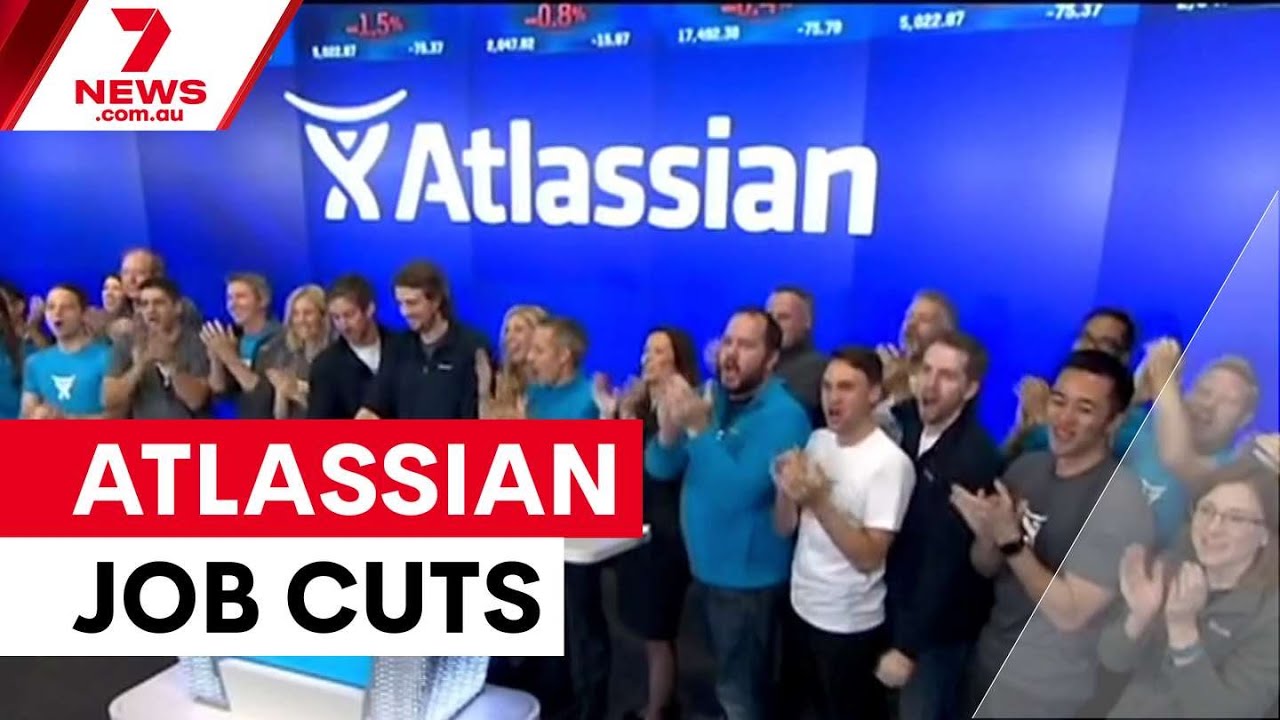
7NEWS coverage of Atlassian's 1,600 job cuts and the CEO's announcement to staff.
A Month of Cuts That Rewrites the Playbook
Atlassian's restructure did not happen in isolation. In the space of a single month, four major companies with ties to Australia announced AI-attributed workforce reductions that, combined, eliminated nearly 8,000 roles.
On February 25, WiseTech Global announced it would cut 2,000 positions — close to a third of its 7,000 headcount across 40 countries. The cuts would start with product developers and customer service staff. On the same day, the Commonwealth Bank quietly made 300 technology roles redundant. Two days later, Block — the company behind Square, Cash App, and Afterpay — cut 40% of its entire workforce, shedding more than 4,000 positions.
I am prepared to say this clearly: the era of manually writing code as the core act of engineering is over.
— Zubin Appoo, CEO, WiseTech Global, February 25 2026
Then on March 12, Atlassian added 1,600 more. In its SEC filing, the company disclosed that more than 900 of the affected roles sit within research and development — the engineers and designers who build Jira, Confluence, and Trello. Of the total, 480 positions are in Australia, 640 in North America, and 250 in India. The estimated cost: US$225 million to US$236 million.
Five Months From Prediction to Contradiction
What makes the Atlassian announcement particularly striking is what its CEO said five months earlier. In October 2025, Cannon-Brookes appeared on the 20VC podcast and predicted: 'Five years from now, we'll have more engineers working for our company than we do today. They will be more efficient, but technology creation is not output-bound.'
By March 2026, 1,600 of those engineers were gone. Cannon-Brookes' internal memo to staff used careful language: the company was 'adapting,' this was about changing 'the mix of skills we need,' and 'our approach is not AI replaces people.' But the operational reality undercuts the framing. When a company cuts 900 R&D roles and simultaneously replaces its CTO with two executives described in an SEC filing as 'next generation AI talent,' it is replacing people with a different kind of workforce — one that is smaller and built around AI capabilities.
The outgoing CTO, Rajeev Rajan, held the role for nearly four years. His successors, Taroon Mandhana and Vikram Rao, were announced in the same 8-K filing that disclosed the layoffs. The timing was not subtle.
The Market Is Rewarding the Cuts
Atlassian's share price has fallen 66% over the past 12 months. It dropped more than 50% in 2026 alone, pushing the company's market capitalisation below US$20 billion — meaning this publicly listed software giant is now worth less than privately held Canva. WiseTech's shares are down 46% over the same period. The broader sell-off in software stocks, sometimes called the 'SaaSpocalypse,' reflects investor anxiety that AI will shrink the addressable market for the workflow, collaboration, and productivity tools that companies like Atlassian sell.
The market's response to layoff announcements has been consistent and instructive. Block's share price jumped 25% after it announced 4,000 cuts. Atlassian rose approximately 4% in extended Nasdaq trading after its announcement. WiseTech gained 11% on the day. In each case, investors treated workforce reduction as the correct strategic response to AI pressure. The incentive structure is clear: cut people, and your stock goes up.
The Structural Case: Why This Is Different
It would be reassuring to treat these layoffs as cyclical — companies correcting for pandemic-era over-hiring. There is some of that happening. But two data points suggest the shift is structural.
First, Deloitte's 2026 State of AI in the Enterprise report found that 34% of surveyed organisations are now using AI to 'deeply transform' their operations — creating new products, reinventing processes, or changing business models entirely. Another 30% are redesigning core processes around AI. That leaves just 37% at surface-level adoption. The majority of companies have moved past experimentation.
Second, Gartner forecasts worldwide AI spending of US$2.52 trillion in 2026, a 44% increase year-on-year. That capital is being deployed to automate precisely the kinds of work — software development, document processing, customer support, data analysis — that employs the largest share of white-collar Australians.
Atlassian's own behaviour confirms the structural reading. While cutting 1,600 roles, the company simultaneously acquired The Browser Company (makers of the Arc and Dia web browsers) and DX, a developer intelligence platform it plans to integrate into Jira and Bitbucket. It is spending to build AI into its products while reducing the human workforce that maintained those products before AI could assist. That is not a cost cycle. That is a business model shift.
What Comes After Software
Software engineering and customer service are the first professions to face AI-driven workforce reduction at this scale. These are not low-skill jobs. Atlassian engineers hold computer science degrees from strong universities and earn well above the national average. Their skills were, until recently, the most marketable in the Australian labour market.
Every white-collar profession that primarily involves processing, analysing, or generating information is now exposed to the same dynamics. Law, accounting, marketing, financial analysis, journalism — the knowledge economy that Australia has spent decades building is the economy most exposed to AI compression. Whether AI creates enough new roles to offset the ones it eliminates remains an open question. The data from this single month in Australian tech suggests the elimination side is running well ahead of the creation side.
Affected Atlassian employees will receive a minimum 16 weeks' pay, extended healthcare, pro-rata bonuses, and a US$1,000 payment once they return their corporate laptop. Consultation runs until March 19, with final terminations expected April 2. For the 480 people in Australia who received that email on Thursday morning, the structural questions about AI and employment are no longer abstract.
SOURCES & CITATIONS
- Atlassian Corporation 8-K SEC Filing, March 11 2026
- WiseTech Global Half-Year Results and Restructure Announcement, February 25 2026
- Block Inc. Shareholder Letter, February 27 2026
- Deloitte, State of AI in the Enterprise 2026
- Gartner, Worldwide AI Spending Forecast 2026, January 15 2026
- Atlassian CEO Mike Cannon-Brookes on 20VC Podcast, October 2025
FREQUENTLY ASKED QUESTIONS