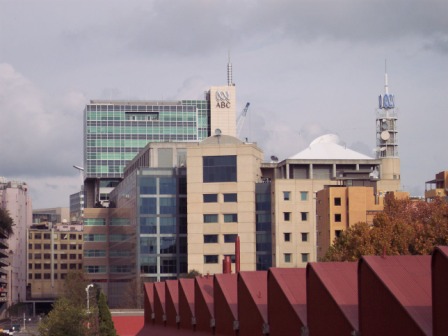
ABC staff have voted for protected industrial action in a ballot that concluded this week, setting the stage for the public broadcaster's first major strike in two decades. The Media, Entertainment and Arts Alliance confirmed the result on Tuesday, though specific strike dates remain unannounced.
TLDR
ABC staff have voted for protected industrial action, marking the broadcaster's first major strike threat in years. The vote follows months of tension between employees and management under new CEO Hugh Marks, whose recent AFR magazine photoshoot became a flashpoint for frustration. Union members cite ongoing budget pressures and restructuring as core grievances, rejecting a $1,000 bonus offer from management.
KEY TAKEAWAYS
Union organisers described the vote as a clear rejection of management's handling of enterprise bargaining negotiations. In the weeks leading up to the ballot, Managing Director Hugh Marks offered a $1,000 cash payment to every staff member as what one union representative called a 'last-ditch sweetener.' Workers voted it down.
The underlying pay dispute centres on a proposed enterprise agreement that would increase salaries by 10 per cent over three years. MEAA members characterised the offer as insufficient given accumulated cost-of-living pressures and years of real wage erosion during funding freezes. When the agreement went to a vote in February, it failed to pass.
A Commercial Broadcasting Executive at the ABC
Hugh Marks took over as ABC Managing Director in March 2025, replacing David Anderson, who had resigned in August 2024 partway through his second five-year term. The appointment surprised some within the organisation. Marks spent six years running Nine Entertainment, steering the commercial network through its merger with Fairfax Media in 2018 and its subsequent transformation into a digital-focused media conglomerate valued at over $5 billion.
His background raised questions about whether a commercial broadcasting executive understood the ABC's charter obligations and public interest mandate. Unlike commercial networks that answer to shareholders, the ABC operates under legislated requirements to provide comprehensive broadcasting services and maintain editorial independence. Staff wondered whether Marks grasped the distinction.
During his tenure at Nine, Marks hosted a $10,000-a-head fundraising dinner for the Liberal Party in 2019. Guests included then-Prime Minister Scott Morrison and Communications Minister Paul Fletcher. The event was organised by the Liberal Party's fundraising arm, the Australian Business Network. Journalists at Nine's newspapers — The Sydney Morning Herald, The Age, and The Australian Financial Review — reportedly expressed concern about the dinner at the time.
That history resurfaced when Marks arrived at the ABC. Staff circulated internal emails questioning whether someone who had fundraised for the political party responsible for the broadcaster's funding cuts was the right person to lead it.
The Photoshoot That Broke the Camel's Back
Simmering resentment crystallised in February 2026 when the Australian Financial Review's Magazine published a profile of Marks. The piece featured photographs taken on the rooftop of the ABC's Ultimo headquarters in Sydney — the same building where staff had recently learned their positions were under review as part of yet another restructuring round.
One image showed Marks leaning against a railing with the Sydney skyline behind him. Another had him sitting in a director's chair. Staff circulated the photographs internally with commentary that ranged from sardonic to furious.
It became a symbol. We're being asked to do more with less while the new boss is posing for glamour shots.
— ABC journalist, speaking to Crikey
The timing could not have been worse. The photoshoot appeared days after management announced plans to consolidate several state-based programs into national formats — a restructure that would eliminate positions in regional newsrooms. Staff saw a leader more interested in personal branding than newsroom morale.
A Decade of Funding Pressure
The current dispute did not emerge from nowhere. The ABC has operated under sustained financial pressure since the mid-2010s. In the 2018-19 federal budget, Treasurer Scott Morrison announced a three-year pause on indexation of the broadcaster's operating funding. The freeze removed $83.7 million from the ABC's budget over the period.
The cut arrived as an efficiency measure. The government argued the ABC should find savings in back-office operations rather than programming. In practice, successive managing directors shed hundreds of positions across news, radio, and digital teams. Regional bureaus closed. Foreign correspondents were recalled. Specialist rounds — science, arts, industrial relations — were consolidated or eliminated.
When Labor returned to government in 2022, it restored indexation but did not replace the lost funding. The October 2022 budget returned the $83.7 million and provided additional funding for international services, but the ABC's overall budget remained lower in real terms than it had been in 2014. Eight years of accumulated cuts had left permanent scars on the organisation's capacity.
In fiscal year 2016-17, the ABC received $861 million in federal funding. By 2024-25, the figure had risen nominally but failed to keep pace with inflation and expanded digital obligations. Staff described working conditions as stretched thin — journalists covering multiple beats, producers handling shows that once had dedicated teams, technical staff maintaining ageing equipment.
Historical Parallels
If the current dispute leads to a walkout, it will mark the first significant industrial action at the ABC since 2006. That year, members of the Community and Public Sector Union and the Media, Entertainment and Arts Alliance walked off the job for 24 hours over a pay offer they considered inadequate. The dispute was resolved after three weeks of negotiations.
The ABC has a longer history of industrial action than its public broadcasting image might suggest. In 1976, staff including 120 journalists staged a 24-hour strike to protest the Broadcasting and Television Amendment Act, which they feared would threaten editorial independence. In 1973, women script assistants at the organisation walked out in a dispute over pay equity — part of a broader wave of equal pay actions across Australian industries during that period.
Each of those disputes occurred during periods of political pressure on the broadcaster. The 1976 action followed the dismissal of the Whitlam government and concerns about the Fraser government's intentions for the ABC. The 2006 strike came during the Howard government's final term, after years of accusations that the broadcaster harboured anti-government bias.
The 2026 dispute carries echoes of both. Staff describe an organisation caught between commercial expectations and public service obligations, led by an executive whose political connections and commercial background make him an uncomfortable fit for the role.
What Happens Next
Protected industrial action can take several forms under Australian workplace law. Options include work stoppages, bans on specific duties (such as refusing to perform management tasks), or full walkouts. Union members will determine the specific form of action in the coming weeks.
The Fair Work Commission certified the ballot earlier this month, meaning any action taken will have legal protection. Workers cannot be fired or penalised for participating in protected industrial action. The certification also means management cannot simply wait out the dispute — the union has a legal mandate to escalate if negotiations fail.
ABC management declined to comment on specific negotiations in the days following the ballot. A spokesperson said the organisation remained committed to 'constructive dialogue' with employee representatives and hoped to reach an agreement without disruption to services.
Whether that dialogue produces results remains to be seen. The rejected $1,000 bonus suggests management misjudged staff sentiment. The AFR photoshoot suggests Marks misjudged staff patience. And the decade of funding pressure that preceded his arrival suggests neither party has much room to manoeuvre.
Strike dates, when announced, will test whether Australian audiences notice their public broadcaster going dark — and whether they care enough to pressure the government to adequately fund it.
SOURCES & CITATIONS
- Crikey, 'Strike looms large at ABC as staff vote for protected action', March 11, 2026
- ABC Annual Report 2024-25, Funding Overview
- Media, Entertainment and Arts Alliance, ABC Enterprise Agreement Updates
- Parliament of Australia, ABC Funding Fact Check, 2023
- The Guardian, 'Former Nine CEO Hugh Marks named new managing director of the ABC', December 17, 2024
- The Conversation, 'Hugh Marks is the new managing director of the ABC. Is he the right person for the job?', March 2026
FREQUENTLY ASKED QUESTIONS


